
151116 – Kathak Giselle – Sadlers Wells, London EC1 > words
Between 1983-85 The Electric Ballroom in Camden London had a small upstairs room hidden above a Hip Hop floor that can only be described as African tribal, it was male, black, physical, fast and violent. A mixture of adrenalin and fear dripped from the ceiling. The African drum and the aggressive percussion of Art Blakey made for a heady cocktail. When The Electric Ballroom closed Congas and Afro Cuban rhythm could be heard at Dingwalls and the Blue Note club. When Drum’n’Bass took off in the mid 1990’s The Blue Note became the home of Metalheadz. The Shoreditch clubs soon introduced dancers to Tablas and Indian rhythms, by way of Talvin Singh and The Asian Dub Foundation among others, and with it introduced club dancers to Kathak. The professional voice, if your feet and hands can be the voice, of Kathak was Akram Khan.
The semi-professional club dancers throughout the eighties and nineties were scavengers nothing was sacred. Dance moves would be taken from The Nicholas Brothers and Westside Story just as easily as from Capoeira or skateboarding. Each re-appropriation choreographed next to the equally unexpected annexation. A dance step would be taken without reference, a pure phonetic movement to be interpreted as one wished. The delivery and sentence flow of the moves was both the test and jury. Club dancers are intuitive improvisers, no sooner had a move been appropriated it is then given a further idiosyncratic interpretation, mixed into a new combination and as such evolves into something innovative and unique. One only has to compare a 1980’s break dance video with a 2016 world champion competition to see how far and how fast a new language of dance can evolve. The semi-professionals that inhabit the club dance scene are raw and unpolished, they play as much to each other as to an audience. Yet it is this microcosm of popular culture that provides much of the upfront R&D for the dance High Arts. Language development and adaption is intrinsic to both.
I have seen numerous works by Akram Khan, most were solos or duets in Khan’s contemporary Kathak rhythmic style. Kathak is story telling through dance so it was of interest to see how Khan would translate the 1841 Giselle classic? The story remains much the same as the original here it includes migrant factory workers, a love between caste and class, betrayal and condemnation, and eventual redemption. Khan’s Giselle was not as expected. It exceeded all preconceptions and is indeed the work of a mature director and equally competent and brilliant team. Visually stunning, complex and intricate, seamlessly weaving contemporary and classical ballet, heightened by the exquisite delivery of the dancers. With the set and costumes by Tim Yip (of Crouching Tiger Hidden Dragon) the razor hipped translucent filigree Mantua dress was a timeless couture piece. The music by Vincenzo Lamagna sometimes reduced to static and looped radio interference created a haunting space in which to perform. Costumes, musical score and narrative all drew heavily upon the original. Professionalism exudes from exemplary teamwork with each contributor lifting the entirety of the final piece. Within this process it is impossible to fully identify who contributes what as the creative process is itself a dialogue of proposals each informing the other, Dancer to Director, Choreographer to Composer, Production to Performance. This creative process evolves semantic interpretations of previous accepted language. At the professional High Arts level the sources are heavily referenced and authenticated and more often refined as opposed to improvised.
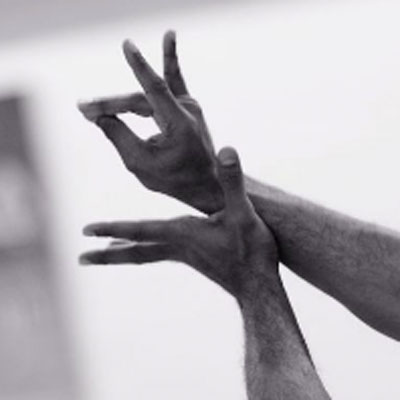
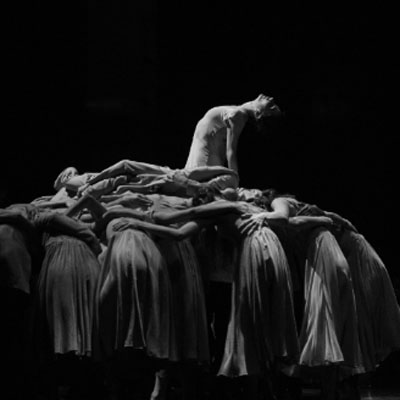
The dancers, migrant workers, in Act 1 performed both the mechanisms of work and the movement of the machines that facilitated the work. This impression was that of mechanical weaving where the soloists were free flowing bobbins flying back and forth through a hypnotic repetitive tapestry. It provided the texture through which one could experience a life of cyclic toil. In this story of love and betrayal, Giselle is a peasant girl who is in love with Albrecht an upper class disguised incognito. Hilarion a jealous rival exposes Albrecht’s secret and by doing elicits tragedy, sending Giselle to madness and death. Simple gestures throughout the performance have significance. Giselle’s cupped hand held over the stomach is read as a pregnancy. Open hands on top of each other pulsate as a beating heart. Madness is a sea of undulating bodies that slowly disperse to reveal Giselle’s lifeless corpse.
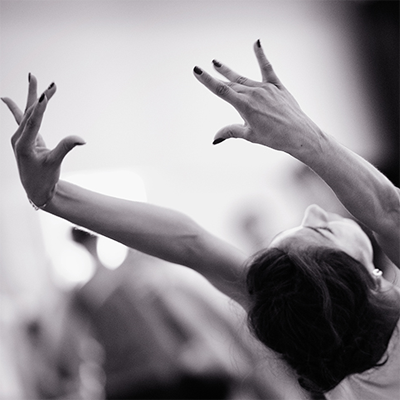
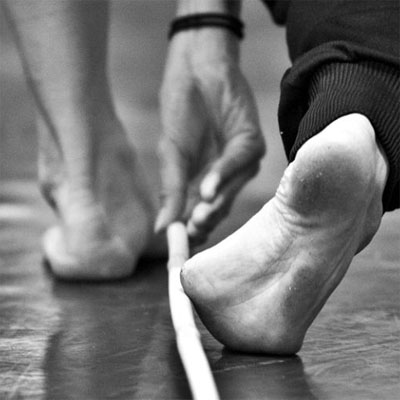
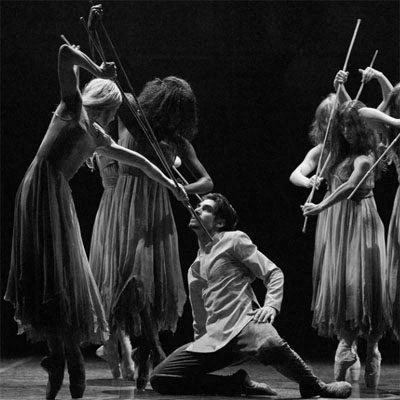
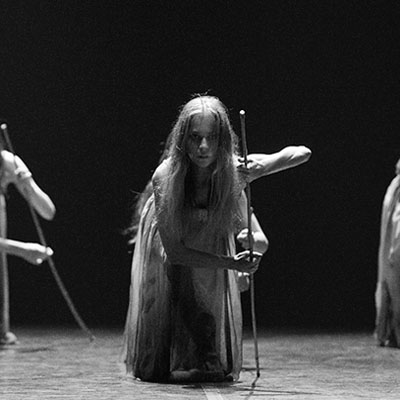
In Act 2 Giselle walks amongst the Wilis. The Wilis are beautiful female sprits that exist between here and the afterlife. They are also fierce witchy warriors, suspicious of mortal men. The Wilis work en pointe for almost an hour. At the beginning of the act the performers emerge on mass out of the darkness. The effect is icy and poignant, creating a performance, which is both cold and haunting. The Wilis with their wild long hair are angry, footless, hovering, all moving as one army of spears. In this piece Khan has subverted the classical language of ballet where en pointe work is the height of delicacy and beauty to represent instead eternal damnation and suffering.
The language of the arts is in constant flux it is forever re-used and reinvented. It’s re-writing is as persistent in the High Arts as it is in popular culture by feeding off of each other. There is a semiotic cultural loop where misrepresentation can be absorbed and be as positive as deliberate re-contextualising. Language like culture constantly evolves. The information age has proliferated the speed at which culture is dispersed and adapted and it now operates in many layers and at many levels. This is as true in art as it is in dance. The evolution of language is a measure of societies ability to adapt to the ever-changing circumstance that determines our existence.
The Surrogate Twin
Postscript
Cesar Corrales plays the jilted Hilarion. Formerly trained classical ballet dancers often look wooden when trying to convey a contemporary piece. Corrales is Mexican Cuban and moves with the inherited DNA of Afro Cuban, Tango and Latin. He delivers with feeling and has an on stage presence and maturity way beyond his age. He is a rising star and a dancer to watch.
Stina Quagebeur as Myrtha delivered the faultless and perfectly evil Queen of the Wilis.