
060217 – Electric 2 – London > words
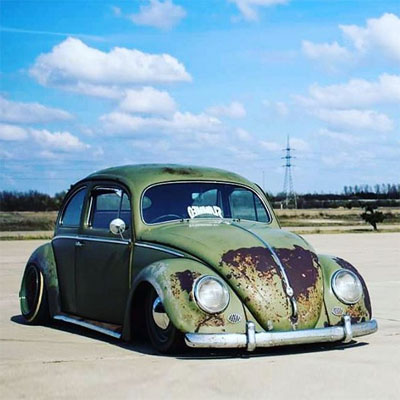
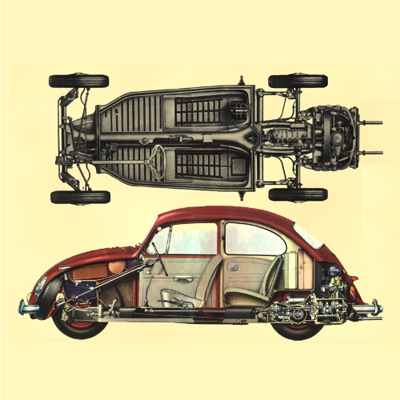
In 1934 Adolf Hitler asked Ferdinand Porsche to design a peoples car. The car had to be economical to run, cheap to build, seat two adults and three children, easily maintained, air cooled, and was to be sold for 990 Reichsmarks (ten months average salary). The Volkswagen ‘Beetle’ Type 1 was the conclusion and it was to become the most successful mass manufactured car ever. Production ran from 1938-2003 in which over 21.5 million were made all using the same platform. Hitler introduced the car as the Kraft-durch-Freude-Wagen (KDF-Strength Through Joy Car); Kraft-durch-Freude being the official leisure organisation of Nazi Germany but it would soon become the KDF car for everyone. The car was produced in small numbers until post World Wars, when the bombed out Volkswagen factory was saved by the English army. In 1949 Heinz Nordhoff was appointed director and production increased dramatically. The car was particularly successful in the 1960’s as the post War baby boom took off and it is synonymous with the hippy and beach boy music culture of the period. Cost, efficiency and ease of maintenance all aided to the cars longevity and endurance but the versatility of its platform base not only kept the cars forever on the road but often gave them a second life; a life incognito.
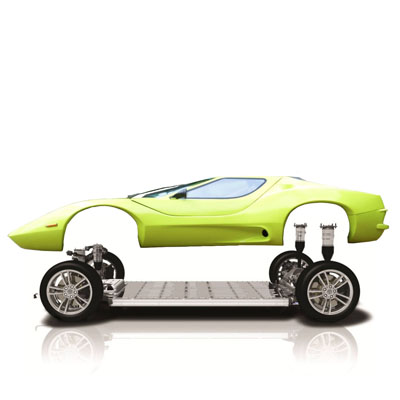
The VW Beetle platform proved so popular and versatile that it soon became the basis for several replica cars. Many small companies set up business using the VW Type 1 platform for their products e.g. Chesil, Karmen, Nova, Puma, Meyers-Manx, R.A.T. between them producing replicas such as Porsche Speedster, Piper P2, McLaren M6GT, Beach Buggy, Ferrari Dino, Bugatti T35. The flat platform with the bolt on body, although popular, was not the direction that the car industry would take as it developed ever more sophisticated monocoque designs. The monocoque with its bolt on sub-frames provides a level of passenger safety unobtainable with the early flat platform designs. The modern mass produced car body is made from a lightweight sophisticated origami of folded steel, pattern cut and welded into a strong protective carapace exoskeleton; a beautiful object in itself. Contemporary car design would seem to have changed direction once again and the flat ‘skateboard’ platform has returned with the development of the electric car.
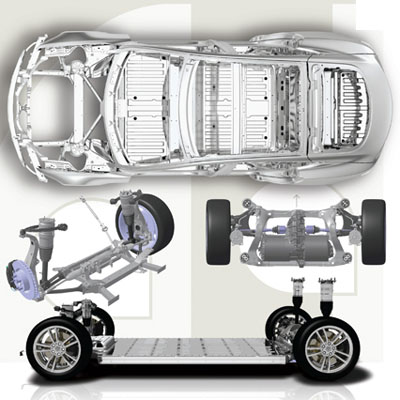
The electric car is a battery deck with wheels; its components and assembly resemble that of a simple electric toy car. Nissan, Renault and Mitsubishi share an electric car platform, others will follow suit. Open source platforms have already appeared although most of these are crude and little better than the Beetle Type 1 chassis of 1938. The battery has determined the design of the electric car skateboard platform. Batteries are heavy, still have relatively low energy density and are therefore required in considerable numbers. The desire for as low a centre of gravity as possible, easy access for complete battery swaps, electric motor maintenance and quick recharging also contribute to the flat platform design. If electric cars continue along this design path to its logical conclusion, even when battery energy density is greatly increased, all platforms will be very similar if not identical and interchangeable. The electric car platform would consist of a battery deck with whole interchangeable battery packs accessible from below, four small electric motors, one per wheel, set inboard with floating drive shafts, inboard brakes and four wheel steering. With this combination and computer controlled independent wheel speeds, direction and steering, the platform would be at its most versatile. Only a unique or unforeseeable battery innovation or alternative fuel source would disrupt this outcome. Computer controlled wheel speed, direction and steering would allow the car to turn 360 degrees on the spot by reversing opposite wheel direction. Four wheel steering would allow side drift parking as well as performance options at speed. Vans, cars and cabs would all share the same platform, whether autonomous or manual.
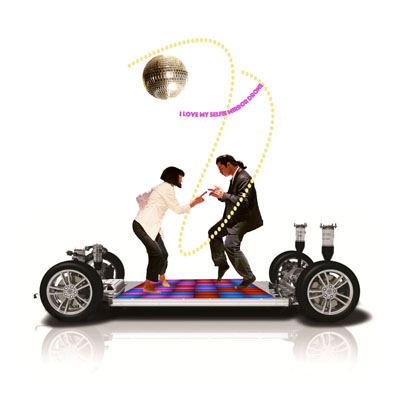
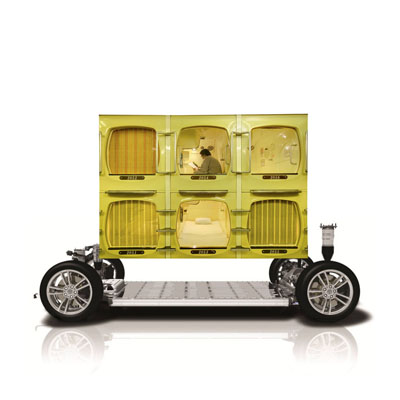
So will the electric car become a milestone within the continued evolution of the petrol car or will it become a completely new product. The autonomous vehicle with a greatly simplified, computer-controlled interface, will affect transport evolution both on the road and in the air (see text 191016 – A.I.viation). Is the destiny of the electric car to be a range of accommodation shells set upon a utilitarian shared platform? Possibly for example in the form of – the dispenser, the bedroom, the boardroom, the short commute, the prestige, or will other design dynamics influence development direction. The indeterminate criterion of present electric vehicle design is hinged around range. This is both the weakness of the electric car and yet the greatest potential for informing future designs. In the ideal, everyone has two cars, a city car and a rarely used distance car, though this is obviously impractical. These issues change from country to country and are dependent on other infrastructure developments. Dense European cities have different needs to sprawling LA suburbs. Improved public transport would negate the need for a city car just as shared car-pooling of long-range cars negates the need for a Grand Tourer. To resolve both issues with one product is a probable interesting design challenge. The small compact city car that morphs to a Grand Tourer is not necessarily science fiction. A compact car that extends its wheelbase to increase stability at speed is not a new concept. Buckminster Fullers D-45 of 1942 would be an early example and other designs have followed. The cars shell remains the same and the wheelbase extends to increase luggage and battery storage space. The second battery unit could well be the home storage battery interchangeable with the cars.
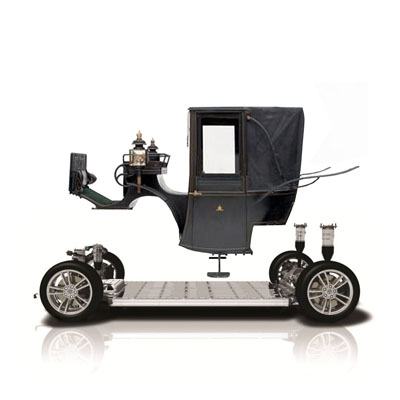
Either development of the electric car, the platform with a range of bodies, sleep pods and the like, or the extendable transformer car creates a new product type. The electric car has already greatly reduced the number of components and moving parts compared to its carbon fuelled alternative. This simplification of the base platform combined with increases in software sophistication, including autonomous driving, shifts the emphasis and purpose of this product. The car may no longer be solely a utility for transportation but instead a multi purpose extension of the home complete with shared IT and energy storage facilities. It was noted in the text of 290716- Electric 1 that the horse and carriage was never intended to be an owned utility but instead a shared resource hired when required and the contemporary electric car may well revert to this role. It should also be noted from the same text, that just as the first petrol cars adopted the typology of the horse and carriage, vis-à-vis, with driver sitting outside and on top, the electric car adopts the form of the petrol car. The petrol car was a new product and not a horse and carriage and the electric vehicle is again a new product.
Images from left to right. 1-2 VW Beetle, 3 Tesla, 4 Tesla & Nova, 5 Tesla & Disco 6 Tesla & Sleep Pod, 7 Tesla & Carriage.
The Surrogate Twin