
200517 – Giacometti – Tate Modern, London SE1 > words
The work of Giacometti is well known and every art or design student has been educated to like him. He is one of the staples of Post War sculpture along with Henry Moore and Barbara Hepworth. Giacometti’s work has further credence through the essays of Jean Paul Sartre and for once the text and subject spoke with one clear voice.
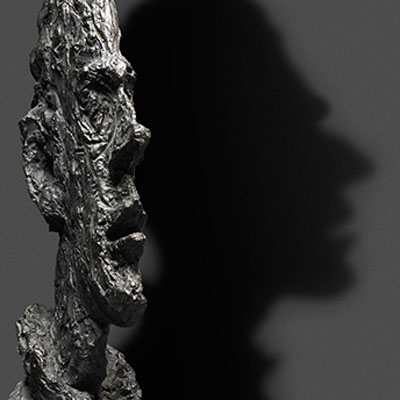
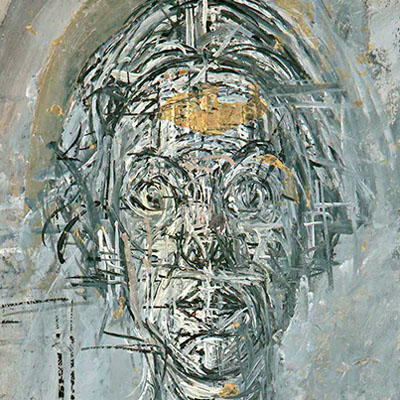
I have seen Giacometti’s work on numerous occasions throughout my life and have always liked and enjoyed it. His paintings and sculpture, frenetically worked, often reworked and revisited. When looking at the work one looks through the eyes of what one has been taught. So we search for and expect the essence of man, the existential man, we expect work that expresses captured distance, the distance of artist from the model and the distance of the viewer from the sculpture. Giacometti’s work is ethereal, delicate, fragile, vulnerable and within his sculpture and drawings all of this can be read. This creates an intimacy between the viewer and the piece, a knowing, recognition of something, or someone, once known but now just out of view. This may take the blurred form of the memory of someone or the silhouette of figures in the distance walking by lamp light in the rain. This blurred form could represent a conversation with your best friend that is thrown out of focus by an unexpected comment or unknown value. That instance when, for a second it crossed your mind, that the person you thought you knew becomes a blur with undefined proximity and then, as you stare, they slowly come back into focus and all remains solid. The distance to the people we know best, our closest friends, is more than a physical entity, it is an understanding of who they are and of what one is and their inter-dependent relationships.
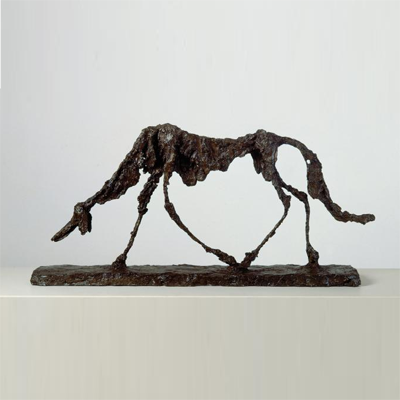
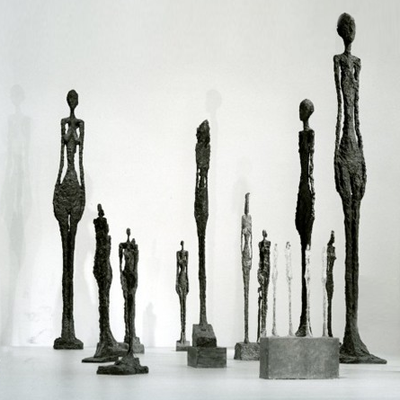
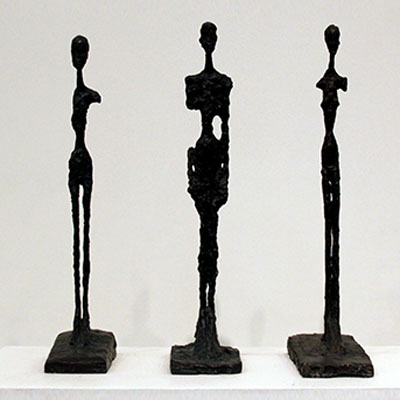
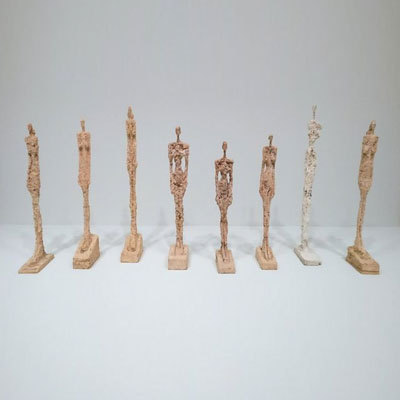
So why was this exhibition any different from those I have seen previously. It is partly because Giacometti’s works are usually viewed in isolation or as small groups. This personalizes them and the viewer’s relationship with them. When searching for the essence of man one assumes that essence to be his character or the very things that define him. This is a personal search and provokes a first person subjective interpretation. The artist’s process of reduction, the scraping back of the clay or plaster leaves the marks, the record of this search, for character, for essence. Essence described as such is a noble quality, the spirit, the soul, the personality, what it is to be human. In this exhibition, when a room is full of standing Giacometti’s the essence takes on a far more brutal truth, it is haunting, a collective murmur, a ghostly memory. It is impossible to not recall that Giacometti lived in Europe through two World Wars. However distanced he may have been personally from these wars (he lived in neutral Switzerland during these years), the walking dead that were the queue’s of the returning troops would have lined many a street in every village, town and city. A shocking reminder of men stripped to the core. The queues formed by lines of ghosts in the carapace of a patriotic uniform, the standing dead, skeletons without emotion, hope or belief. Flesh haunted merely by the memories of the men they once were. Essence here has a far more sordid truth, the existence of the survivor, those that cling to life through primordial instinct rather than desire. Together Giacometti’s sculptures recall European man caught within the trauma of the immediate post war aftermath.
The bringing together of all these pieces, to be able to view a whole life’s work within a short walk through several rooms reveals something equally disturbing about Giacometti’s methodology. The work portrays an obsessive, compulsive disorder of a repetitious returning to a recurring theme. We are told that Giacometti sculpted relatives, friends, wives and mistresses but when the work is grouped as it is now, the feeling is that he sculpted one aspect of one person every day for 50 years. A continuous and never ending search for himself and his alignment to what it is to be human. Following the years of atrocities that man inflicted on man the essence of what it is to be human would be the most difficult question of all to answer.
The Surrogate Twin
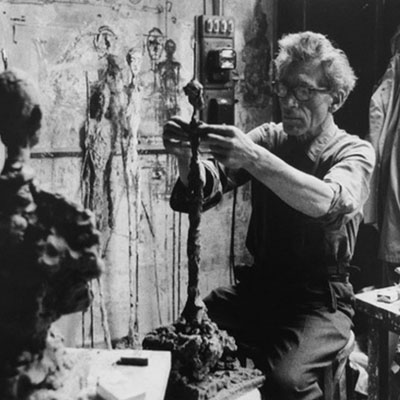
Images left to right 1-6 Giacometti, 7 Giacometti working in his Paris studio