
280416 – Angry Light – London > words
Rough and ready to brawl, rejecting the idealised compositions of the Renaissance Caravaggio painted up close and personal. He painted what was there, disease, decay and dirt all squashed into a flattened and compressed picture plane. Lighting flashing angry diagonals across the canvas, orchestrating the eye and unfolding the narrative, all set upon a darkened background. Caravaggio painted the light of the basement, the dive bar, the back street brothel, the light of the alley, intense one directional, splitting. Light that lands on his subjects like thrown fire burning patches from the canvas. The spaces are shifty, shady, squalid, the inhabitants dubious and suspicious. This was the Rome that Caravaggio occupied in the late 16th century. Doublet’s, daggers and dueling, ready to fight over a misplaced smirk or a poorly directed comment. Life day by day, hand to mouth, fight by fight, in the back streets of Rome, the underworld far removed from the Renaissance Papal elite. Supreme talent wrapped in a rough outer case.
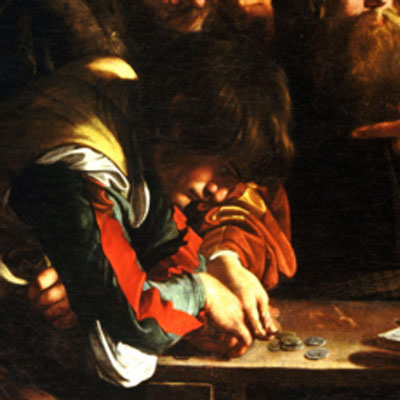
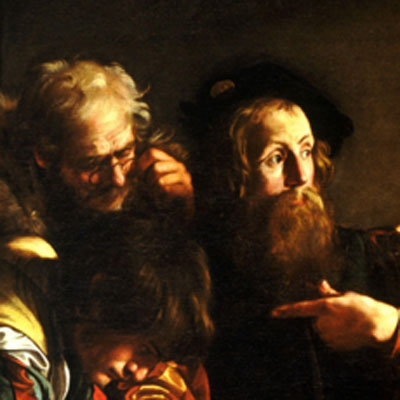
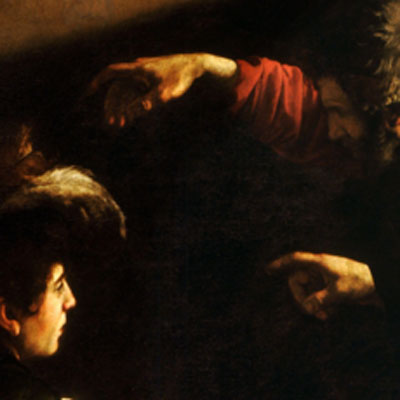
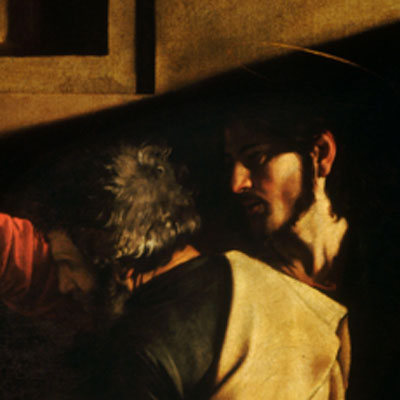
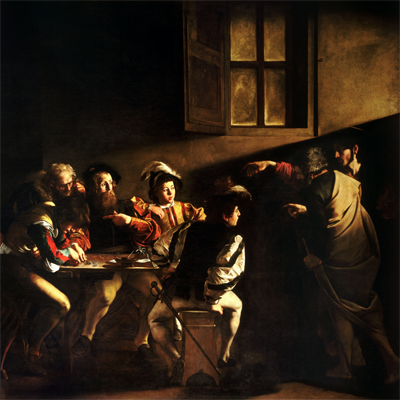
Caravaggio’s personal representations convert the mythological to the everyday pulling flying disciples off of the Papal ceilings to sit them on bar stools around an empty table in a lowly tavern. In The Calling Of Saint Mathew the prosaic is interrupted by the miraculous but to most of the bystanders of the composition the event goes unnoticed. Jesus and Peter enter the tavern barefoot wearing period contemporary clothes. Jesus points an accusing finger at Mathew. Mathew could be the bearded male third from left but the composition has more potency if he is the young male fiddling with the coins on the far left.
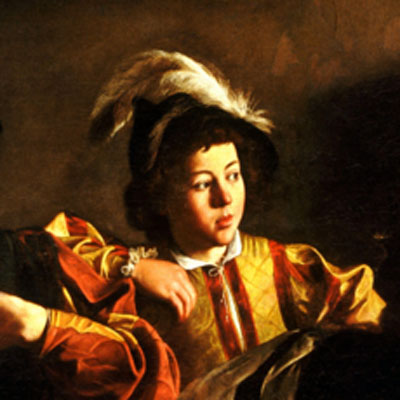
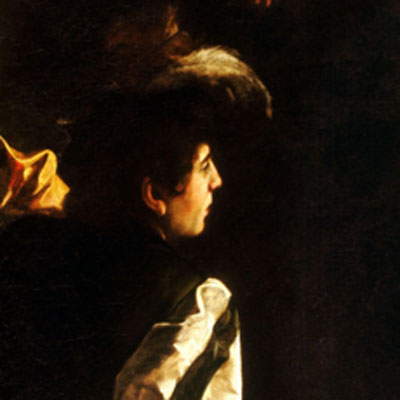
The magic of the painting is in the lighting; here tenebrism is used with deliberate mystery. Light is used in two ways. An upper window top right sets up a diagonal across the painting and this aids the narrative by giving it direction. A second light source falls on aspects of the characters, their faces and gestures. This second light is the one of interest as its source is unclear. Some of the light is frontal, some low as it illuminates under the table and some comes from the right, possibly from an open door through which Jesus and Peter entered. The light from the upper right window is above the majority of people in the composition. The light from the assumed open door (off frame) would need to travel through Jesus and Peter to hit the table. Jesus and Peter throw no shadow. Any frontal light, which is the most probable direction for light to be able to hit all five figures to the left of the composition gathered around a table, is shadowed on the left. This second light is used to split the composition into two groups. The group around the table sit in a sphere of multi directional light and as such are illuminated. Jesus and Peter stand in a more natural light that falls on their backs and obeys most scientific laws. The brilliantly lit hand of Peter, seconding the motion of Jesus’s hand, being the exception and is unnaturally lit. There is a dark chasm that divides the two groups in the composition. Into this dark chasm are the pointing accusing hands and here they float as an offering, a salvation. The picture could be read as a tripartite with a dialogue between two groups across a dark void and as such is symbolic.
Light adds a super-real element to the painting increasing its intensity. It highlights and accentuates, focusing on aspects of the narrative to aid decryption. Light sets the scene by establishing the space, location and atmosphere in which the meeting takes place. Light aids the dynamic of the composition by setting up a diagonal to aid the reading of the narrative whilst it moves the eye across the canvas. Finally, light emphasises the spiritual through mystical illumination, it splits the two groups of the composition into deliverer and receiver.
The Surrogate Twin