






141016 – The Teenage Entrepreneur – London > words
I was recently asked “what three skills are most important for a successful entrepreneur?”
Entrepreneurs are on trend at the moment, apparently everyone with a beard and a coffee shop is an entrepreneur. It is a frightening over used word and sadly follows the fad’s of the Aerobics Teacher, the DJ, the Chef, The Yoga Teacher, The Wellbeing Coach, The Blogger, The Social Celebrity, etc. They are generally posts for people with few skills and great followings and are therefore marketable to the mainstream. So the word entrepreneur like the others on the list makes me cringe. The web is full of text on what makes a successful entrepreneur along with get rich quick schemes and how to be a millionaire and work 5 minutes a week, followed by buy my book or subscribe. But there are some incredible entrepreneurs out there.
Salesman
Team worker Cross-pollinator
I would list the three key skills of the successful entrepreneur as the above with the Salesman being foremost and Team Worker – Cross Pollinator running equal second. The word inventor or director could be substituted for cross-pollinator but with the word inventor one first thinks of objects and with the word director one first thinks of organisations. The cross-pollinator works across inventions, finance and organisations.
Many of the most successful entrepreneurs come from the US and the key to this is in the words, Show-Business. Show business is an American invention, the business of showing or making widely accessible. Business and to show are intrinsically linked. Americans understand and invented the power of popular culture. If one can see the clarity of turning popular culture into a business it takes little to see that in reverse and turn business into popular culture. The salesman is the ‘show-man’ the man that shows, he is the market man, the guru, the entertainer, the performer. When we say salesman we think of door to door or the guy behind the counter in a shop but to sell someone something you have to convince someone that there is value in that product or service. The product or service has to be ‘sold’ to both the client and the financier. Even the word ‘sold’ here is used as a metaphor as it is not physically selling but instead represents the idea that converts others to share your confidence in a product and its potential. The salesman convinces, he is a seller of confidence. Many of the truly successful entrepreneurs were neither inventors or makers but instead sellers of confidence.
Henry Ford neither invented the motorcar or the production line
Elon Musk neither invented Paypal or Tesla
Steve Jobs neither invented the computer or its software.
Many entrepreneurs such as Alan Sugar and Charles Dunstone have no inventions but all see the potential in a product a service or an idea and have the skills to make others see that potential too. Many entrepreneurs start with a very simple idea and then maximise its potential. In the age of the internet this has benefitted from extreme leverage. i.e. an image that fades after a few seconds becomes Snap with a soon forth coming IPO valuation of $25 billion (due March 2017). Others started equally simply and include a photo compare hot or not – Facebook, a web search by page rank – Google or discount book sales – Amazon. Once an income stream through market capture is established the potential entrepreneur has the capital to truly become an entrepreneur. Many salesmen time the lucky break but the key to the true entrepreneur is not what he does first but what he does next.
Entrepreneurs grow their revenue streams through diversification and they use pre-existing revenue streams to expand into new markets. Entrepreneurs are well aware of their own limitations and quickly build teams of the right people for the right job and delegate work. Once teams are established the entrepreneur directs through cross pollination mixing ideas, inventions, marketing, advertising and finance. Success comes from this directorship, knowing which projects to run with and which projects to drop. Entrepreneurs are rarely first to market but instead capitalise on the groundwork of others. The groundwork of others is the commodity used to ‘convince’ and the showman sells this ‘confidence’. As the success of the entrepreneur grows the groundwork is internalised as the commodity of confidence is established within the brand of the entrepreneur. This allows the entrepreneur to run the moon shot projects that develop into the totally new products and markets and to do this the development teams constantly need to be remixed and refreshed.
The internet has lowered the age of the successful entrepreneur. Unicorn companies, those with valuations over $1b have been created in only a few years. This has created many financially powerful young people and the consequences of this will take time to evaluate. Youth tends to be more cavalier with its attitude towards risk and at present with a planet that needs such radical overall this is a good thing. Doing something is better than the old school doing nothing. However, tackling so many high risk projects will have considerable financial consequences down stream, fortunately entrepreneurs also have focus and perhaps this will avoid the downside of risk. We live in the times of the teenage entrepreneur where the rest of the world holds the baby reigns blindly following our new leaders. What type of world will they create only future history will tell?
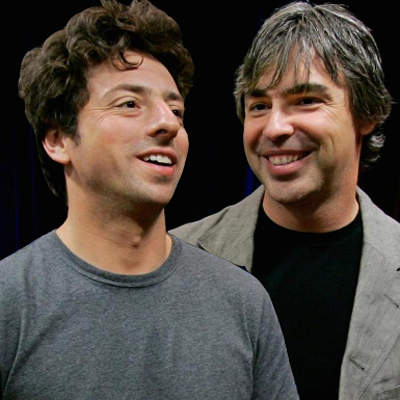
Images from left to right. Elon Musk, Victoria beckham, Jeff Bezos, Natalie Massenet, Larry Page and Sergey Brin, Aneeqa Khan, Mark Zuckerberg.
The Surrogate Twin