
260919 – Chocolate Jesus – London > words
It has been a continuing surprise to see how much time Richard Dawkins has given to discussing religion. It seems strange that an evolutionist should waste so much of his time talking about a medieval means of social control when consumerism now provides the means to organise the crowd. Statistically religion is still frightening with 84% (Pew Research Centre 2012 Wiki) of the global population still believing in some form of supreme being and life after death. This percentage is still high in developed countries and America is one of its leaders with 52% attending church at least once a week. In North America only 5% of the population describe themselves as atheist (Demographics of Religion Wiki).
Christianity in Europe has historically been inseparable from the State. When the Roman Emperor Constantine first converted to Christianity in 337AD, the religion began to gain in popularity. All previous polytheisms were soon to decease. By the early Middle-Ages the power of the church out-grew and oversaw those of Kings and countries, helped unify laws and establish common codes of morality. Church Law became intrinsic to State Law. The Church had its own means of fund raising through taxation and donations. Fear of the unknown kept the Godly good and Christianity grew very rich.
Religion has never only been a means of social control it also had a strong business model. Through the accumulation of wealth, religion had access to power, amassing armies to fight for infinite causes fuelling the further accumulation of great wealth and power. During the Middle-Ages, with the average life expectancy in the low thirties and the quality of life so poor for the majority of people, it is of no surprise that the people flocked to the promise of transcendental betterment. Religions have always had additional commercial objectives usually obtained from rents, taxation or gifts, often little more than payment of bribes to help obtain absolution. This wealth would then be invested in property or land that in turn generated more wealth, as in a typical rentier finite economic social system.
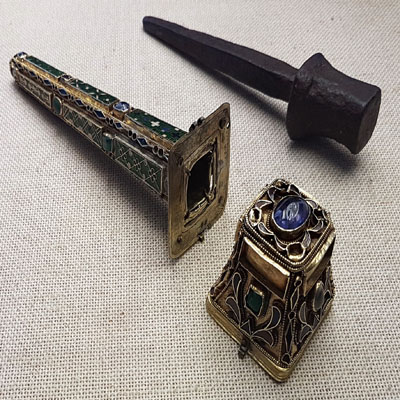
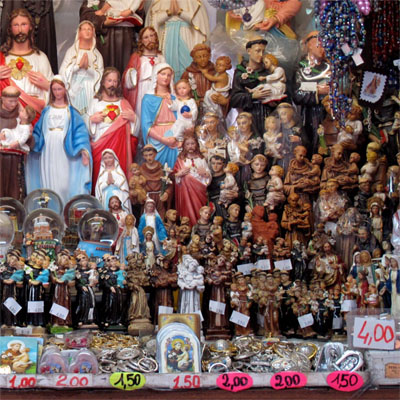
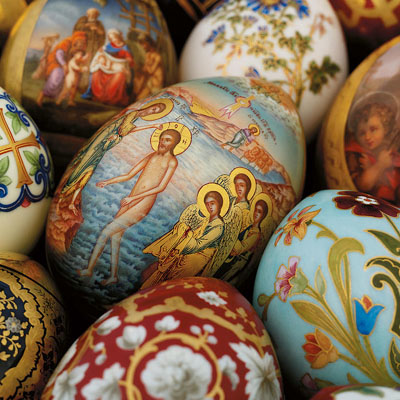
Religion, however, was also commodified, by among other things, the religious relic. The preserve of the religious relic for veneration, had and still has an important role in many religions including Buddhism, Christianity, Hinduism, Islam, Shamanism. The market for relics, and the extremely high prices paid ensured that there was always a constant supply. No other product could increase its margins quite like the religious artefact combined with the myth of Holy provenance. Fakes were plentiful and always available. If one could not afford an original item, a known fake or representative souvenir was the next best thing. The religious souvenir was a means of scaling the business model of the ‘authentic’ religious relic, where each relic could be multiplied a thousand-fold. An official souvenir, a souvenir blessed by the Holy was a license to print money. A license not to be missed and to be well used as an intrinsic component of future business models.
Commercial enhancement by provenance plays its part today, typically in corporate brand products such as designer t-shirts or signature cosmetics. This is corporate endorsement of corporate provenance. The latest form of global idolatry is for any product endorsed by the myth of the global internet celebrity. This is the most peculiar take on the endorsed product and is itself a consequence of globalisation and popular culture. An internet celebrity gains celebrity status via media saturation. The internet celebrity needs no particular skill or ability, they do not need to make the product or have any affinity with it, they simply need to endorse it. The popularity of the celebrity is the endorsement value. Within the structures of the internet popularity can be bought. The internet’s celebrity popularity is also often gained by the way in which the celebrity endorses the product, often this is a performance. The value of the celebrity and the value of the endorsement of the product by the celebrity are intrinsically linked. This is a circular, self-promoting activity where product and endorsed provenance gains the following of the faithful in popular culture.
Why then, post Enlightenment, post Industrial Revolution, post Post-War Consumerism, does religion persist? Within the developed European countries there has been a slow but steady fall in religious believers. However, America, the country that invented Consumer Capitalism, the percentage of religious believers runs close to 95% of the population. How does Corporate Consumer Capitalism sit so comfortably with the idea of deities and an afterlife? One key to this is that religion in the US has never been as intertwined with the formation of the State as it has been on many other continents. In many continent’s religion, and the formation of State have been inseparable. Religion in the US is instead an independent. In fact, it is a multiple independent, with numerous fractions practicing variations upon a Christian theme, each competing with the others for congregation. American religion is a business full of networks and showmen, it has been commoditized and is cash generating. Congregations fill stadiums and the Hallelujah feelgood factor is a hard sell. US religion is Walmart with hymns. Medieval religions practiced that if you are good (well behaved) and donate enough money or time there is a space for you in the afterlife. This required sacrifice whilst here on earth for the promise of better times to come. The US Christian religions have a ‘have your cake and eat it’ approach, a good time here will be followed with a good time hereafter. All you need to do is spend, spend, spend. All can be purchased, including absolution and one’s transcendental tickets to heaven. The relationship between capital and absolution is key, to spend on a good cause purchases the right of passage.
In the US there is a convergence of two controlling social systems, that of Religion and that of Commodity Capitalism. This is a syncretism. A religious syncretism is usually seen during the transition from one dominant religious system to the next. Historically these transitions recur. When a new religion is adopted fragments of previous religions continue, some are incorporated into the dominant religion. Often the easiest way to expand the territory of a religion is through incorporation of other religions. Eventually when fully incorporated the original source is forgotten. This is familiar territory of any business, smaller businesses, ageing or upcoming, are bought up for their assets or intellectual property. Sometimes the acquisition is generative growth positive, at other times a business may have been simply bought to shelve the competition. Business within today’s popular culture is a winner takes all event, where the control of the infrastructure and the gateways allows for a constant low risk rentier income. Corporate brands or internet celebrities control the gateways. Religion at one time controlled all infrastructure and all gateways, even transcendental gateways. There is no better way to expand one’s commercial domain than via the infinite virtual space of the hereafter or the internet. Heaven as a virtual IP address has yet to be constructed, a market as yet unexplored.
In the US as religion developed outside of the State and independent to it, it was possible for religion to have an open commercial agenda. In a competitive market lead economy, it was necessary for religion to fully adopt this commercial agenda. Growth required finance and survival among the many competing branches of US Christianity required popularity. Popularity in numbers and popularity in the consumer experience. The independence of the church from the State allowed the church to split into numerous derivatives each with its own esoteric interpretation of Christianity. These compete for congregation against each other and for market share. High popularity is essential for both survival and wealth generation. Convenience, accessibility and ease of use are key to attract new members. Recurring recognisable rituals, a strong social agenda, user enjoyment, ensure that the service is ‘sticky’. Every aspect is made user friendly e.g. credit card donations, The Drive Through Wedding, The Drive Through Funeral Home and Rent a Priest.
In the nineteenth century the great train stations were the temples of the Industrial Revolution. In the late twentieth Century the temples of the powerful nations were the airports, gateways to and representative of, a nation’s standing. In today’s culture of global consumerism, the flagship stores of the corporate designer brands are the places to which we travel to pay homage. Outrageous in their ambition, cost and regularity of their perpetual re-designs. These stores lined in exotic materials and finished with exquisite details can be found in the premium zones of every major city.
The Apple corporation take this religious affiliation to an extreme both in ceremony and within its stores. Each year Apple launches its new products or newly improved products. This is a venerable event hotly anticipated and attended by the faithful. Those lucky enough to obtain access sit through several sermons that last many hours. The speakers are applauded onto the stage, every incremental improvement receives a standing ovation. Every detail, every radius, every surface finish is described endlessly. The speeches are tutored, rehearsed, choreographed, embellished with laboured prose. The speakers have had their drama lessons and do not miss the long pause for reflection or the quip of self-sanctification. They preach to the converted, who each hold a goody bag of hallowed objects, the sticker, the pen, perhaps the time sensitive discount voucher. It is hard to imagine Porsche offering such a similar saccharine event.
The Apple stores continue the religious affiliation of the annual ceremonies. They are a profound contemporary reflection of a religious space, with a light filled nave sitting above a crypt. A typical Apple store sits as a pristine glass box on an open piazza or urban square surrounded by the giants, the commercial towers that one would expect to find in city centres where every square meter is maximised. Yet the ground floor of an Apple store is empty, an interior urban plaza for meetings, teachings and conversions. From this light filled space one transcends down a designer sanctified staircase to the crypt, here regimentally organised are alters of commerce bedecked with sacred objects.
In the Italian store of Apple Piazza Liberty, Milan. Apple go one step further, to paraphrase Moses 21:14
“Then Job stretched out his hand over the water; and the Lord (F) caused the water to go back….. and made the water into dry land, and the waters were divided. So, the children of Apple went into the midst of the water on the dry ground, and the waters were a wall to them on their right hand and on their left.”
Apple products and stores are without question high quality design, they do not need a gushy sermon to sell but showmanship is the American way and it is applied with indifference to all products good and bad. It is hard not to think of the scene from the 2015 film Lord of War where Nicolas Cage, an American salesman, steps over the very recently deceased body of a guard and complains that he can’t sell a used gun.
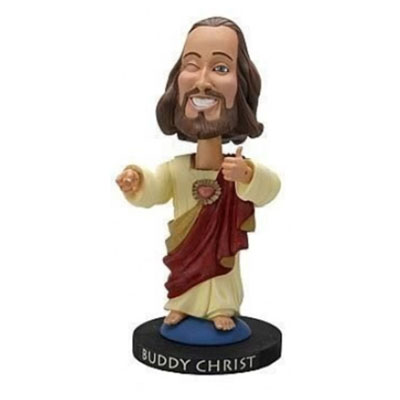
It is almost impossible to have a conversation in America without talking about money, American life revolves around the endless role of selling. The entrepreneur is no longer someone who invents, he is the showman that sells what others have invented, a performance artist, a salesman, a seller of confidence, a confidence-man and unfortunately often a con-man. The entrepreneur has reached a mythical plateau in our modern social hierarchy. We all follow a Sales Rep. A Sales Rep empowered by showmanship and the instant global availability of the web. By selling ‘confidence’ the entrepreneur transfers his perceived belief in the power of the product or service to the client. In America the country that re-invented the contemporary film and music industries, showmanship and selling come hand in hand. Everything is packaged and performed, sporting events to politics, high tech to low tech, fashion to faith. The US are masters of the Event and Event Management and all events are merchandised. At these Events one can buy the accessory you never knew you needed, the t-shirt, the logo mug, the fan teddy, the window sticker, the key fob, the Chocolate Jesus. The souvenir, a proof that you are one of the faithful, a financial commitment to one’s belief.
“Well. It’s the only thing that can pick me up. It’s better than a cup of gold, See, only a chocolate Jesus can satisfy my soul”.
Tom Waits 1999
Images
1. The Trier Nails from The Cross of Christ
2. A Souvenir stall in Padua, Italy
3. Souvenir ceramic eggs from Russia
4. A nodding head Buddy Christ
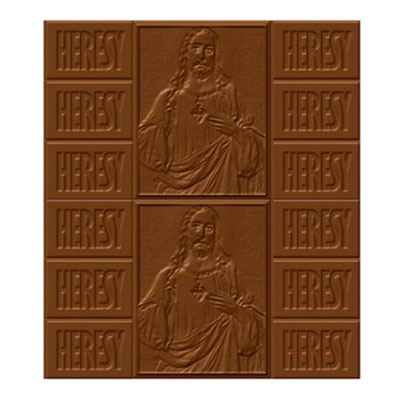
5. Heresy Bar
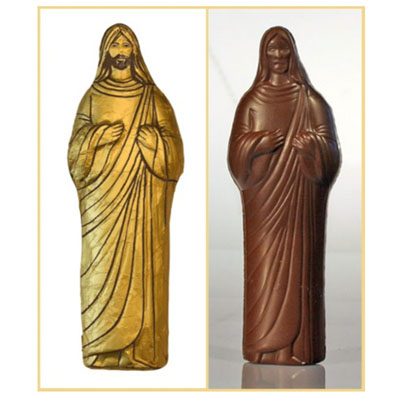
6. Chocolate Jesus
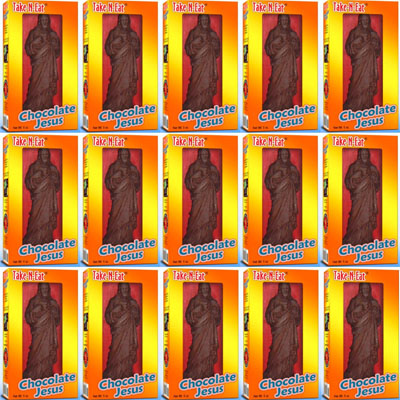
7. Take and Eat JC