
040816 – Synthetic Landscapes 4 – Canopy > words
Synthetic Landscapes should be read 1 through to 4.
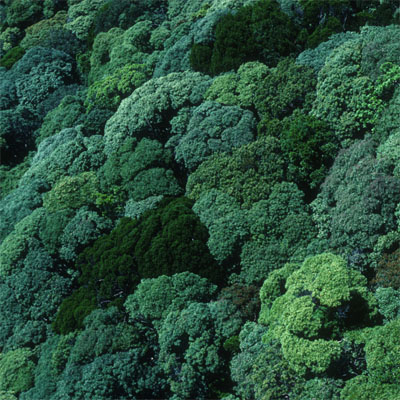
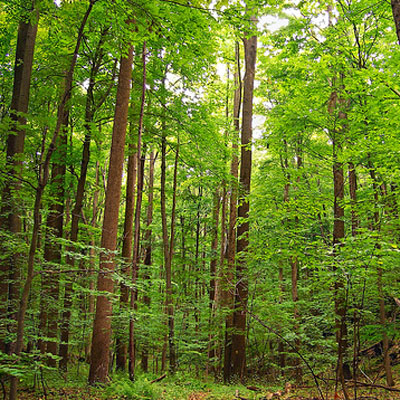
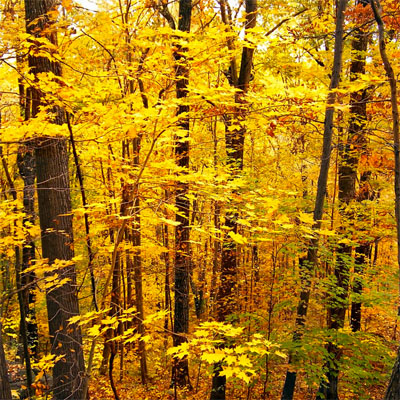
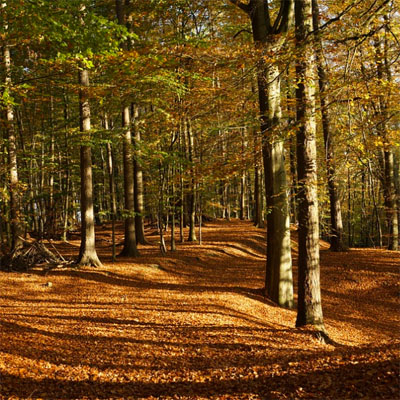
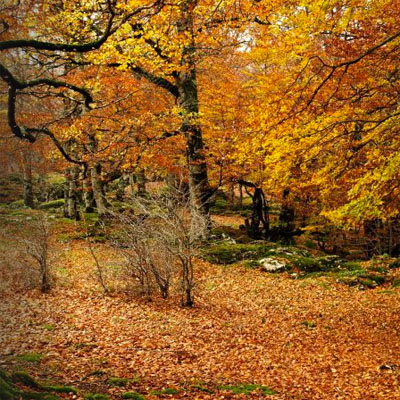
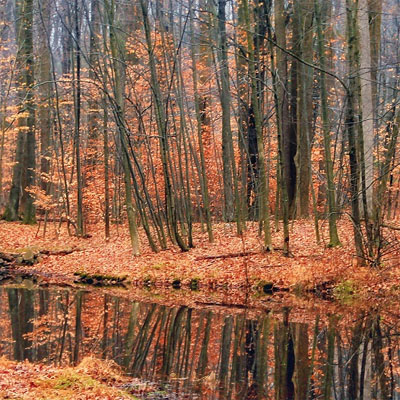
Canopy is not a synthetic landscape, it is the natural three dimensional immersive responsive environment in which we are both actuators and reciprocals of its system. It is the landscape that we have forgotten as it has been removed from nearly all of the developed world. We continue to see nature as pastureland, viewed from the comfort of our car, a continuous surface of green rolling hills. Today’s pastureland was once forest, ancient, wild and untamed, a dense impenetrable mass of moss, lichen and fern, dark, damp and full of life. We wiped these systems away to graze our cows and grow our corn. There is a need to reintroduce the tropical and temperate forest so that it can again become an integrated part of the sustainable world.
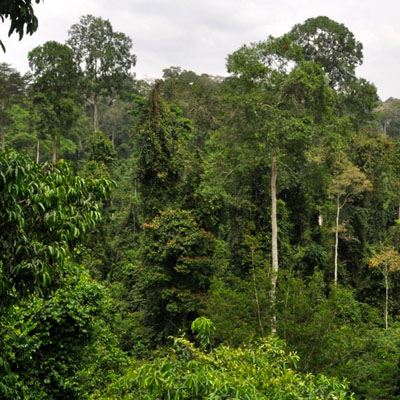
The rain forest is a complex system of interrelated species. The rain forests are a dense layered mass of vegetation with each layer having a specific role and housing its own eco system and yet together they work as a symbiotic system. The rain forests are typically wet and tropical and are home to the majority of all species on earth, they re-oxygenate the air and consume carbon dioxide. The forest floor is a rich but shallow new earth and the symbiosis within this ecosystem’s layers continues below ground. Rain forests are dynamic living environments and as such the stratification is not always clear with many overlaps throughout the forests development. The rain forests water cycle is an efficient circular system. Plants roots take up moisture and nutrients into the canopy, falling rain is often caught by the canopy. During the day as the forest heats up water evaporates forming clouds that in turn become the next days rain. The process feeds the forest and purifies the water, the nutrient cycle is self-feeding. Rain forests have constant climate and constant rainfall allowing the trees to be deciduous yet evergreen, continuously growing and shedding leaves. Rain forest soils are often infertile, shallow acidic and stained red due to high concentrations of iron oxide. The soil needs the forest as much as the forest needs the soil.
Layer Stratification
The emergent, the tallest of the trees are those able to withstand strong winds and excessive heat, these may rise fifty meters above the ground (seventeen stories), some are able to reach heights of eighty meters. Their role is to break new ground to form the shelter under which new forests may grow.
Below this is the canopy layer a continuous coverage of foliage 30-40m above ground. The canopy is one of the richest unexplored habitats on earth with over a quarter of the world insects and half the worlds plant species. Many species never leave the canopy either to venture up to the emergent layer or down to the forest floor. Epiphytic plants grow within the canopy range, they attach themselves to trunks or branches and obtain all of the water and nutrients they need from falling rain and debris.
The understory or under canopy sits below the canopy, only 5% of the light that hits the emergent layer falls to reach it. Leaves become huge waxy plates that try to absorb as much light as possible. The understory is home to larger mammals.
The forest floor, the lowest level with only 2% of light reaching its surface where plants adapted to low light can survive. The forest floor is relatively clear with less diversity and speciality species that can grow with such low light levels. The floor is made of decaying plant and animal matter that decomposes quickly due to the humidity and heat. Fungi feed on the decaying organic mass that is rich in nutrients but poor in humus. Buttress roots are common in the shallow soil as there are few nutrients or minerals at depth. The buttresses are structural and the roots spread to a wide supportive base. Where the roots break the surface ridges help to channel water and fresh nutrients into the root system. Collectively interlocking root systems stabilise the soil and protect the weak soil from erosion. On average rain forests receives 2m of rain per year and this amount of water leaches soluble nutrients from the ground. Large mammals are able to roam the forest floor as it is has sparse vegetation.
Below the forest floor are the decomposers and these are vital to a nutrient dependent forest. Decomposition rates are high due to temperature and humidity levels as well as armies of microorganisms, bacteria and fungi each with a decomposition role. Nutrient recycling is essential as the below ground resources support the above ground biomass and all of its inhabitants. In breaking down leaf litter microbial organisms turn organic compounds into inorganic forms of carbon that can be used by plants. The microbial community respire taking up oxygen and releasing carbon dioxide.
Ecosystems benefit mankind in numerous indirect ways primarily through cleaning, air and water, and decomposing and recycling wastes. Ecosystem services have recently been given economic values and categories such as; supporting, provisioning, cultivating and cultural. The purpose of this is to try to add a comprehensible value to systems that work in the background supporting other economic or social criteria. The problem with this is that the values and assessments are still homocentric and not planet focused. Of the four criteria:
Supporting – services that are necessary to support all other ecosystems.
Provisioning – includes the provision of food, medicines, mining, water, minerals.
Regulating – carbon detoxification, waste decomposition, water purification, prevention of soil erosion. Cultural – would include scientific, educational, recreational, spiritual.
In summation the natural landscape, that of the forests, are three-dimensional immersive environments with complex integrated systems supporting a multitude of diverse species.
What is the difference between our concepts of landscape and wilderness? Landscape is allowed to be farmed as farming is conceived of as part of landscape. Wilderness is the unknown, undiscovered wild. It is conceived as the primitive romantic allocated to pockets of other worldliness kept somehow in isolation and suspension. The ecological and environmental as opposed to spiritual concept of wilderness is historically relatively new. The vital influence of independent beings outside of mans homocentric notions and rules is difficult for us to comprehend. The idea of coexistence, that we are part of a much greater whole alienates. The domestic landscape in any form is not a true wilderness, species diversity and proliferation need to remain untouched by humans. So in this over populated world how can the concept of natural exist?
Modern landscape is determined by policies, government directives, subsidies, global markets, where land only has a value measured by its economic return and the bias of that return is manipulated according to policies. This problem is compounded as all land is now owned, split into networks of estates and small holdings each with their own agenda. The concept of ecological coexistence is meaningless in such an environment. Short sighted political competition strives to support short-termism to appease the demographic popular mass. Global policies are powerless and perhaps only patronage can collect, save and set aside natural landscape. The constant depletion of resources through monoculture is unsustainable and their replacement with variations of polyculture at present unrealistic. We live in an ever-increasing synthetic world supported by synthetic systems and a reduction in human population is the only way to attain a balance.
So what can be learnt from these short essays on synthetic landscapes? Firstly we view things incorrectly, we are too close or too far away. The heart zooms in close and the intellect seeks overview but both of these approaches misses the point as they reduce landscape to surface, the landscape as the rolling plane or the flower as a smooth petal. We read landscape in the abstract, in books, from IT, from above high, in our towers or from the cliffs, or we walk on lawns and admire two dimensional compositions of arranged fauna. We flatten to overview, to control and understand and in so doing we have forgotten that nature is not like this and that we are part of it and not above it. In the essay Synthetic Landscape 4, The canopy landscape is truly three dimensional and we are engulfed by it, it consumes us and orders us, to inhabit it we have to live within its rules.
Secondly after surface we desire objects, totems, souvenirs, monuments, effigies. Our elementary three-dimensional understanding loves products. Architects are living proof as they have for centuries built objects to be viewed from above, studied first as drawings then as models but always viewed on the desktop. Even when built high in the city buildings are visualised in the mind as a totality, as a clearly defined object with an enclosing perimeter. Natural landscape is a dynamic, ever adjusting variable, an emerging responsive nebular conclusion of interrelations.
In conclusion, system diversity is essential to efficiency.
The Surrogate Twin