
220117 – 3D Collage – London > words
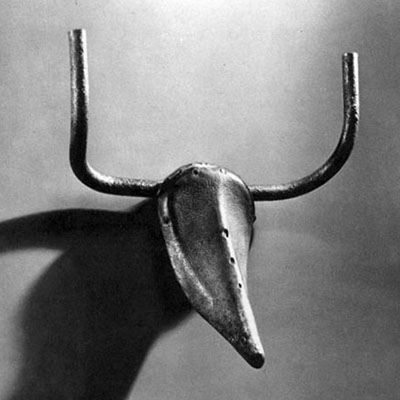
Collage, from the French coller ‘to glue’, the art of assemblage of different forms combined to create a new whole. Known examples of collage date back to 200BC but this use is mainly as assemblage or Bricolage. Collage as an art form is a twentieth century invention and a by-product of mass production and industrialisation, especially with regard to the printed or photographic image. Juxtaposition is a key element in modernist collage, references and signifiers often used to add conceptual depth to the composition of cubist and surrealist works. By the 1960’s photomontage had replaced many modernist ideas of collage and the photomontage space often occupied compositions with real perspective. In art collaged products are assembled to create something new. In car design this sometimes also happens.
The 1960’s was a strange time for car manufacturing. The US the automotive industry had grown on the back of the US oil industry and general Post War US dominance. Asian car makers were still in their early development stage. European car makers lacked the financial backing post war to re-tool their factories or spend lavish sums on R&D. As the US built muscle cars, the Asians built imitations and the Europeans were on make do and mend. Out of this unusual mix came a new type of inventive entrepreneur, that of the component car builder, building cars using off the shelf parts supplied by other manufacturers. TVR, Lotus, De Tomaso and ISO are four makes that immediately come to mind. De Tomaso (Mangusta and Pantera) and ISO (Grifo and Rivolta) had Italian bodies over US mechanics; these cars were aesthetically enticing but crude. Early TVR’s (Grantura, Griffith and Vixen) still had a hand made kit car feel. The master of component car production, despite continued poor build quality, was Lotus.
Colin Chapman (1928-1982) began modifying cars to use in competitions as early as 1948. This began with the Lotus 1, a modified Austin 7, and concluded with the Lotus 6. The early experiments gained public interest and with the production of the Lotus 6, (1952-57) Chapman was able to fabricate and supply kits for sale out of which Lotus Engineering was born. These early cars had a tubular space frame chassis and an aluminium body. The kits used parts from the Ford Prefect and were mainly used by privateers and enthusiasts for hill climbs and competitions. In 1958 Lotus cars produced the Elite for public sale as a factory built complete car (although this was also available as a kit). The car was innovative with the use of its load bearing glass fibre monocoque, had independent suspension all round and was low drag coefficient. The monocoque was advanced, but beyond the material technology available at that time it incorporated a bonded steel structure at the front to support the engine and bonded steel reinforcement in the body to support the doors. All bonding to, and junctions with the monocoque were never fully resolved. The car was expensive to produce, fragile and sold in low numbers (approximately 1000).
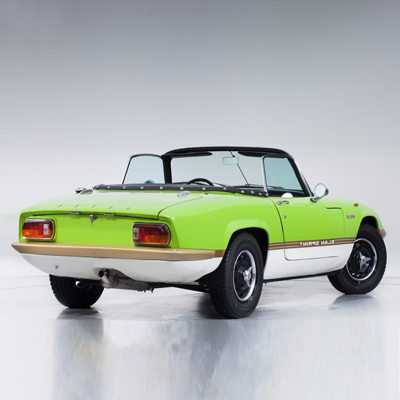
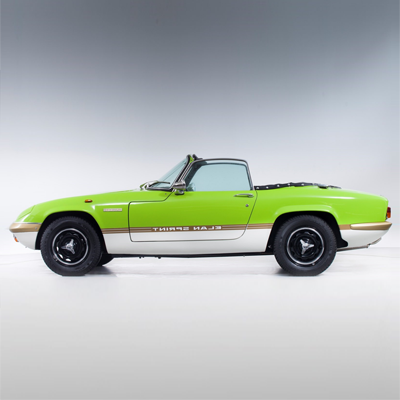
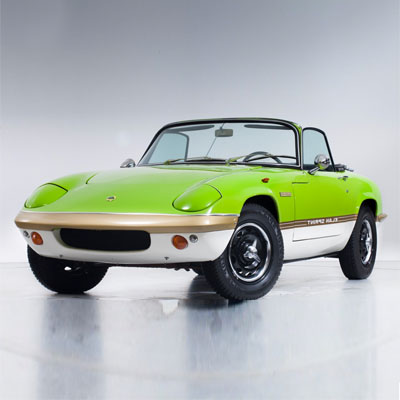
The Lotus Elan and Elan +2 (1962-75) was the design of Ron Hickman (of Workmate fame). The Elan was the beginning of commercial success for the company and a master class in component design. Putting a purpose built body over inherited mechanical components is fairly straightforward. Creating a pure seamless aesthetic whole whilst incorporating windscreens, bumpers, lights, door handles etc. from the parts bins of others is far more difficult. The Elan design was beautiful, the engineering ideas revolutionary and as an example of applied design collage one of the most successful to date. The Elan was a collage of economic necessity.
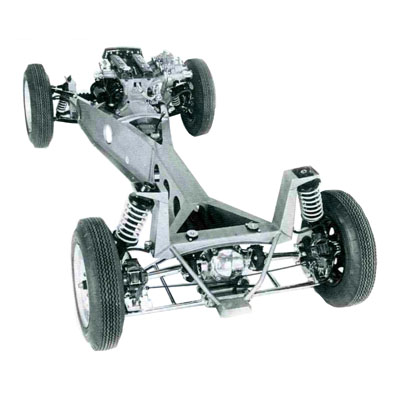
Key to the Elan concept was the 18SWG steel backbone deep box section chassis with Chapman suspension struts. It was strong, economical to produce and light at 75kg. This chassis would be used on the Elan, Elan+2, Elite and reversed to be use on the Europa. Further downstream the chassis would evolve for use in the Esprit. The chassis of the MG R-Type of 1935 may have inspired the Elan chassis but this was an all new revolutionary platform. The chassis has a V at either end where the opening of the V at the front houses the engine and at the rear the trans axle (Vice versa in the Europa). The car is light and nimble with a very good power to weight ratio (685kg /128bhp), the handling phenomenal with excellent cornering and braking ability and steady directional stability at speed.
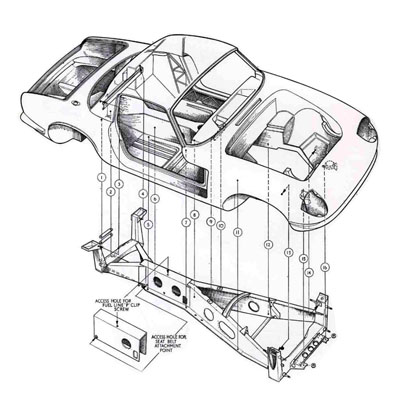
Onto this backbone chassis would sit the Lotus GRP monocoque and a whole menagerie of components from Triumph, Ford, Alfa Romeo, MG, Wolseley, Hillman and others. The monocoque was fabricated in seven pieces and bonded together as one whole. The design of the monocoque is the outcome of various inputs including ergonomics, aesthetics, aerodynamics, structure, brand identity and styling. GRP is little more than a stiff glue, held solid in space, holding a three dimensional form that supports this collage of assorted parts. In the 1960’s art world high collage was the photomontage works of Richard Hamilton. In the design world of three-dimensional applied collage the Lotus Elan is hard to beat.
So was the Elan a good design? The answer has to be yes and no. It’s innovation, power to weight ratio and interior and exterior styling were all ahead of their time. Lotus’ work in Formula One influenced the design of the road cars. The biggest design fault was that the Elan chassis offered no side impact protection. The Elan build quality faults were in part a condition of the economically challenged 1970’s. It was a difficult time to start a company that sold motorcars.
Lotus Elan and Elan +2
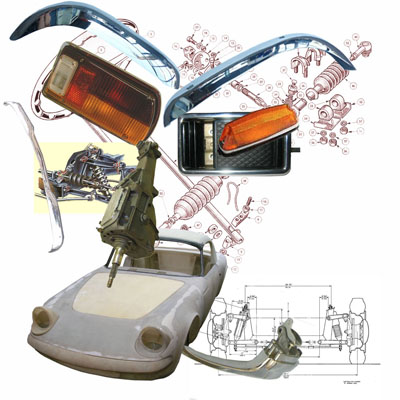
Some of the parts that make up the Elan Collage
Alfa Romeo rear lights
Austin 1100 door handles
Ford Anglia front bumper +2
Ford Capri Front windscreen
Ford Capri door window glass
Ford Capri brightwork
Ford Consul Corsair or & Austin Maxi transmission
Ford Consul Classic rear differential with a Lotus designed aluminium housing
Ford Kent 116-E four cylinder cast iron engine block with a five bearing crank
Hillman Imp drive shafts
Lotus Harry Murray designed aluminium twin cam, two valves per cylinder, head
MGB interior door handles
Sunbeam Alpine filler cap
Triumph Heralds steering rack
Triumph Vitesse front suspension
Triumph Spitfire modified radiator
Triumph discs
Vauxhall Victor rear lamps (early models)
Wolseley Hornet modified, cut in half, rear bumper for the +2
Images left to right – 1 Picasso Bull, 2 Elan collage, 3-7 Lotus Elan.
The Surrogate Twin