
170117 – Emotive Transparency – London > words
In Colin Rowe’s infamous 1955 essay on Transparency: Literal and Phenomenal (with Robert Slutzky) two notions of transparency are discussed with regard to modernist painting and architecture. The first Literal Transparency; that through which we can see whether paint or glass and that through which light can pass is given a reduced text. The second Phenomenal Transparency; that of the suggested space captured within the compressed picture plane, especially with regard to cubist painting and architectural layered space of the early Modern Movement, this has the majority text. Dictionaries only give the definition of transparency as the literal description described above. Phenomenal Transparency is the reserve of Art critics and theorists.
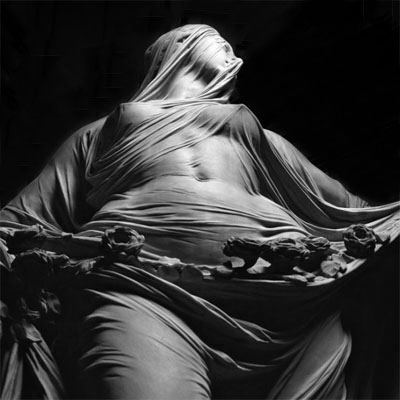
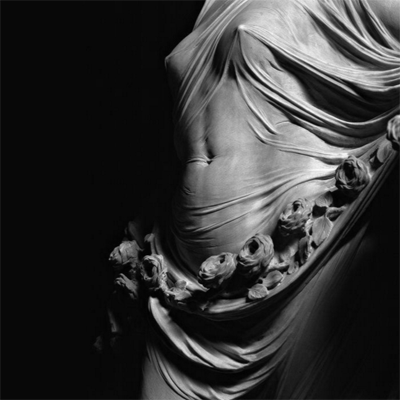
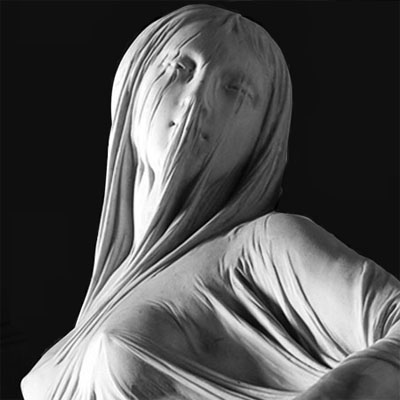
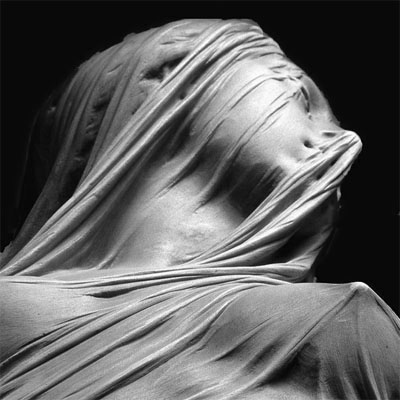
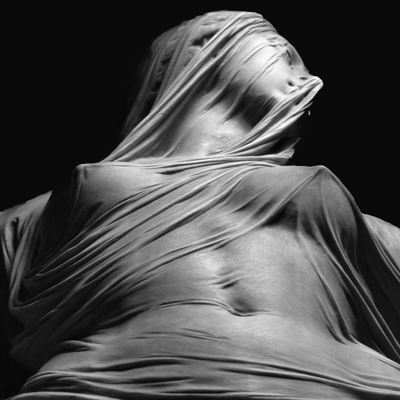
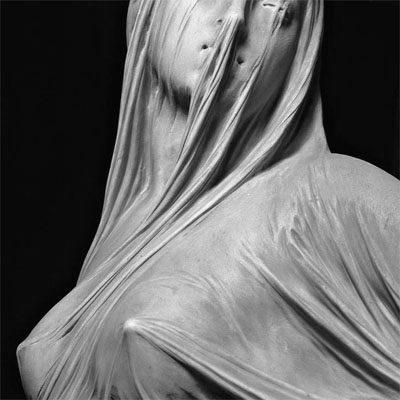
It was my intention to assume the concepts behind Phenomenal Transparency and to apply them to a critique of the Baroque figurative sculpture of Antonio Corradini (1688-1752). In re-reading the Rowe essay the concepts behind the idea of Phenomenal Transparency were totally inappropriate to the Corradini work but equally interestingly and equally inappropriate were the Literal Transparency definitions. It was concluded that Corradini exploits a third type of transparency that of a perceived or emotive transparency. It was further concluded that in the Baroque world, where faith had equal authority to science and law, the perception of emotive transparency would be considerably stronger than our perception of it today.
Marble is a metamorphic rock composed of sedimentary carbonate minerals that have recrystallized. Recrystallization is a metamorphic process that requires intense temperature and pressure where grains, atoms or molecules of a rock or mineral are packed close together, creating a new crystal structure. Marble is nearly twice as dense as concrete and is only translucent as a backlit veneer when a few millimetres thick. Antonio Corradini uses marble that is solid, heavy and non translucent. Scientifically we are aware that the marble is solid and that we cannot see through it. Emotionally the sculptor induces a cognitive response to two known conditions, that of the woman and that of the veil. By presenting this duality the artist creates the desire to see two complete known entities simultaneously and in so doing creates the illusion of transparency
The Surrealists were aware of emotive transparency. In the Rene Magritte’s Le Blanc-Seing in the essay below (d.161116) there is no flattened cubist layered space, as both components that make up the space fall within a single perspective on the same picture plane. The image is flattened by the manipulation of ones perception. Our desire to complete the image overrules our rational interpretation of what we actually see. Our minds join the horse and rider as one image passing behind the trees in a space represented through normal perspective. The reality is that the horse is not whole but instead laid as three strips onto an exiting perspective of woodlands. Antoni Corradini uses the same technique. When looking at the veiled face in detail, the veil does not cover the face but instead it is carved in strips that are laid upon the face. Up close we either see only the folds of the veil or the curves of the face. Our desire to see both of these things simultaneously creates the illusion of transparency. The transparency is generated by a sensual and emotive response to the appearance of two known cognitive conditions presented concurrently.
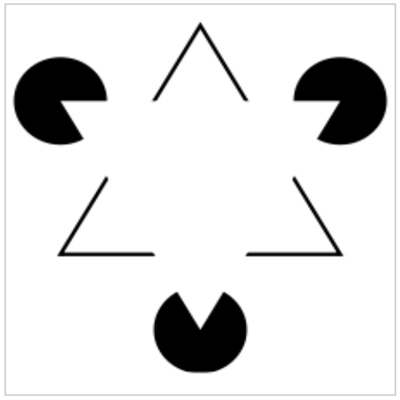
Ambiguous images are famous for inducing the phenomenon of multi-stable perception. This is when an image provides multiple, though stable, perceptions. Usually two images from one drawing, one image is perceived at a time, never the two images simultaneously. Veiled Truth is also a three dimensional optic that manipulates our sensory perception but with greater sophistication than an ambiguous image. When we see an image the first act of perception is to organise the image into identifiable groups. The simplest group consists of edges. On a 3D figure we first identify the edges and our brains connect the edges to conclude an identifiable form. When a pattern or form is perceived frequently it is stored in memory so that it can be recalled easily without the need to study in detail the entirety. The human form and the human face would be such frequently perceived patterns. This obeys what is now known as part of the Gestalt grouping rules where good continuation provides the visual system with a basis for identifying outlines and forms. Veiled Truth also obeys the Gestalt ideas of proximity where close similar objects are most likely to belong to the same group, here the folds of the veil. Perceived complete forms seen from a series of drawn fragments is best exampled by the Kanizsa Triangle. In this drawing the perception of two overlaid triangles on three circles is induced by a series of drawn fragments. Veiled Truth draws upon this emotive cognitive response to achieve transparency in the solid medium of marble.
In summation we have three known types of transparency.
Literal Transparency this has a scientific definition and requires transparency or translucency within a material.
Phenomenal Transparency has an intellectual definition and is read through decoding information.
Emotive Transparency has an impassioned definition where the desire to see overrules the logic of seeing.
It saddens to concede that the craftsman’s skills of the past may never be revived and that we live in a culture that so undervalues such skill? Our instantly obtainable and so easily disposable digital culture has lost so much.
Images left to right. 1-5+7 Veiled Truth, Antonio Corradini (1688-1752). 6 Kanizsa Triangle
The Surrogate Twin