
280219 – John Hejduk – London > words
The 60’s rode the wave of post war euphoria filled with youthful optimism and confidence. The Wars were over and out of the rubble a new world would be built. Music culture had made many young working-class extremely rich, they found themselves in the position to be able to buy up the large country estates of the now cash-poor landed gentry. Times they were most certainly ‘a changin’. Architecture and design quickly followed suit, with large urban commissions such as the Pompidou Centre going to young inexperienced and unheard-of architects. New fashion designers sprung up to capture the ready-made markets selling groovy clothes in loud colours and man-made materials. Everything seemed to be going fine but there were many hidden problems that were soon all about to unravel in the 70’s.
The Vietnam war had continued throughout the sixties, as had the Cold War. By the late 60’s and early 70’s both these wars had lost the popular vote and the Peace and Love movements displayed active resistance. These wars had minimum disruption on the global economies but this was about to change when the Middle Eastern conflicts of the mid-70’s deprived the developing world of the one resource that it could not do without – oil. Markets crashed, industry stagnated, welcome to the world of the three-day week, mass unemployment, garbage stacked six feet high on city streets, power cuts in the developed world and union and political chaos. With no money, contemporary culture made do, making clothes out of rags and songs out of two chords and spit. Punk was on the streets and in the shops.
The academic world reacted differently to the chaos of the mid-70’s. The big machine of the Modern Movement had failed. The pre-cast concrete towers were now slums, and were soon about to be felled. The machine aesthetic, a bland clean ergonomic production was no longer enough. Corporate culture itself was questioned, perhaps it had led us all astray, it had already left many behind. There was a search to start anew, a naïve poetic, a reaction to the global industrial machine, both to its products, its finance and its philosophy. This was the beginnings of the Postmodern and Postmodern representation, it looked for meaning through semantics and narrative, for the sensorial through colour and form and it looked for the emotive through typology and juxtaposition.
The emotive was an awkward concept in the late twentieth century where rationalism and logistics dominated the manufacture of most goods. It had a Freudian childlike quality. Words such as melancholy, anxiety, profound, romantic, morbid, feverish, voluptuous, prosaic, banal, spectral, oppressive, exuberant, have little currency in the logistics of construction. Yet these emotive states were missing from much of Post War international design. They were part of a language that had been lost, we no longer knew how to read it or see it. To explore and to communicate these emotive states one needed to begin again, to go back to basics, the child’s crayon drawing where all is simplified, flattened and without scale. A dreamscape of how things should be as opposed to how they actually are.
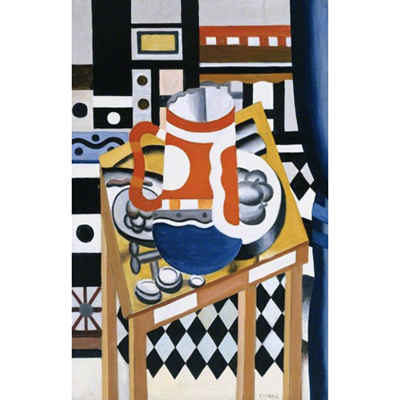
Dreams are fragmentary, they reference through juxtaposition, they are often without context, they are idealised virtual worlds which we are able to inhabit without conflict or rule. Their conception comes not from the rational but instead from the other worldly. The later drawings of John Hejduk explored these phantom places. Inspired by dreams and memories, dislocated from context and reassembled as metaphor. The architectural work from the early 70’s compares compositionally to that of the paintings of Ferdinand Leger becoming more surreal like the sculptural work of Le Corbusier. They form a dreamy landscape where all is possible, where the rational world no longer exists. Hejduk’s break with the architectural functionalism of the time did not revert back, with a nostalgia for an architecture of the past but instead from within, personalised and esoteric, a collection of incidences, incurred and recalled. The work of Hejduk spans many years and these are framed by time. Recalled experiences from within each time frame are the raw materials for assemblage. Each time Frame is several years.
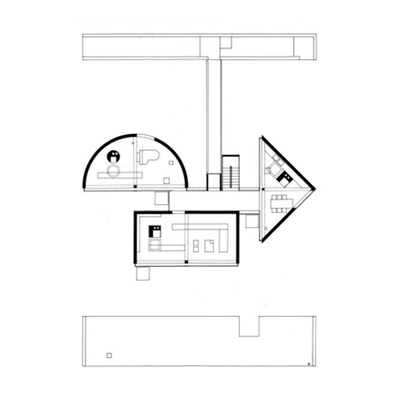
In the early work there is also an ongoing conversation between the biomorphic and the biotechnic. These are two terms used by Hejduk to describe man-made and machine-made forms. But these are also metaphors, representing the emotive, hand sculpted forms in search of the sensorial and the rational of the logistical forms of the International Modern. Curvaceous forms are used for the biomorphic and grids are used for the biotechnic. The work can best be described as a tentative, uncertain laboured struggle, a long walk in the dark. The early work up to time Frame 2 manipulates the grid. The grid in terms of architectural language is an abstract. It has no predetermined or proportional scale, it has no up or down, it can be fully rotated in 3D and is an infinite system. By manipulating the grid, the abstract can be pursued as a formal system, a form generator in its own right. By time Frame 3 the biomorphic is inserted into the grid enclosing fluid transitional and activity spaces. There is very little compositional rapport between the biomorphic and biotechnic, a curved line in plan is extruded to enclose a particular volume. There is not the juxtaposition of ritualistic to abstract spaces that can be found in the work of Michael Graves of the same period. The resulting volumes enclose by Hejduk’s biomorphic forms house activities and not rituals and they are very much an insertion. Towards the end of time Frame 3 the curved forms begin to take over from the grid, this Frame also continues from the late 60’s into the early 70’s.
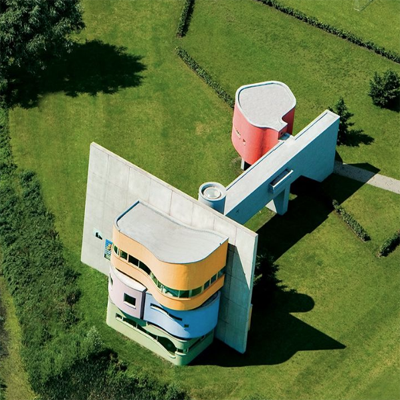
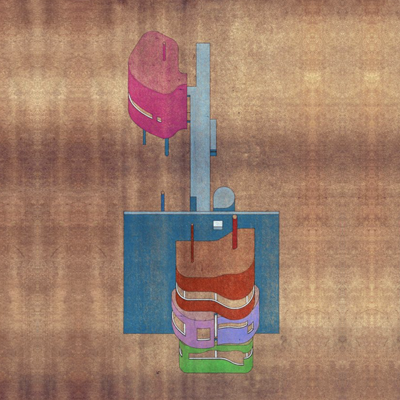
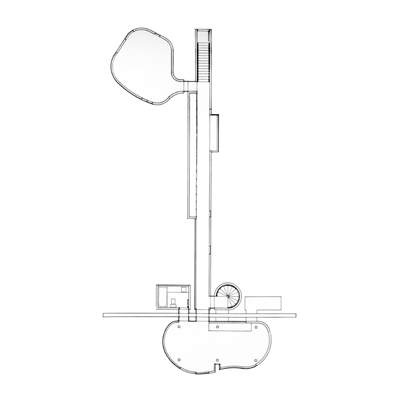
In the work of Hejduk of the 70’s the biotechnic has become subservient to the biomorphic but now a third component has entered the conversation and that is the wall. The wall is considered as neutral, painted grey, a thin membrane through which a discourse exists, it is described as a thin momentary condition. The wall has no functional purpose it is simply the initiator of a conversation. The wall sets up a condition on the site around which the spaces can begin their dialogue. Spaces become grouped, living, bedroom, circulation, and then become separated from each other, elongated journeys, pushed out into the site. Each space develops its own language, they soon become identifiable individual objects, the staircase, the space, the corridor, the wall, and are assembled sculpturally. The houses sit as sculptural objects in the landscape, but architecture is experienced through movement and time, a series of experienced fragments. Here the Hejduk buildings are very much like the compositions of Leger. Each individual component has a recognisable use or point of reference but the assemblage re-phrases conventional understanding.
It is interesting that the work of the New York Five, Eisenman, Meier, Graves, Gwathmey and Hejduk were each exploring architecture’s semantic role post International Style. Eisenman and Meier continued to explore the mathematical abstract as a means of space generation, although Meier’s buildings were always very site specific. Graves began to re-incorporate traditional ritualistic spaces into the abstract grid, typically kitchen and central fireplace rituals. Graves eventually turns to historic referencing with classical Postmodern. Gwathmey and Hedjuk try to reinvent architectural language from scratch using either pure or biomorphic form (Hedjuk) or by re-assembling recognisable typological architectural components (Gwathmey). The work from this group during the late 60s and very early 70s was incredibly potent, stimulating many of the Postmodern architectural dialogues that were pursued through the late 70’s and early 80’s. Meaning, Language and Local, being key to the enrichment of architectural and design dialogue through to the 90’s.
Hejduk’s works stands out from the others for its simplicity, perhaps even its naivety, as a generator of form, the emotive, the recollection of a dream, a feeling, a personal experience by definition. The subject of the conversation, the architectural language post International Style has historical relevance but by personalising the response Hedjuk’s work was a cul-de-sac to mainstream architectural discourse. Hejduk’s work quickly moved on, his later experiments were even further removed from modernism with his use of typological reference. In these, preceding building types were caricatured, e.g. wind tower, water tower, bell tower. When no precedent typology exists, a new type is invented e.g. House for a Musician. The language of this Typological referencing is simplistic and mono syllabic. The whole object is the reference signifier, it does not break down into further semantic components, as time has yet to invent or agree these. The work is more in tune with the that of Aldo Rossi and Bruno Minardi and as such recalls the empty and melancholic landscapes of De Chirico. With this work the Postmodern is an historical invention explored by the generations that had deliberately, and for good reason, forgotten how to think historically.
Hejduk’s works falls into the transition phase between Modernism and Postmodernism. It ignores the established conventions of The International Style and Functionalism and searches for a new means to communicate, through content and metaphor. The simplicity of its language and its use of assemblage make it easily accessible. The work has a poetic charm, it’s escapist, fragmentary and non-site specific. The compositions are idiosyncratic visions, spawned from the consequence of a chance meeting or event from years gone by. These visions inspired perhaps from yesterday’s dream or elements recalled from that scrapbook we call memory, a collection of cinematic intensities that linger forever in the back of one’s mind. Together these fragments help shape who we are, they shape our character, our purpose, and for Hejduk they shape his buildings.
Hejduk describes the wall in his compositions as neutral and grey, as such perhaps, the wall is supposed to form the background in the same way as the flattened collage of wallpapers fill in the background of many cubist compositions. Perhaps the wall was a necessary framing devise, a back drop or enclosure for composition. Perhaps the wall was a necessary structural means to allow the compositions to ride up the picture plane in denial of perspective and in support of the flattened three dimensionality of the axonometric. However, Hejduk’s work tends towards metaphor and the elements in it are read as such. The wall read metaphorically is a long way from neutral, it cuts the site as clean as any cut of a Samurai’s sword. Figuratively elements form this side of that, neither both and this is ruthless, without exception. However, in space time the wall is almost invisible, a mere moment of the present, a crossing barely 200mm wide, inconsequential.
In Hejduk’s work, if one were trying to interpret metaphor to read meaning through composition, or to speculate on what drives the mind of the architect, the wall would be a good place to start but I doubt the answer would be either neutral or grey.
Images
1. Wall House 1973
2. Drwg Wall House 1973
3. Plan Wall House 1973
4. Half House 1968
5. Leger Still Life with Beer Mug 1927
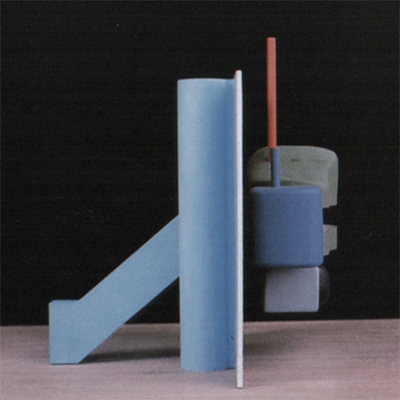
6. Cemetery for The Ashes of Thought 1975, Side Elevation
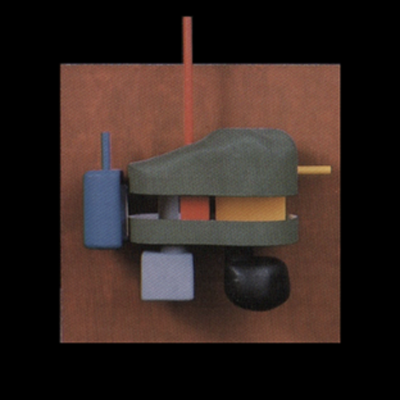
7. Cemetery for The Ashes of Thought 1975, Front Elevation