
130120 – The Electric Carriage – London > words
In 600 BC Thales of Miletus, the Greek philosopher, wrote of the attraction of the lodestone to iron and other lodestones. The lodestone, a naturally magnetised piece of mineral magnetite. The navigational properties of the lodestone were known by the Middle Ages and the name lodestone probably dates from this time as its Middle English lodestone means ‘course stone’. The first modern treatise on electricity De Magnete, was published in 1600 by an English scientist William Gilbert. In this text he studied electricity and magnetism. He invented the new Latin word electricus (like amber, from the Greek word electron meaning amber). Amber when rubbed can hold a static charge. The journey from the magnetic properties of the lodestone to beginnings of understanding electricity took 2200 years. The words electric and electricity first appear in print in Thomas Browne’s Pseudodoxia Epidemica of 1646. The German scientist Otto von Guericke demonstrated properties of electromagnetic repulsion in 1663 and in 1791 Luigi Galvini published his discovery of bioelectromagnetics, demonstrating that electricity was the medium by which neurons passed signals to the muscles.
The Leyden jar, is a glass jar that was able to accumulate and store static charge, a type of primitive battery. It allowed users to discharge electricity when required and was discovered in 1745. Alessandro Volta’s battery or Voltic Pile made of alternating and paired zinc (-) and copper plates (+) separated by felt pads soaked in salt water was published in 1799. The Voltic Pile gave scientists a reliable source of electrical energy and from this date considerable progress was made in the studies of electricity. Rechargeable lead-acid batteries were invented by Gaston Planté in 1859. The basic understanding of the unity of electric and magnetic phenomena including electro-magnetic fields, electromagnetism was made by Hans Christian Ørsted and André-Marie Ampère in 1819. Shortly after in 1821 Michael Faraday invented the electric motor and George Ohm calculated and analysed forces in the electrical circuit. Electricity, magnetism and light were definitively linked and modelled mathematically by James Clerk Maxwell in 1861.
Faraday’s big contribution came when he discovered mutual induction. Faraday wrapped two insulated coils of wire around an iron ring, by passing a current through one coil he found that a momentary current was induced in the other coil. Faraday further discovered that by moving a magnet through a loop of wire an electric current flowed in that wire. The current also flowed if the loop was moved over a stationary magnet. Faraday’s experiments established that a changing magnetic field produces an electric field, this relationship was determined as a mathematical proof by James Clerk Maxwell and is known as Faraday’s Law. Putting an electric current through a wire creates a magnetic field, putting this electrically created magnetic field inside a magnetic field (between the opposite poles of two magnets) creates a force. This force can be used to create rotation and hence mechanical power. Using these principles Faraday would go on to construct the electric dynamo, the ancestor of modern power generators and the electric motor. An electric motor is an electrical machine that converts electrical energy into mechanical energy. An electric generator is mechanically identical to an electric motor, but operates in the reverse direction, converting mechanical energy into electrical energy.
In the early nineteenth century once the principles of electric rotation were understood and a battery storage source had been discovered, electrical engineering progressed rapidly. People such as Thomas Edison, Alexander Graham-Bell, Ottó Bláthy, Galileo Ferraris (three-phase induction motor), Baron Kelvin, established laws and invented uses for electricity. People such as Nikola Tesla and George Westinghouse helped turn electricity into an essential resource for modern life.
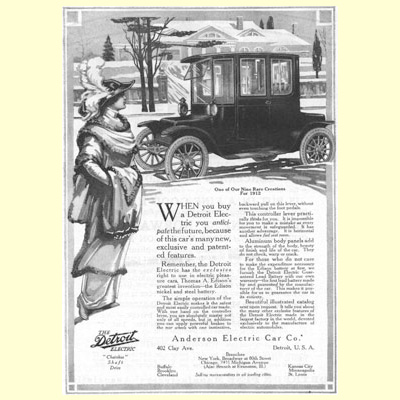
Over one hundred years ago electric cars were the most numerous vehicles in the world. During the late nineteenth and early twentieth century they out sold every other type of car. Electric taxis could be found in London, Paris, and New York. Electric cars were also the fastest in the world holding the land speed records through to the 1900’s. By 1912 many houses in the US cities had electricity and were therefore able to charge the cars at home and so the popularity of electric city cars increased.
In the US in the early 1900’s 40% of cars on the road were steam cars, 38% were electric and 22% were petrol run. This may seem a strange mix today but car design was in its infancy and undergoing rapid transition. This transition was not only for the means to power propulsion but also cultural, away from the horse and carriage as an established typological norm. The most easily adapted transition technology was that of steam as it already had been well tested to power factory machinery and locomotives. Steam was noisy, heavy and ungainly, with the need to carry coal to stoke a boiler of considerable size. A steam car needed approximately an hour to prepare as the water in the boiler needed to be at steam before one could leave. The very early versions from the late 1800’s, were a strange hybrid of carriage, locomotive and what would become later recognisable as a car. Early steam cars were not at all user friendly and nor were petrol cars. The first petrol cars were noisy and temperamental. They had to be started by hand crank, had a crash gearbox, they had a series of knobs switches and dials that controlled ignition, advance and retard, fuel mix, often also hand pumped, in addition to the controls for acceleration, brakes & steering. They were complex machines to use, very smoky, smelly, dripping oil everywhere from total loss lubrication systems.
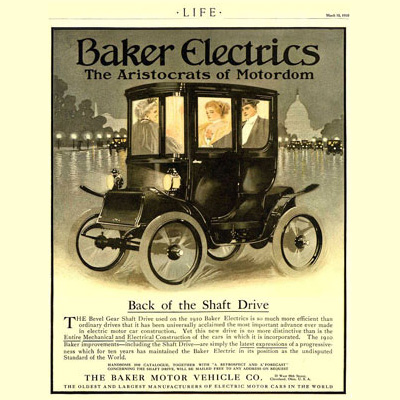
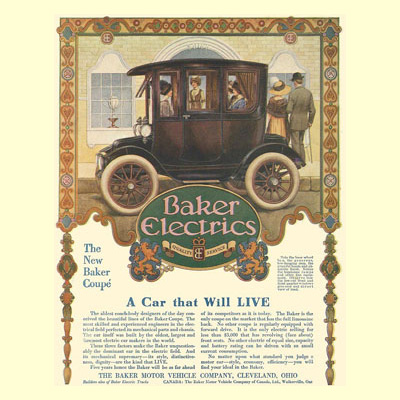
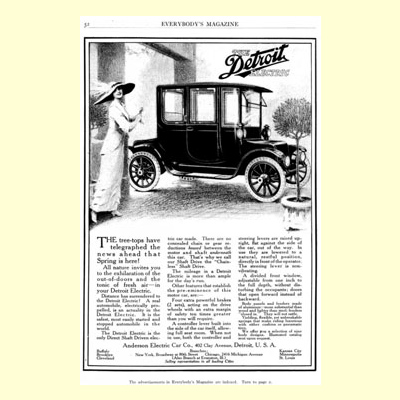
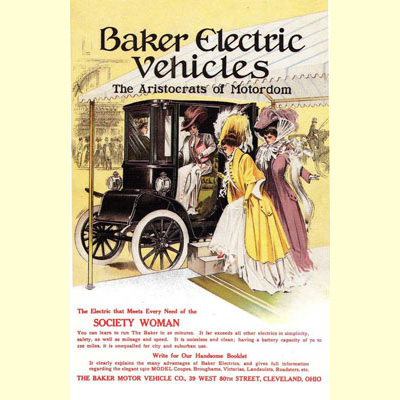
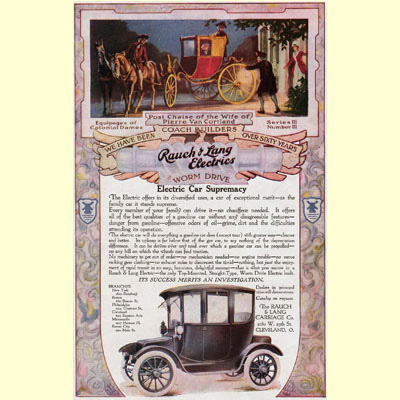
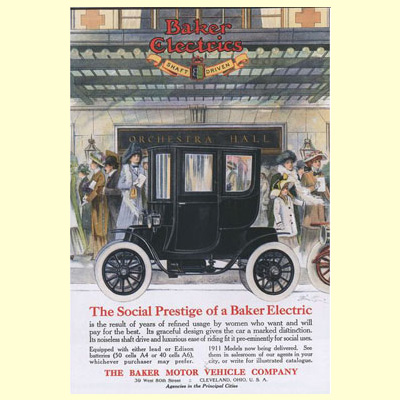
Early electric cars were popular for exactly the opposite reason, they were very user friendly and also used an existing and established transfer technology. Electricity had been used to propel rail carts in mines, as clean air in a mine was a necessity. Electricity was now quite common in the factory and companies such as Edison’s and Westinghouse’s had begun to connect houses to city grids. Electric cars required no gearbox, a simple lever pushed forwards or backwards controlled momentum. One could learn to drive an electric car within an hour. They started and stopped immediately, they were clean and could be charged at home. Their limited range was inconsequential as they were city cars designed for the short commute to and from near destinations. The energy density of the batteries was always their weakness. There were also cultural reasons why the electric car was a popular substitution for the horse drawn carriage. The concept of car as a utility did not exist. The people that could afford cars could afford servants. The carriage was a suspended interior room, softly sprung, sumptuously lined and protected from the elements. People sat on padded seats face to face, windows were curtained and ceilings were high, you stood up to get in and a tall hat did not need to be removed. Large windows accessed the view but equally allowed one to be viewed. Drivers and footmen sat outside exposed to the elements. The electric car was the best cultural replacement for the carriage and the society that were carriage drawn. It did not necessarily require a driver but the carriage component and its etiquette were kept whole and intact. The early electric cars were like the early electric lifts, both were rooms in which one moved from location to location, one vertically the other horizontally. These rooms had seats, often revolving seats, mirrors, flowers in hung vases and delicate lighting. One could wear hats, bustles and large voluminous dresses, one could wear a cape and carry a cane. These moving rooms were social spaces in which one could converse on the way to the theatre or to and from the newly fashionable multi-levelled department stores that had recently opened.
In America the early cars were called Brass Era cars 1896-1915 due to their ornate use of brass for details, lights and grills. Once again this is a cultural transfer of ornament onto engineering, a beautifying of the mechanically austere. This cultural transfer often has little to do with the car per se, as it is a transfer from the language of architecture and the interior. This interpretation of what a machine should be varies from our present day ideal of aesthetic convention. This is due to the altered perspective at the outset of the car destined typology, utility versus a social mobile room. As speed and distance began to take precedence, the utility aspect of the car developed over that of the mobile room. The speed, power and independence offered by the car as a utility replaced that of the leisurely, social discourse offered by the carriage. It is interesting that at the same time the movie house replaced the theatre, one a popular convenience and the other a social performance. The movie house as a building type diverged away from the theatre as it shed all of its ancillary social spaces. The anti-rooms where discourse, performance and the rituals of societies business people and voyeurs were entertained. The cinema stripped of these social spaces became streamlined, a foyer and a viewing room. As time became commoditised everything became more functional, functional used as a synonym for time efficient. Streamlining as a stylistic expression of time saving efficiency would spread in the coming decade through all aspects of the applied arts. Streamlining was quickly applied to cars and in the process the cultural language of design, with all its ritualistic and semantic overtones, were stripped away and replaced with the time saving language of functionalism. In this the technological advance overtakes cultural advance and in so doing shifts and realigns cultural agendas and values. It is impossible for us to look at the car anew with the values and from the perspective of the Edwardians. As we now transition from the internal combustion engine cars of our époque to the electric cars of the future, at first step, will be to simply replace the power plant. The car will be recognisable as a car. It will have a front and a back, a bonnet and a boot, some may even carry grills and transmission tunnels decades after either have need or use.
The very early 1900’s was the Golden Age of the electric car where sales peaked in 1910. This coincided with what in the US called the Brass cars and in the UK were called Edwardian cars. Brass, Edwardian and Electric were together all scheduled soon to be the past. Within fifteen years of 1910, electric cars had all but vanished from the streets and were replaced by cars powered by the internal combustion engine. So why from these three types of power source, steam, electric and petrol, did the petrol car from such a poor start soon dominate the roads. Firstly, reliable transport, both domestic and commercial, was beneficial to all markets and increased market capture through distance distribution. Transport was a growth industry fuelled by its ability to assist other industries. The fundamentals of logistic necessity put pressure on the fledgling transport industry to run with what was presently viable. There was no time to wait for battery technology to catch up and investment funds were quickly redirected towards the combustion engine powered motor car and its procurement. Secondly, huge reservoirs of underground oil had been discovered around the globe. It was estimated that these reserves were so large that they would last at least 3000 years. Oil, unlike coal, could be pumped and piped, making its distribution infrastructure easier to establish. Oil had greater energy density than anything else available and from the outset had multiple uses, it was a fuel, a lubricant and a preservative. Later with further research and advances in chemistry, oil proved to be incredible versatile and the basis for many varied industries to come. None of this was missed by the world of finance and the culture of capitalism. Thirdly, as roads improved it was possible to travel ever greater distances. A requirement of distance was range and speed, steam and the electric battery simply could not compete. Fourthly, Charles Kettering’s invention of the electric starter motor of 1911 greatly helped the petrol car as there was no longer a need to hand crank the engine to start it. A hand cranked engine not only required considerable strength it was also a dangerous activity, responsible for many injuries, even deaths when hand cranks took the full force of engine kick-backs. Fifthly, the final nail in the coffin of the electric car began in earnest in 1908 when Henry Ford streamlined mass production and with this managed to reduce the cost of and ease of, through standardisation, the assembly and repair process of the petrol-powered cars.
The association of carriage to personal identity had little importance. The grand horse drawn carriage may be recognised as part of a wealthy estate but not as an item owned by an individual. The carriage was a shared mode of transport. The driver, footman and stable hands may have considered the carriage as their own, as although they didn’t own the carriage, they would have known considerably more about it and the team of horses that pulled it than the owner. The carriage was part of the estate shared by the family members that lived on the estate. The early Edwardian cars, including the electric car continued this relationship, with the car as a shared facility and not a status item. As the car became streamlined, with its design bias now being functional, its previous cultural role gave way to its new technological role, the carriage became the chariot. The car became a masculine fetish object of the successful representing speed, power and daring. By the 1930’s the car had become the status symbol for everyone who wanted to be anyone, consider the celebrity cars of this period and images of Clark Gable standing alongside oversized Duesenbergs.
Post wars, the cars of the 50’s and 60’s were the youthful symbol of independence, films of the early 70’s such as Two-Lane Black Top (71), American Graffiti (73) and Vanishing Point (71) highlight the cars role in society. The car had become an essential expression of male virility, of status, of fashion and of tribal association. It became a means of escape, an expression of one’s values, it was the only confinement in which young couples could respectfully be seen alone. The car quickly became the ménage of all these things, a tin enclosure of adrenalin, courtship and competition, complete with Lucky Strikes and furry dice. By the 1970’s and 80’s a car was a necessity due to the suburban sprawl that now surrounded all cities, a pre-requisite for all youth as it gave independence and access to the now time organised week at work and the new weekend world of clubbing.
As service sector jobs replaced industrial jobs cities became re-urbanised, with many from suburbia moving back to the city centres. Today’s flat dwelling urban youth have no place for car ownership, cars are hired and shared. Cities have deliberately become car unfriendly, speed bumps, bottle necks, restricted roads, congestion charges, parking permits and fines all make car ownership very difficult. Modern apartments no-longer provide parking spaces in ratio with accommodation units or site density. Public transport is the norm, the cars iconic value and representative value has been diminished. Of necessity, society has become more social, flat sharing, co-working, cab sharing and car-pooling are the new norms, even small-scale transport, scooters and bikes, are hired by the hour. Ownership of any of these items is far less important. Greater urban density has created a new urban social class, flats, often beyond one’s financial means are now rented, kitchens, TV rooms, gyms, pools and a concierge service are included within the service charge. The new living room may be a private club or a local bar, people eat out, shower at their gyms and live within the social infrastructure of the city. A flat may serve only the functions of safe storage and sleep.
In the 18th century, one would probably work in the same industry as one’s father, continuing generations of cobblers, farmers and farriers. One’s time followed the seasons or immediate market needs. A farmer’s day changed in length Winter to Summer, a cobbler or farrier waited upon the next client to arrive, each job bespoke. The worker was a crafts person, he had total knowledge of the full process of making, from raw material to finished product. Quiet periods were one’s own time. The crafts person had control over the quality of his product and the application of his time. Industry mechanised and commoditised time as consistent and regular. It organised our weeks and weekends and the main purpose of our labour became profit not product. One goes to work to produce goods that may have no known immediate market and in that we serve the machine. The machine may produce shoes of which one’s contribution may be to only to push the button to make the heel. One need not know how to make a whole shoe, or how much it costs to make a shoe, or where the materials come from, or where it will be sold, these jobs are all done by other people. Industry collectivised our knowledge, time and production. The pooling of knowledge could be alienating as one no longer had an overview but industry improved living standards and created known quantities of leisure time. Leisure time itself became commoditised but still forms the networks for social grouping.
Leisure time will soon increase along with population increases and further automation. Within this new found leisure time new social groups will emerge and develop. Our changing relationship to ownership and product status is all part of this transition. The electric car during this transition will at first imitate the combustion engine car that it replaces but as more automation, increased connectivity and car sharing become the norm our cultural associations with the car will transform its form and purpose. The Edwardians saw the early cars as communal mobile rooms. The twenty-first century may revisit this approach to transport design or it may well invent the as yet un-invented as new technologies open up new cultural opportunities.
Images
1. Baker Electric 1910 – Aristocrats Ad
2. Baker Electric – Social Prestige Ad
3. Anderson Detroit Electric – Ad
4. Baker Electric – Society Woman Ad
5. Detroit Electric – 1912 Ad
6. Rauch & Lung Electric – Worm Drive Ad
7. Baker Electric – Will Live Ad