

100416 – Affirmation – National Gallery, London > words
Amsterdam had entered its Golden Age by the 1600’s with control over the East Indies Trade, a period that would last for two centuries. Capitol moved from previously Spanish dominated merchants to the Dutch trading ports. Spain’s power had been diminished by lengthy wars with England. Europe was split Catholic/Protestant with the Catholics moving south as the Protestants moved North. Amsterdam attracted skilled tradesmen from a mixture of Protestant, Portuguese Jewish and French Huguenots escaping the persecuted Catholic countries and the Counter Reformation. Good infrastructure from canals and cheap energy from windmills and peat added to the growth. The Dutch East India Company, the first multi-national corporation dominated Asian trade and the spice routes bringing goods back to Holland before redistribution. On this Amsterdam was the convenient bottleneck for all this newly created liquidity. Science had also helped loosen the grips of the Catholic church and the individual began to enter a period of artistic self expression where previously all high art was religious. Modern sophisticated banking, finance and insurance grew to support the ever-growing trade. Trade was financed by shares sold on the first modern Stock Exchange and with this risk was diversified to the numerous shareholders. Speculation was rife driving up prices, Tulip Mania famously crashing in 1637. The Dutch also dominated Inter European trade via control of the Rhine. The Rhine entered the sea via Dutch ports and shipped goods in a two-way trade North/South from the Mediterranean countries to the Baltics. The Urban merchant class dominated Dutch society, with landed gentry and clergy having little influence. Calvinism established a liberal intellectual and religious tolerance and from this the sciences flourished as they were allowed the freedom to speculate and posture.
So what did the Dutch spend their newfound wealth on? One could say self-affirmation, all of Europe had been dominated by the Church and predestined thought. There was a cultural and intellectual fight to break away from divine fate and to establish a realm for the scientific liberal, to establish the individual. The big “Who am I” was answered by identity and status consumables – or portraits and possessions. Showy wealth was frowned upon as a Catholic attribute. Lineage, earthly and heavenly, best exemplified by Louis XIV of the House of Bourbon as the Sun God with his ‘Divine Right of Kings’. A common problem when religion and law become one. Puritan reality replaces idolatry. Painters such as Vermeer and Rembrandt (portraits), Osias Bert and Snyder (Food), van Brussel and Bosschaert (flowers) expressed this. The ideal and Divine, Gods on clouds, the celestial vision, is replaced with dark backgrounds that focus the viewer on more humble subjects such as portraits, food and flowers. Each of these genres were very much used as an expression of wealth however humble the compositions may look today.
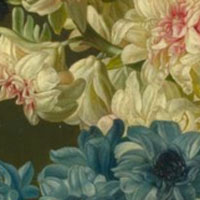
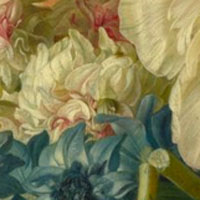
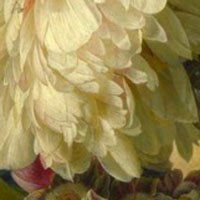
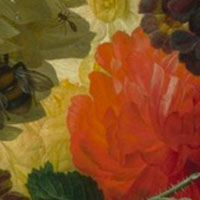
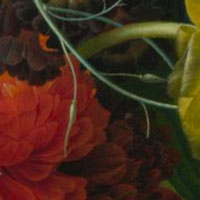
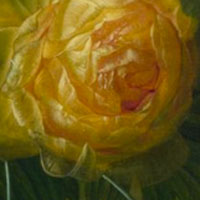
So here we are looking at paintings of flowers but trying to look through the eyes of wealthy 17th century Dutch merchants. When a Tulip bulb could sell for 10 times the annual salary of a skilled craftsman and as expensive as pepper (peperduur) was a common expression. All things shipped in from new found far foreign lands had huge value due to the related risks entailed in transportation and acquisition, spices and exotic flowers being no exception. So in many ways this is the equivalent of Dutch 17th century bling but in a language that today lacks relevant punch when the contemporary audience that has been exposed to the abundance of modern supermarkets or are blind due to the proliferation of the disposable digital image. One could retro-read a beautiful painting of exquisitely detailed flowers as representative of 200 years tyranny, power struggles and corruption but that would be a lengthy essay, perhaps for another day. Today we’ll just enjoy the skill of the artisans that could capture sunlight striking a shell, a petal or the iridescence on a fly’s wing.
The Surrogate Twin