

020816 – Synthetic Landscapes 2 – Toxic Beauty > words
Synthetic Landscapes should be read 1 through to 4.
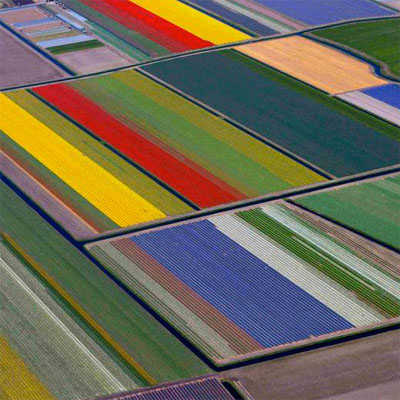
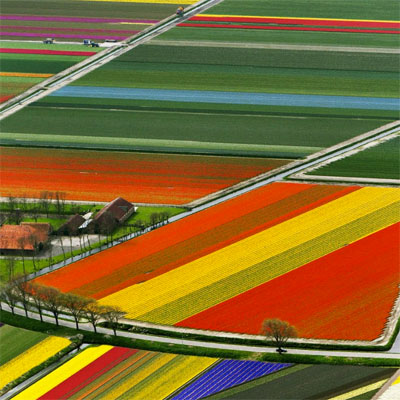
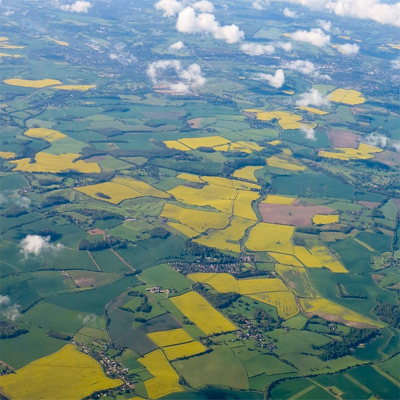
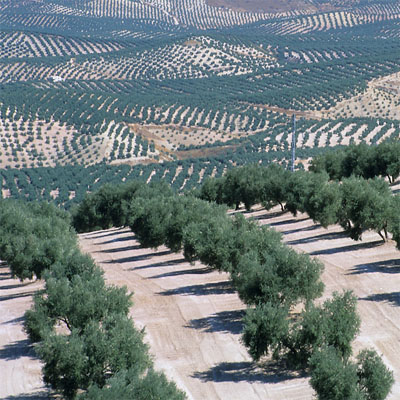
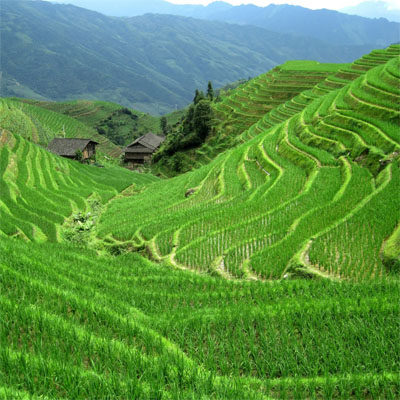
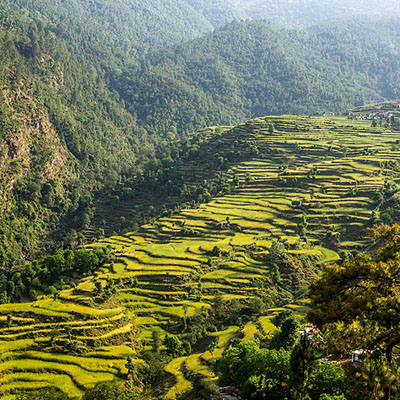
There is something incredibly seductive about order and pattern. Partly as organised regimentation signals stability, control and efficiency all desirables built into the human psyche and partly the appeal of manmade geometric aesthetics. Humans crave simplicity from chaos, structured geometry over natural disorder; endless fields of blocked colour in rectilinear patchwork tapestries are easy on the eye and easy to comprehend. The tamed landscape concurs that we are in control and that we can make nature do as we please. Of course nature isn’t chaotic. It has hierarchy and order but it is not an order that most humans understand. We feel vulnerable in its presence, we order to organise and dominate, control is calming, it is safe and secure. In pleasing the eye the abstract patterns of monoculture, the chequered fields of blocks of colour, neat rows of subservient trees that line up to assist man and make his life easier and more pleasant hide a broken order.
Man has been farming for at least ten thousand years, he learnt to save seed and plant so that food would appear on his doorstep, he no longer had to live a nomadic life as a hunter-gatherer. Steady and reliable food quickly increased population and as population grew more farmland was cleared. Natural landscapes, indigenous species and habitats have all been wiped away. Historically every time a farmer cleared a small land holding habitats are swept aside but since the 1950’s this has been done on such a colossal global scale with thousands of square miles cleared to plant a single crop. Farmland is protected, sheltered and nurtured but the more we parent our crops the more they are dependent on us for their survival. Todays crops are genetically so far removed from their wild ancestors that they are unable to exist without their daily fix of fossil fuel derived pesticides and fertilisers. In our quest of forever increasing yields we leached the soil and bred out the crops inner defence systems. Annuals replaced perennials and with each season the plough weakened the soil losing the topsoil that will take a thousand years to replace. Below ground the microfauna and microflora that adheres and regenerates the soil are broken apart. Hard compact surfaces become windswept dust plains or washed away in heavy rains as water cannot penetrate to the depths required. Topsoil ultimately gets washed into rivers or drains and eventually ends in the sea. Some parts of the Mid West US lose 30mm of topsoil every two years. The soil is no longer a rich black fecund of life and death, the ongoing circle of perpetuity but instead a chemically enhanced anaemic rock like mass. In our never-ending search for increased production we have turned farmland into a synthetically supported factory system. Even our extensive manicured lawns are a form of monoculture.
The industrialisation of farming methods that have developed over the past two centuries favours monoculture, farming of one crop or one breed continuously. There are short-term efficiencies in this system as a single species has the same requirements and runs one timetable. Planting, maintenance, harvesting, marketing and logistics can be standardised. Sadly there are long-term inefficiencies such as soil degradation, low biodiversity and high risk of disease through pathogen spreads. The negatives can be offset with pesticides and fertilisers, usually made from petrochemicals and delivered with diesel miles. The efficiencies of monoculture increase yields that in turn increase with scale, so monoculture farms benefit as they grow and in so doing consume neighbouring farms and land. Eventually thousands of acres may fall under a single ownership and are harvested by subcontractors that move from farm to farm following the seasons. The Corn Belt of the Mid-Western United States, olive groves of Southern Spain or cut flowers from the Netherlands would be typical examples. Concentrated production of cash crops from within a confined area feeding a world through global distribution systems are particularly vulnerable to disruption including political, logistical and environmental. The long term negatives of monoculture have long been known and efforts to obtain equivalent yields from polycultures are being tested. The transition to polycultures will not be easy as increased labour, tooling and logistics costs are off set by longevity and less dependency on fertilisers.
The world’s natural state is forested but forests now cover less than 30% of the planets surface. The depletion of the Amazon rain forest is a sad atrocity but that depletion has occurred in every developed nation. In the US there was once 440 million acres of forest now there is only 25 million acres a 95% depletion. Tropical rain forests are depleting at a rate of 35 million acres a year. The consequences of de-forestation are well known first soil erosion followed by polluted water tables. Every nation should be re-forested and not micro managed agrarian forest but natural forest left to assume its own natural balance and eco system. This would not only help the biosphere to the benefit of all the planet but would also start to put a slow squeeze on land available for development or agriculture which in turn would begin to put pressure on a reducing population. Managed forests have little diversity, trees are planted at one time and harvested, clear cut, at another putting strains on habitats. Natural forests have a mixture of trees of various types, ages and scales. In the mix dead trees have an important role housing all types of wildlife that are essential to a thriving living forest system. We have become so use to associating farmland with nature that we now accept farmland as nature. We have no concept for the wilderness without human intervention.
In conclusion, regimented order does not guarantee the most efficient system.
The Surrogate Twin