

210617 – The Story Teller – London WC1 > words
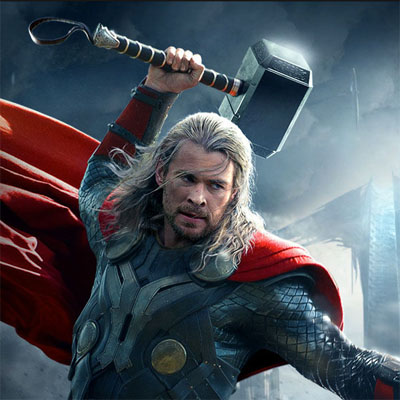
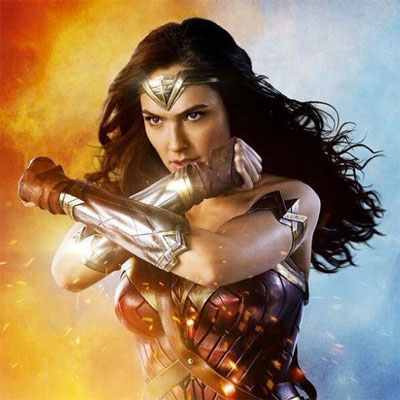
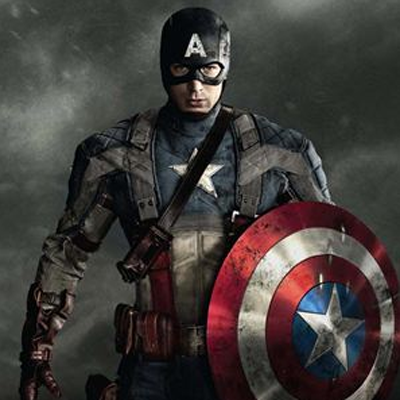
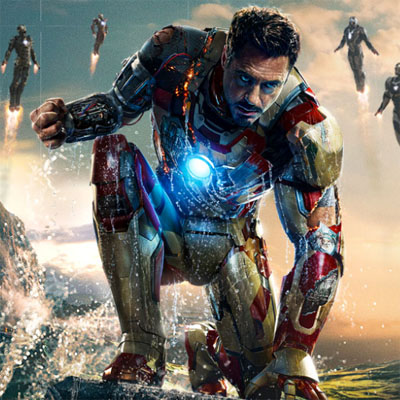
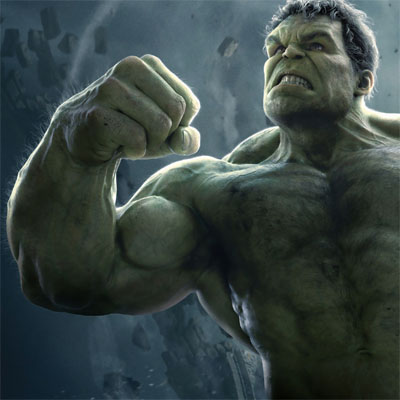
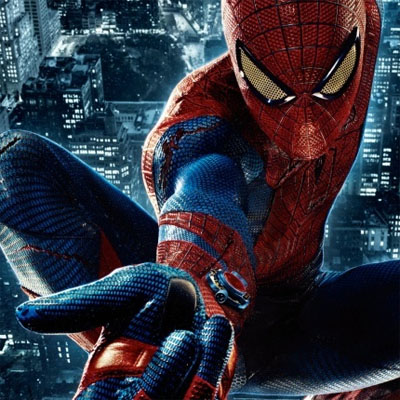
The American comics of the 1940’s and 50’s have much to answer for as we now live in a world dominated by superheroes all vying to don their lycra underpants ready to save the planet whilst briskly thumping evil into submission. Cinematic superheroes have become the comparative of the popular press. The everyday and the mundane can now be quickly promoted to superhero status with the readymade C.V. of mythical achievements appended by ghost-writers and others of the marketing machine. Fortunately my superheroes are boringly normal, few of them can fly, none can morph into another form, none can burn through sheet-steel with a focused stare and most (but not all), dress fairly conservatively. I have been lucky enough to have met or worked with many of my superheroes and those that practice outside my network I have been able to see in lectures. Simon Schama is one such superhero, a professional academic that always ensures quality of research, content and presentation. So I was very much looking forward to this lecture by Simon Schama at The National Gallery, The Spur of Influence: Rubens and Rembrandt
Simon Schama calmly walks onto the stage and the presentation begins with a polite introduction but within minutes of commencing, several encyclopaedias have been simultaneously unleashed. The audience becomes lost within a torrent of flying words selected from Schama’s vast vocabulary together with references picked, compared, rotated and discarded from thousands of years of global history. The audience have little option than to sit blank faced, drowned by a tsunami of intellect, catching fragments and phrases as they pass. In full flow Simon is a pansophical tornado that echoes throughout the hall. For us mere mortals Simon’s lectures are almost wonderfully incomprehensible. At the age of 72 he has spent most of his life in the world’s best universities and libraries conversing with the brightest in his field. Unfortunately most of our educations are far less rich often self-taught, solitary and web based. To enjoy Mr. Schama at his best he has to be read or as in his documentaries, edited and paced. There is a discipline required to writing and film production that are imposed by the economics of delivery, emphasis, embellishments and pace. A symphony is not just a crescendo of notes but equally and simultaneously an organisation of silence.
The historian’s dilemma is that non-fiction books do not necessarily have to be linear. Interrelated events happen concurrently in different parts of the world. When we pick up a non-fiction book we read around time zones, movements or consequences, we cross relate and build a full four dimensional understanding of history. Television is linear, it is story telling and a good storyteller requires well considered editing. The craft of the narrator is to set the pace and tempo and to burn into the imagination what has been augmented by reason. Televisions role is to slow everything down, to simplify and explain, to anchor our perceptions in time and space. It is impossible to ever soak up enough history to prepare oneself for whatever comes next, the future. However, in times of danger, and these are dangerous times, we desperately need to capture and record memory and this is one of The Story Teller’s roles.
I have recently watched Simon Schama’s 2000-2 A History of Britain, yes, all three series, fifteen episodes almost back to back. Binge History if there is such a phrase, but what a story, I could not stop watching, everything else was put on hold. Traditionally history often reads as little more than a lengthy chronological listing often in an incomprehensible text by the academic elite. These old-school tomes line our shelves; they sit thick and dusty. To read these texts grinds much like watching old British thespians play the classics with regulated gestures and rolled tongue English.
It is difficult to make interesting a history that has been explained and covered so many times before but for a masterful example of how this can be done the last chapter of A History of Britain, The Two Winston’s is a narrative gem. The Two Winston’s explains the fall of The British Empire, the end of The Industrial Revolution and The World Wars through the eyes of two Eton boys, Winston Churchill and Eric Blair (Winston Smith being the protagonist of Eric Blair’s aka George Orwell’s novel 1984). The glory of Empire championed by Winston Churchill of Blenheim verses the disillusion of Empire portrayed by the rebellious Winston Smith head of ‘The Ministry Of Truth’. Here both sides of the same coin are used to tell the account of the passage of time and the conclusions of its outcome. This is clever narration indeed from one of the best Story Tellers of our time.
As for the Simon Schama’s lecture The Spur of Influence: Rubens and Rembrandt, it was enjoyable to be within the eye of the storm but I think it best for someone else to be left to try to explain it.
The Surrogate Twin
Images Left to Right, 1-7 Marvel Characters, (With 3 as a character to marvel).