
050516 – Happy Yellow – London > words
Creativity is problem solving and is associative, it takes what surrounds us and uses it in a novel way to resolve new questions. Creative people see unusual connections that others may miss when problem solving. The problem with being creative is that one needs outside substantiation to verify that ones own creativity is not insanity. Creatives work best as a team bouncing ideas one to the next. Constructive creative links differ from random associations and being able to edit constructive from random is the key to true creativity. The difficult part of creativity is rarely solving the problem, it is recognising a relevant problem to solve in the first place. One thinks of problems in terms of pragmatic issues, product development, infrastructure, logistics but problems can be social and cultural and these may also need creativity to resolve.
The impressionists faced a problem at the turn of the twentieth century. Art previously had a representational and allegorical role within society. With the development of improved literacy, accessibility to printed text and the invention of photography arts conventional role was disrupted and its previously exclusive minority elite market broadened. Science had shifted the focus from the mythological to the everyday and the wonders of the everyday were all encompassing waiting to be discovered by those that were able to see. The Impressionist painters took to this challenge by trying to capture the mood or experience of the moment instead of an accurate figurative representation.
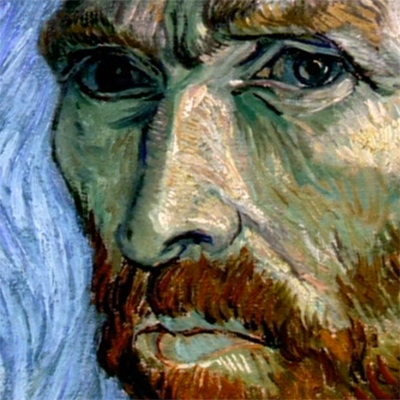
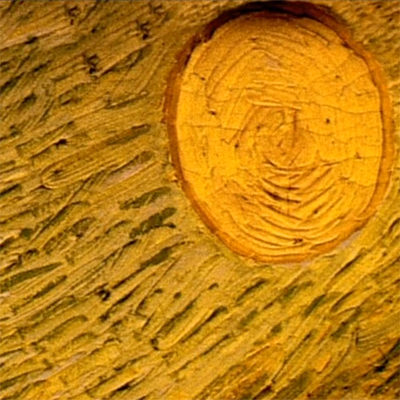
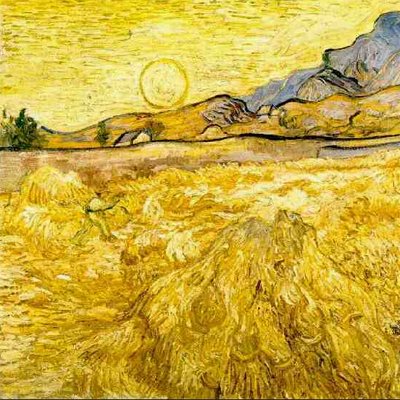
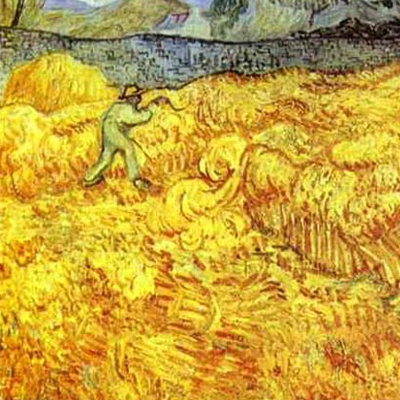
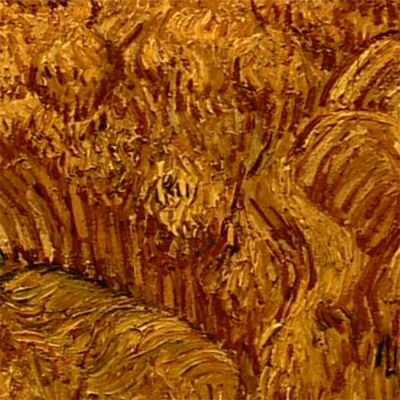
To Van Gogh a paintings feeling was its essence. Feeling is of course subjective but with Van Gogh capturing this feeling was a pursuit followed with a religious zeal. The feeling captures, sunlight, wind, heat, smell, sound, all of these things make up the experience of the moment and all are fleeting. The painters work is intense, quick, tactile, immersive and the result is the outcome of this outpouring. The canvas is not strategically composed, structured and balanced it is improvised on the spot, there and then. It is reactionary, and carries with it the mood of that moment, happy or sad, overwhelming or humble, hot or cold. When the canvas is finished the viewer should ‘feel’ the artists experience and in so doing share the moment with the painter. Feeling by definition is measured by intensity, the sensitive are the greater receptors of the atmospherics that set mood. Being sensitive and creative provides the perfect conduit for capturing this form of expression. Bias, emphasis, enhancement and magnification are part of the creative tools that help shift focus and reinterpret the feeling, enabling others to share and see. Van Gogh uses the medium of paint, with this medium he tries to capture the feeling of burning heat, of slow winds, of happiness. These are represented with intense colour and brush strokes that form an assemblage of micro foci. The viewer is drawn close to the canvass and sees the painting as the painter painted it. The viewer scans the canvas for areas of intensity and draws from it their own subjective conclusions.
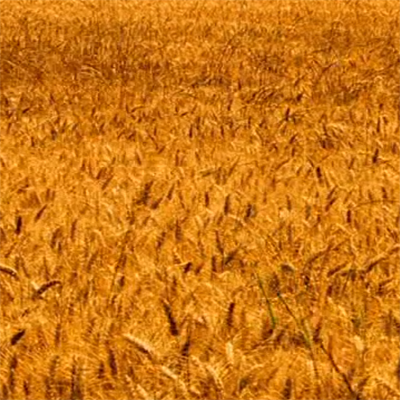
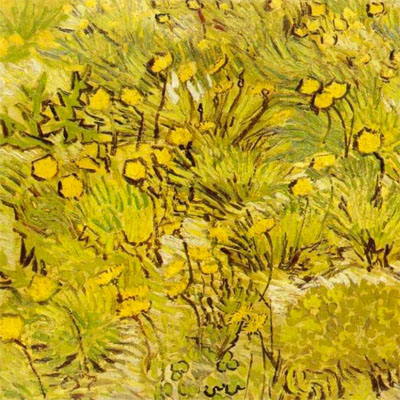
Van Gogh as a creative, explores new ideas and means of representation and as such is isolated. There is no precedent by which to compare the results of his work. Success or failure depends on the acceptance and the interpretation of others. Associative thinking has no time for abstract society rules, all is equal and of equal measure and are part of the same alchemic mix. The creative that explores the unexplored walks a lonely path and in so doing questions the limits of their own creativity. During the creative process there is a continued dialogue between constructive and random associations and the artist is both editor and director. Van Gogh, like many creatives, had a personality of extremes, he was depressive, schizophrenic, bipolar. Exploring these emotional extremes enables access and interpretation of and to the creative tools of expression. To be creative one needs to question accepted norms and conventions but this experimentation needs affirmation through outside critique. When isolated logic is self-substantiating. For Van Gogh happiness was best represented by the colour yellow this is seen in many of his paintings. Yellow is a subjective representation of happiness but to Van Gogh eventually happiness and yellow become one and the same. Van Gogh concludes that to be happy the cure for his depression was to eat yellow. Potassium cobaltinitrite, Cobalt Yellow unfortunately for Van Gogh is a toxic cure for happiness. In the spectrum between what is normal and insane, between creativity and madness, one walks a dangerously narrow path but without those that question the limits of what is understood the world would stagnate.
The Surrogate Twin