
061216 – Lessons – London > words
Natures R&D
Mankind’s ability to produce and assimilate knowledge is increasing exponentially along with the products and technologies associated to this newfound knowledge. This has left many of the world’s population socially and intellectually displaced and has been a catalyst for the political unrest across the globe as people pursue popular political doctrines. This new knowledge is mainly used to create fiscal products and efficiencies that in turn increase pressure on global problems such as population and capital consolidation. Progress moves forward at ever increasing speed whilst not tackling the issues of priority urgency. The world’s ability to be able to support the human population is running close to maximum capacity, there is a requirement to slow down to buy time to better manage and direct future development. With access to plentiful resources and energy mankind has achieved via brute force, he now needs to achieve with balance a fully sustainable agenda that has scope for equilibrium and longevity. This will include a managed global fiscal/population, terraform earth projects that allow us to inhabit ever more extreme regions, a move to a fully solar economy and the beginning of space colonisation. Ever increasing computer power is slowly decoding the complexities of molecular and genetic biology. As our understanding of bioengineering increases our control over its uses and applications will increase. Initially this knowledge will be used to repair and prevent medical issues, gene strengthening will lead to gene splicing which in turn will lead to complete remodelling and genetic design for specific requirements.
Man still has much to learn from natures millions of years of R&D. To inhabit ever more extreme environs, including space, man would do well to maximise on nature’s millenniums of development. Perhaps at some point in the future man will take control of his own evolutionary path as he continues to adapt and evolve in relation to the ever more extreme environments in which he will inhabit. This short accumulative essay on the marvels of the natural world lists nature’s considerable achievements in living within extreme environments. The list has no particular order and will be added to as time permits. The purpose of the essay is based on the premise that humans living in extra-terrestrial environments will evolve independently from earth-based humans. The human species will split and diversify to accommodate the new imposed conditions of their chosen future environ. Science will enable and enhance the speed at which humans evolve through bioengineering, fine-tuning each human strain to its new or predicted environ. All life on earth is genetically similar as we have evolved and diversified over time from common ancestors. During the evolution process a multitude of natures wonders have developed unique and very specific skills many of which would be beneficial to increase the pallet of the human bioengineer. The list below begins to sample possible source traits.
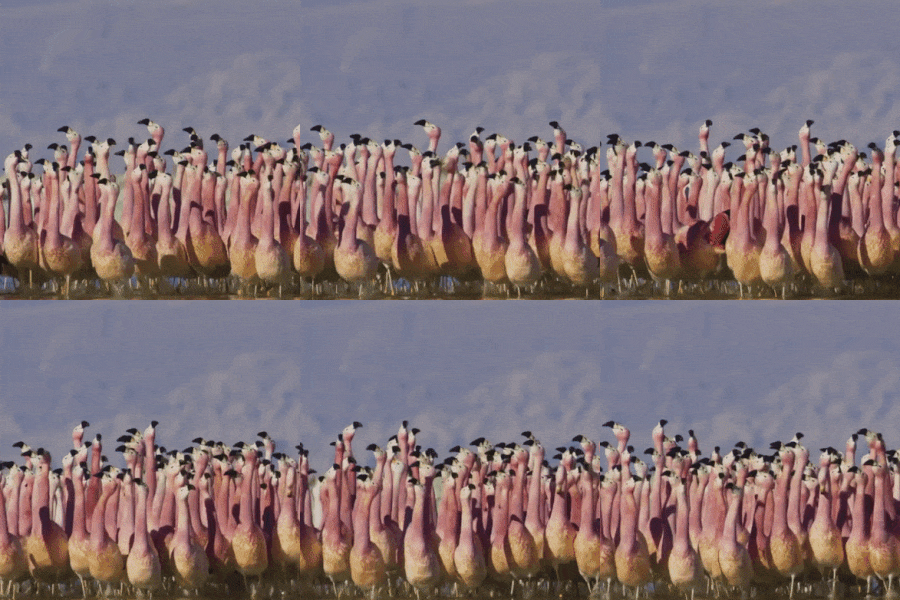
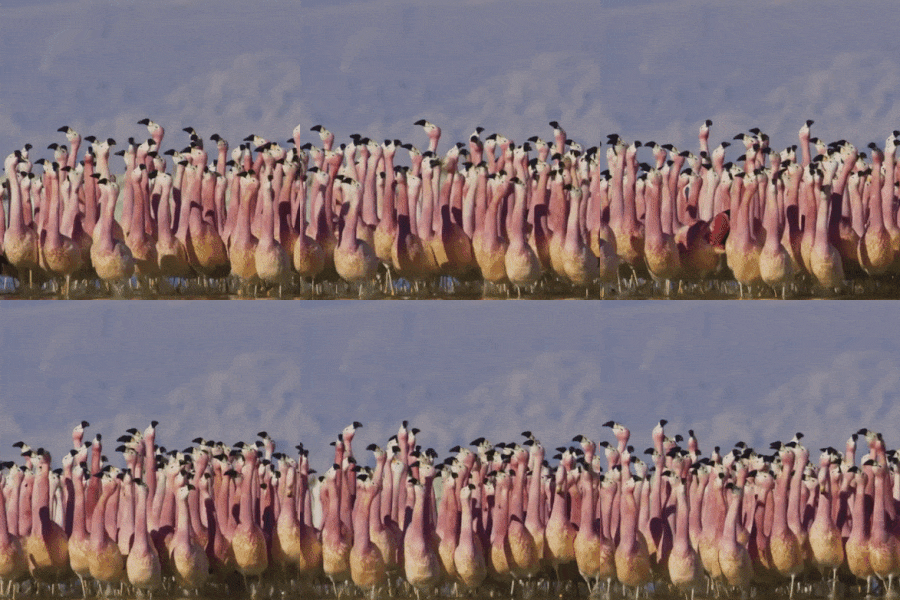
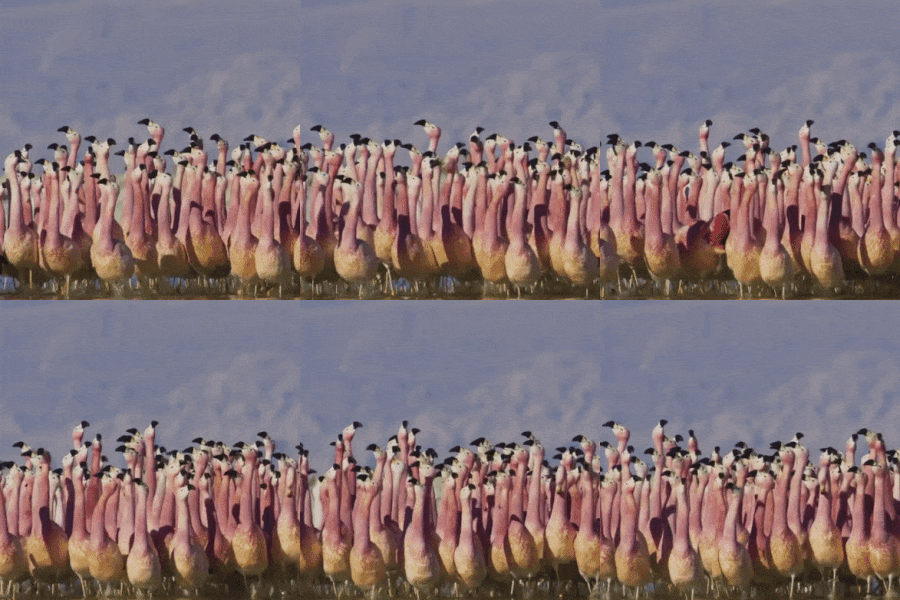
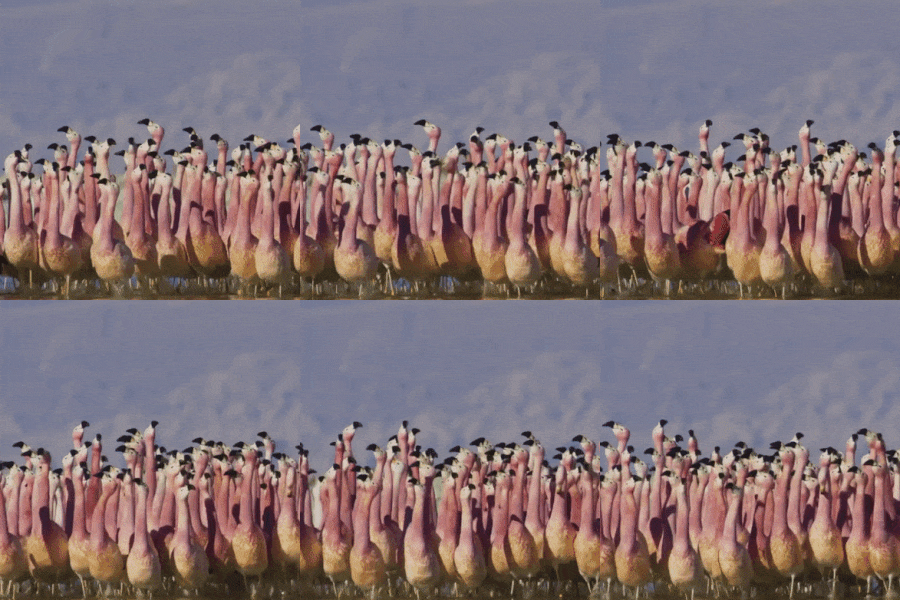
Flamingos
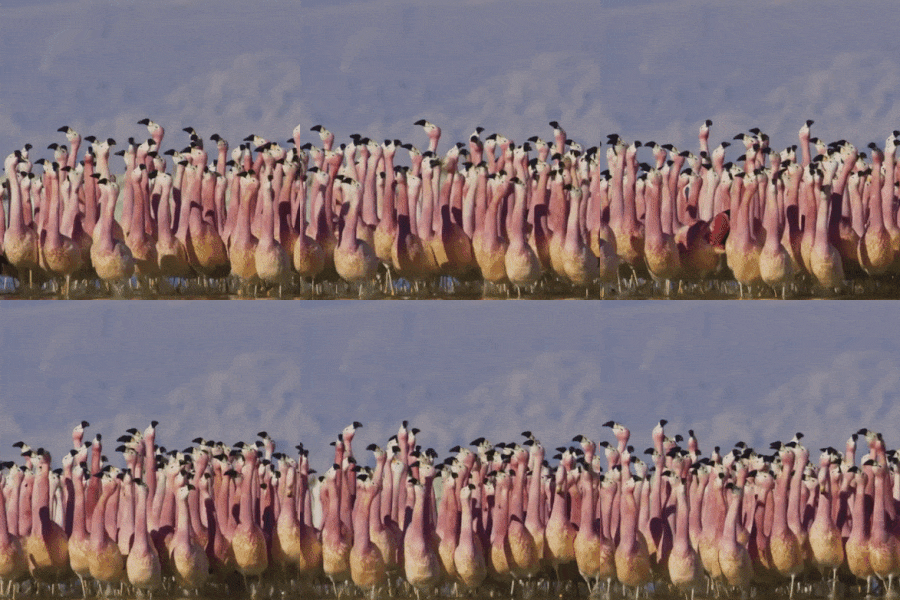
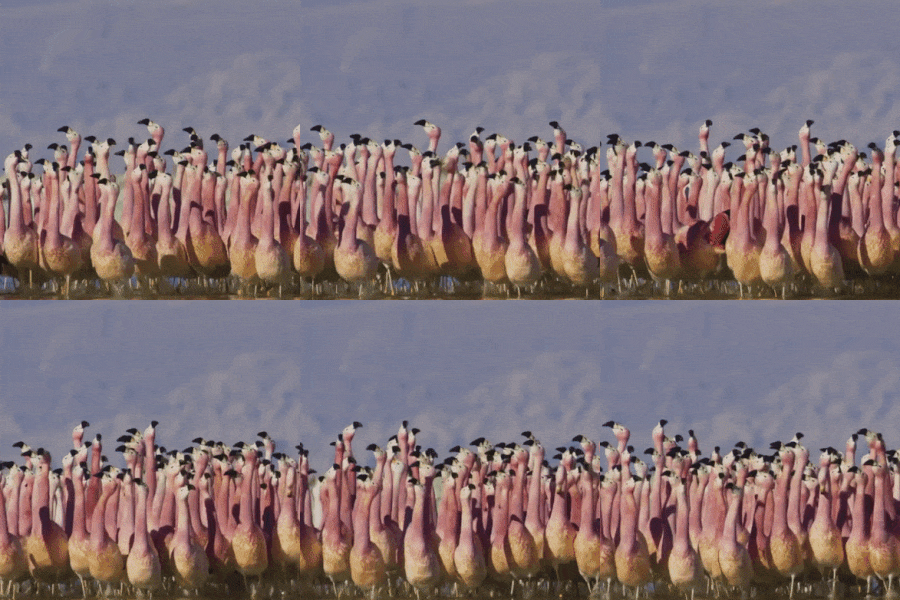
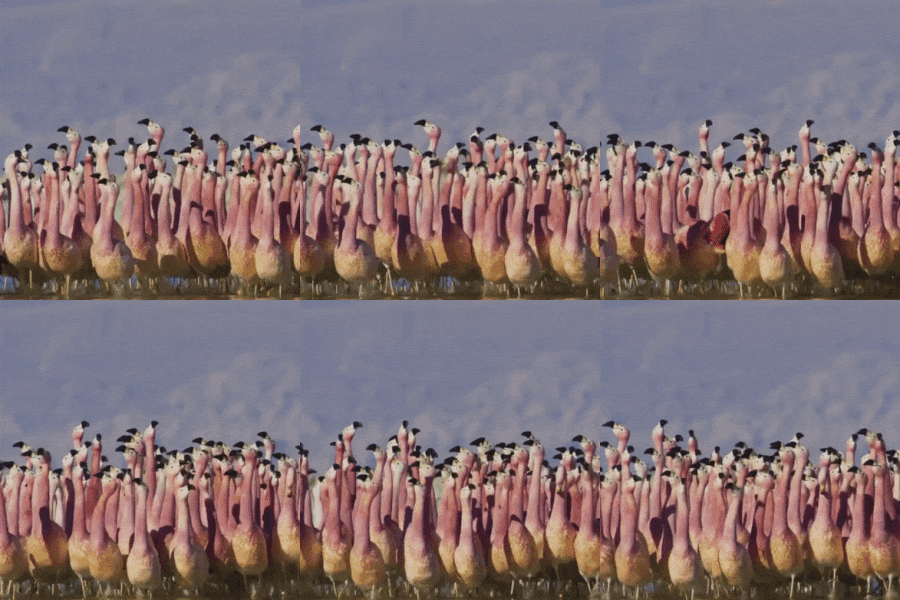
Thermoregulation – The Flamingo thermoregulates keeping its body at a constant temperature regardless of the surrounding ambient temperature. This allows the flamingo to inhabit regions of severe diurnal range where day night temperature may vary from -30 to a day temperature of +40 °C. Using a system of counter current blood flow heat is efficiently recycled and not lost, extremities such as the long legs and large feet are highly vascularized and these can be used for either cooling or conserving heat. The body works as a heat pump so heat loss is minimized when the ambient temperature is cold and heat gain minimized when the ambient temperature is hot. A flamingo’s legs are primary heat conductors. It will stand on two legs when the ambient temperature is hot so as to aid heat loss and on one leg when wishing to minimize heat loss. The efficiencies gained through thermoregulation allow better use of energy during other activities such as flight where flamingoes have been known to travel up to 600km between habitats. Flamingos are also able to use evaporative heat loss methods such as, cutaneous evaporative heat loss and respiratory evaporative heat loss. Cutaneous evaporative heat loss lacks efficiency in hot dry climates due to moisture loss during the evaporative process. Respiratory heat loss, panting like a dog, is a more efficient method of cooling. The flamingo’s respiratory system, its long neck, trachea and membranes within the neck are all part of a sophisticated cooling system.
Osmoregulation – Flamingos inhabit hyper-saline lakes with high alkalinity, often called soda lakes. They ingest food with high salt content and mostly drink salt water, whilst also being able to drink fresh water at near boiling point from geysers and volcanic springs. The flamingo desalinates this water with the use of its kidneys, the lower gastrointestinal tract and its salt glands, these work together to maintain the homeostasis between ions and fluids. Although salts from food and water pass through the kidney first it is dissipated via the salt glands in the flamingos beak. As such the flamingo is an organic water conservation and desalination plant.
Brown Bears
Many mammals hibernate, some much more efficiently than bears but the principles are the same for each. When food and resources are limited and environmental conditions harsh lowering ones metabolic rate conserves energy over prolonged periods. When the bodies metabolic rate is lowered the body temperature drops and the heart rate and breathing are slower. The hibernating body exists on reserves of stored fat built up before hibernation. Whilst hibernating bears are able to recycle their urine and proteins, this stops muscle atrophy and the need to urinate for many months. Bears also have cubs during hibernation and the cubs also hibernate until warmer weather arrives. If humans fully understood how hibernation works and how to induce it in humans this would have many uses including medical and space travel.
The Artic Wood Frog
Many insects, reptiles and fish posses a level of freeze tolerance but the Artic Wood Frog is the master and can be frozen alive. Up to two thirds of the frogs body water can be frozen and it will still live. When frozen, the Artic Wood Frog stops breathing, its heart stops beating and it can endure this state for many weeks with temperatures as low as -16°C. Upon thawing the frog returns to a healthy life. The Artic Wood Frog uses cryroprotectants that lower the freezing temperature of the animal’s tissue to protect its cells. Cryoprotectants include urea (usually excreted in urine) and glucose (blood sugar). Being able to freeze living human tissue without damaging cells would have immediate medical implications including its use for organ transplants. If humans could survive an induced frozen state this may be useful for space travel and space survival.
Microbats
Many mammals, birds and fish use bio sonar or echo-location. It is used for navigation and hunting.
Microbats such as Townsend’s big-eared bats are masters of echo-location. Man-made sonar is multi beam. Bio sonar has one point to transmit sound, the mouth, and two points to receive sound the ears. Bio sonar is extremely efficient at analyzing size, speed, distance and surrounding environments these can all be sensed using bio sonar with incredible accuracy, microbats hunting moths being one example. Microbats use sound waves above the range that humans can hear, ultrasound. For humans bio sonar would be useful for mapping, modeling and navigation.
Hydractinia
Starfish, sea urchins, the Mexican axoloti, newts, some lizards and frogs can all regrow body parts. Every species is capable of aspects of regeneration but this regeneration can be complete (total replacement) or incomplete partial replacement or repair where full or total regeneration is prevented by fibrosis. The salamander can regrow its tail but not its limbs whilst closely related frogs can also regrow their limbs. Sharks regrow teeth throughout their lives, something humans are unable to do, and deer annually regrow antlers. The planarian worm has impressive regenerative abilities, chop them into tiny pieces and each piece will regrow a body but a small marine creature the hydractinia can better all this and regrow its head. The key to regeneration is the retention of embryonic stem cells for life and it is possible that humans may have this form of tissue regeneration but it is genetically dormant. The embryo has the genetic structure to fabricate a body and its associated parts to maintain complete regeneration throughout ones life one would need to retain this ability at a cellular level. The bodies ability to fully self-repair would have immediate use wherever our future explorations may lead, however distant we are from the nearest hospital or donor bank.
Limpet teeth
Abalone shell, spiders silk and tooth enamel are all tough. Tooth Enamel is the hardest substance in the human body and is 96% mineral. Abalone shell an extremely hard ceramic composite (see entry 071116 Composites) made from platelets derived from chalk and glued together with an elastic protein. This combination of rigidity and flexibility gives the shell its unique characteristic and its strength. Spider’s silk is also a composite that combines the properties of two spun proteins. Spiders produce three types of silk each with a different purpose. Dragline silk forms the diagonal spokes of the spiders web, bridgeline silk the point of connection to the webs support and a third more elastic silk that is used to create the continuous spiral of the web itself. Dragline silk is the strongest of the spider’s silks and has a tensile strength of 1.3 GPa (gigapascals). Steel by comparison is 1.65 GPa but spiders silk is less dense and therefor much lighter than steel, so weight for weight spiders silk is 5x stronger than steel.
Limpets are molluscs that spend most of the day scraping their food from the surface of rock with their teeth. Limpet teeth have replaced spider’s silk as the strongest organic material known to date. Limpet teeth have a tensile strength well beyond most alloys at 3.0 to 6.5 GPa. The teeth consist of a protein base interwoven with a tightly packed webbing of nanofibers made of an iron-based mineral called goethite. Like all of nature’s materials it is fabricated at ambient temperature from readily available materials. If we understood, at a molecular level, how limpet teeth are made (grown) we could make (grow) body armour stronger than Kevlar and perhaps eventually use that knowledge to build spaceships and space stations.
Barnacle Glue
Barnacles, a crustacean, have two natural larval stages, the first nauplius is common to most crustacean, it swims freely once it hatches out of the egg feeding on the plankton. The second cyprid larvae stage is unique to barnacles. The cyprid larvae searches for a surface that is exposed to water flow, either a moving surface such as a boats hull or whale torso or a surface within strong tidal flow. The cyprid larvae attaches itself to its chosen surface for the rest of its life and from here feeds on passing plankton.
Barnacles are fixed with an excreted cement. Most bio-adhesives consist mainly of proteins such as gelatin and carbohydrates such as starch. Barnacles adhere by first excreting an oily substance that clears the water from the rock or surface to which it wants to attach, it then excretes a phosphoprotein adhesive (a protein containing phosphorus). Proteolytic activation of structural proteins help bond the protein with other proteins and the chosen surface whilst transglutaminase cross-linking reinforces cement integrity. It is believed that this is similar to blood clotting so the barnacles cement bond is a form of wound healing.
If we understood exactly how the barnacle bonds we could adhere in moving wet conditions with an environmentally benign glue. If the bonding process was fully understood the reverse would be easily achievable creating surfaces to which the barnacle was unable to attach. This would have priority for ships where friction efficiency equates to more speed with less fuel consumption.
Gecko Feet
The Gecko is renowned for being able to climb vertical smooth surfaces such as glass, it can even hang inverted from such surfaces, and yet its feet are neither sticky or use suction to adhere. The gecko’s feet are a type of dry adhesive using millions of fine hairs as contact at a micro scale.
The gecko’s foot spreads wide for maximum contact with the underside of each toe having a series of ridges that are covered with uniform ranks of setae (fine hair). Each setae subdivides into hundreds of split ends with flat triangular tips called spatulas. A geckos’ satae is approximately 110 micrometers long and 4.2 micrometers wide. The spatula end is about 0.2 micrometers long and 0.2 micrometers wide. There are about 14,400 setae per square millimeter on the foot of a tokay gecko, over 3.2 million on its front feet. The geckos feet work by attraction and repulsions between atoms, molecules and surfaces. A molecule is a group of atoms bonded together, the smallest fundamental component of a chemical compound. Atoms consist of protons and electrons. Positive atoms are attracted to negative atoms and this is the basic principle of molecular bonding. The geckos’ feet do not bond as in the chemical description to a surface but use this attraction to grip.
Human design application of this knowledge would include gloves, suits or any interlocking surface that needs an immediate on/off.
I will continue to add to this text when time and relevance permits.
The Surrogate Twin