
211216 – Electronic Gallery – London c06/1992 > words
Flock Project June 1992.
Invented in 1904 the air curtain is a pragmatic form of invisible non-material boundary. A sheet of energy separates two temperature zones with a fast moving airflow screen preventing the internal and external air pressure from equalising. The air curtain is a primitive form of invisible architecture, a type of force field protecting an interior enclosure.
In the late 1960’s the work of Super Studio montaged an architecture that had been reduced to pure energy, there are no buildings or monuments, no borders or boundaries but instead environs that facilitate and enable life. These were politically conceptual projects conceived for an idealised continuous space, the space of John Lennon’s 1971 Imagine.
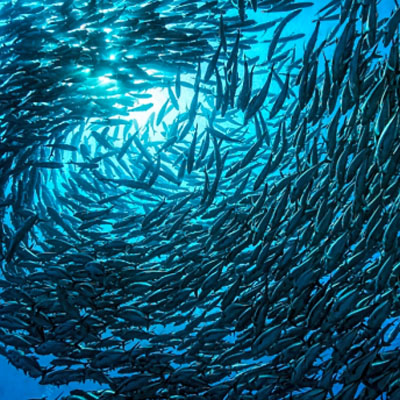
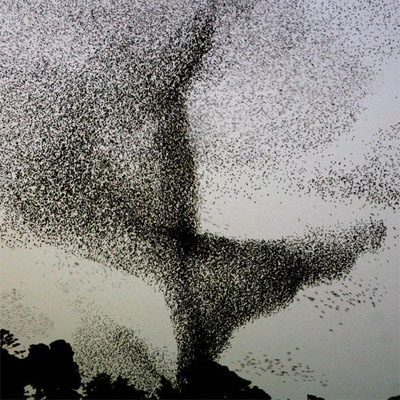
Architecture is organised simplistically, usually with serve and servile zones punctuated by service cores that provide for and support programmes. It is possible to organise a more liberal architecture directly from the programme by deconstructing, re-writing and overlapping programmes. Destructed programmes form compositions that are multi-layered like a musical score, the resulting spaces more liquid and transitory. Flock swarming or fish schooling describe types of organised collective motion of numerous individual members that move as a combined whole. This is usually used as a means of defence by magnifying the spatial consequence of the colony. The flock or school move together with equal speed and direction, instantly and collectively responding to events, actions and dangers. The swarm or school is a kinetic spatial organisational system producing a fluctuating architecture appropriate for software driven spatial typologies.
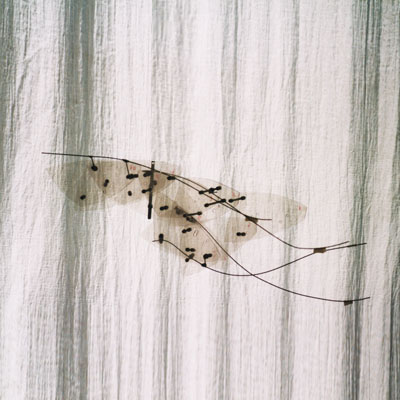
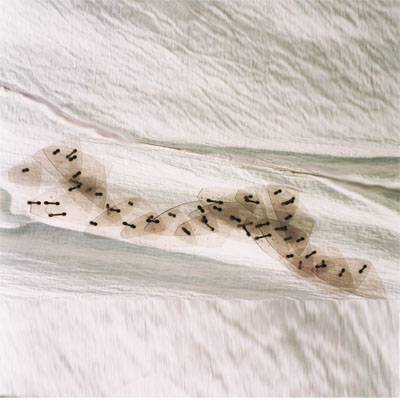
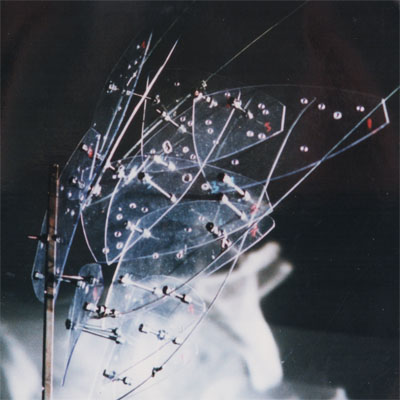
The Light Flute was an initial experimental maquette, it was deliberately shaped like a flute, one end was held and from the other streamed ‘notes’. The ‘notes’ were interchangeable transparencies on stems. Hold the Light Flute to the sun and light through the transparencies modulates the physical space upon which the light falls. The purpose of the Light Flute was not to throw image onto surface, although that was part of its function, but instead to represent the dualism within the concept. When the Light Flute was offered to someone, they would hold it, study it, enquire about its purpose but almost always eventually hold the Light Flute to their mouths and mimic playing. Here without any causal or rational reason an object had directed the behaviour of the user. The Light Flute is an instrument that both modulated space and behaviour. The Electronic Gallery is a larger instrument of the same type.
Film space is an instantaneous scale less space, it can compress and extend time, slow it down and speed it up, it can advance or recede the picture plane expanding and collapsing our perceived physical enclosure. In film space the subject may be viewed simultaneously from several directions, close up or from afar and as such it portrays space as a group activity or a collective Borg experience. The space may also be described by the experience of the subject, the dog running through the woods, the bullet cartridge being discovered. Film space plays forwards and backwards, it loops and replays, it zooms in and out, becomes focussed an unfocussed, it can be colour intense or de-saturated. Film space is a constantly narrated and orchestrated space, well edited and cropped, perfect, hyper-real as it makes public the most intimate whilst normalising the most brutal. Film space is a ride, the viewer is carried through a sequence of pre-determined events, shown what to see, when to laugh, when to walk away. The space is shared, emotions shared, fear as a group activity, we are dragged into the fight; we stand alongside the assailants, within the circle of aggression. The viewer experiences the car chase, the motorbike ride, the crash and the inevitable recurring death. The death can be experienced from inside the subject, as all focus is lost, eyes slowly close and the skies turn black. Through constant saturation we have become immune to film space we accept it as a normal interpretation of physical space, yet it is nothing like the real space we inhabit.
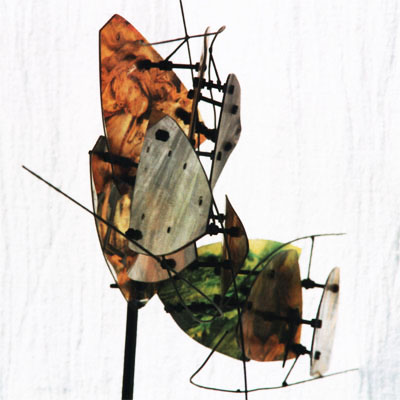
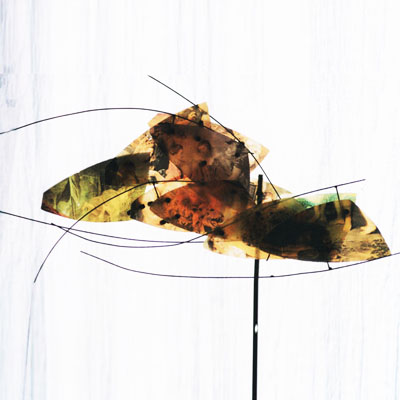
The Electronic Gallery set out to explore the impasse between our understandings of film space and physical space, between conceptual synthetic space and real space. It set out to explore the synchronistic potentials within the simultaneous experience of both spatial types. The Electronic Gallery reinterprets a real time walk by wrapping it in a swarm of choreographed spatial sequencing. The brief questioned both the cinema and the traditional gallery as an appropriate typology, it made a pragmatic shortcut into an abstract meander with a spliced array of alternative spatial experiences en route. The architecture was to be reduced to the liquid medium of film. There are no service cores, no secondary programmes, there is no enclosure and the structure is removed from the immediate spatial experience. Each picture plane, a two-dimensional surface, becomes a tesseract of evolving spatial types working in isolation or together as a hive mind collective. The synthetic space of the picture plane modifies the physical space through its discourse. A building consists of hardware and software, form and event, the Electronic Gallery moves towards the presentation of pure software, the space as energy, liquid, volatile, a womb or an abyss.
The space of fire is a space created by pure energy, it has its own dynamic, is self-forming, it is not a space of enclosure, skin or structure. The Electronic Gallery is a self-morphing space fuelled by the energy of information, sequenced interactive software. It can be fire, water or woods, it can be macro or micro, inter planetary travel or journeys through nano landscapes. The space can be subjective and personal, augmented solely for private consumption. As architecture becomes more kinetic, responsive, space modulating, the system that organises it will need to be more fluid. The Electronic Gallery would be an ongoing experiment, an instrument, a spatial research tool for assessing space-time juxtapositions.
Synthetic space is a timeless medium, it can represent a space that is happening elsewhere simultaneously, represent a space that happened several years previously or be a space that has never existed at all. In it one can listen to spaces from other times, smell fields and factories, interact with it, push through the synthetic forest to discover past or future worlds. In synthetic space the real world has been decontextualized, manipulated, edited, tempered. This hyper-real intensity makes the synthetic space more real, more violent, more exotic. There is a constant dialogue and discourse between real and synthetic space, as synthetic space intensifies to become more real, real space emulates it to catch up. The fictional and the real interact, one directs the other. As real space tries to imitate its super-intense fictional counter part, the fictional space increases its intensity to further distance the real. The fictional synthetic space has been edited and recomposed to deliver hyper-real intensity. One subjectively and subconsciously edits real space-time to align with the concepts and expectations of constructed synthetic space-time. Real and synthetic are mutually interactive, influential and directive this is a self-propelling cultural relay loop.
The early maquettes of the Electronic Gallery explored the spatial ideas of swarm organisation and were left clear. Other early maquettes employed the use of a previously created synthetic space, Peter Paul Rubens (1577-1640) paintings of Marie de Medici, Queen of France. These were painted as a series of twenty-four four meter high frames that depict events throughout the Queen’s life; by default they incorporate time and could easily have been a storyboard for a film and of course they were pure fiction. Marie de Medici was an unremarkable person with an unexceptional life. Rubens paints her as a divinity taught by the Gods, a French heroine of extraordinary adventures, noble deeds and fearless undertakings. Thus immortalised this is the image that history adopts and with the adoption of the myth her real world powers increase.
In a world that is a copy of a copy of a copy, that is simulated and re-assimilated there is little attachment to anything natural. i.e. strawberries not tasting like strawberry drinks, that in turn make suppliers genetically modify strawberries to taste more like strawberry drinks. This is our world, the world in which we live and architecture and film should explore this space.
See also Fruit Pastels 161216
Images Left to Right. 1 Herrings School, 2-6 Electronic Gallery, 7 Starlings flock.
The Surrogate Twin