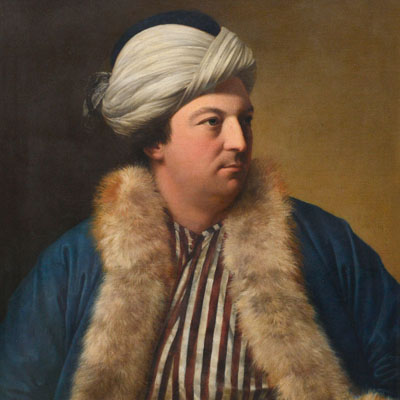
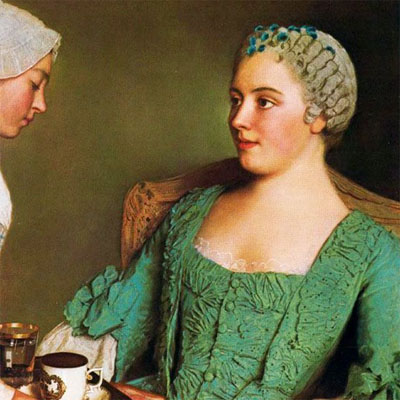
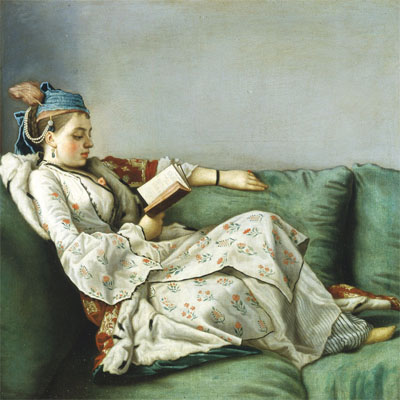
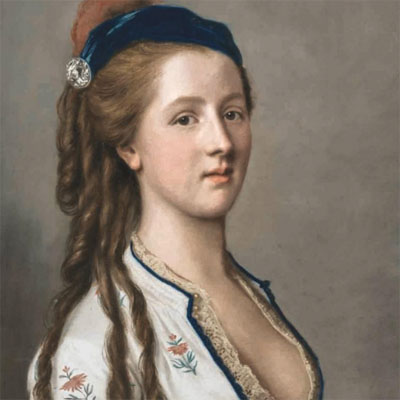
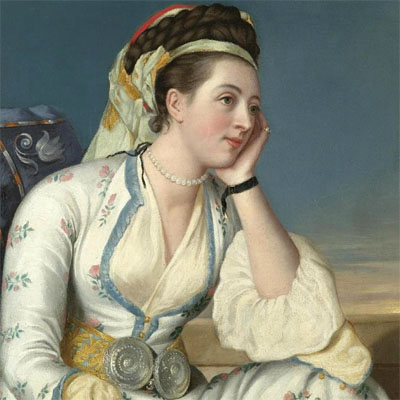
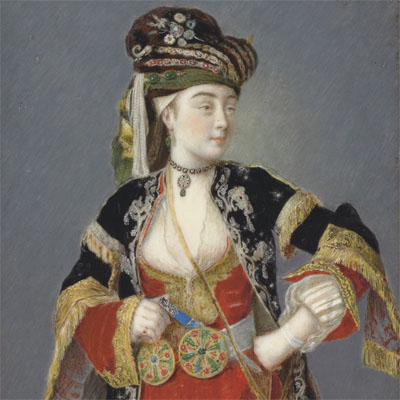
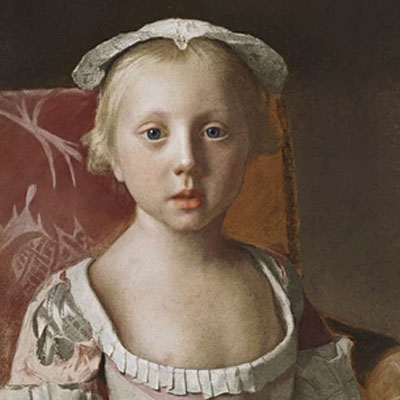
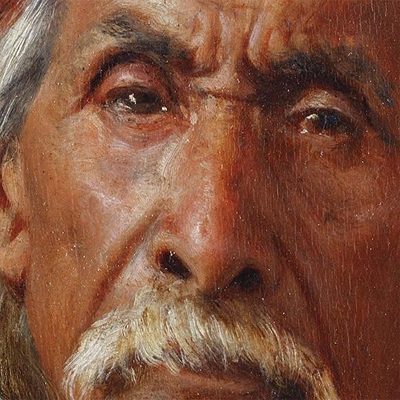
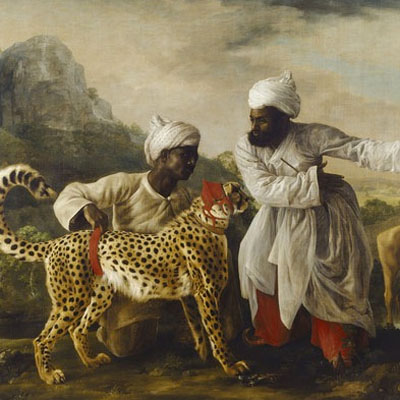
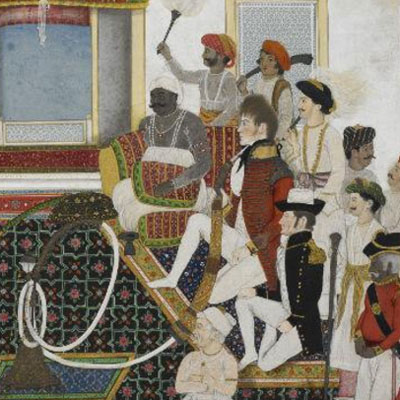
The hyper-realism of the paintings of jean-Etienne Liotard reveal an invaluable insight into the influences of Eighteenth Century European fashion. Open sleeves, applique panels, articulation of the elbow, multiple layers, Chinoiserie and Middle Eastern influences all combine to form a rich fusion. Photographs were not allowed inside the exhibition and the photos below do little to show what I found so interesting about the clothes. Costumes worn as a specific combination were of interest. A bodice, a skirt and a top do not sound too different but the combination was so alien to todays ready to wear. Under the bodice was a lace top, this consisted of a lace front and collar it had no back or sleeves and could only be worn with the bodice and top. The top tight fitting across the shoulders, split sleeved at the top of the arms and tight sleeved from elbow to wrist. A separate sleeve was worn under the top and could be seen at the cuff, the elbow and the split at the shoulder. The sleeve would be finished with a ribbon at the elbow and a lace cuff, all separate items. Dressing in this way was a time consuming group ritual with the need for assistants.
Imagine being a cartographer in 1770 onboard James Cooks Endeavour. The ship lands on the east coast of an unknown huge land mass. There is a sandy beach, trees some hills in the distance and from this information it is intended to chart the new continent. Drawing a landmass by looking at it obliquely mile after nautical mile. Mapping the then unknown planet, marking shallows, currents and wind direction. Collecting all the information required to establish new routes on which to trade. Doing all of this on an oak built, square rigged, three mast Bark. The accuracy of the information collected is astounding and it established the infrastructure required to build a commercial empire. It is difficult to view this exhibition without thinking of Google, Amazon, Facebook or Apple mapping and controlling both our real and virtual worlds. Substitute ecosystem for infrastructure and the parallels are obvious. This is an amazing exhibition covering a heroic period of human achievement.
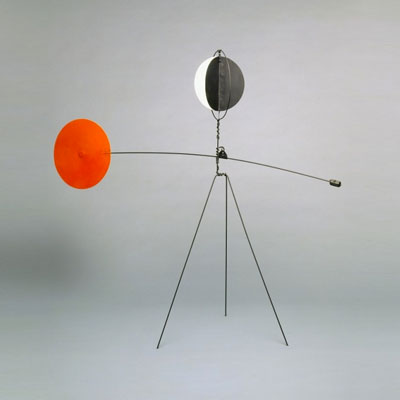
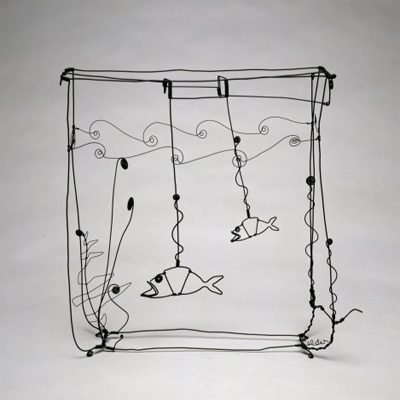
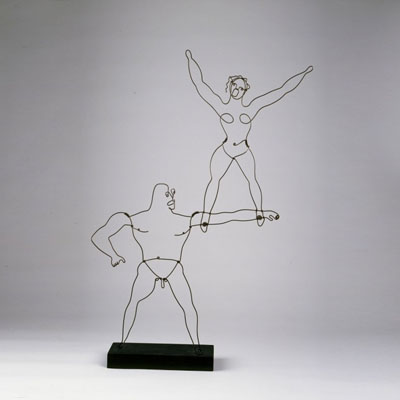
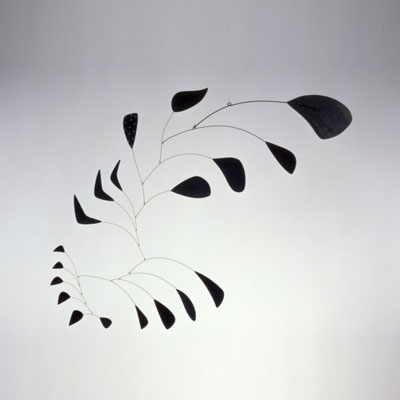
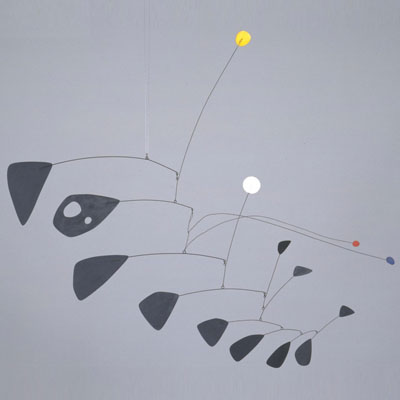
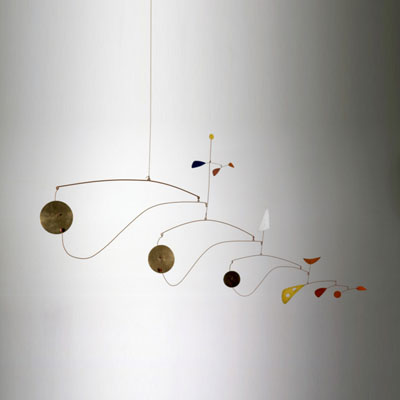
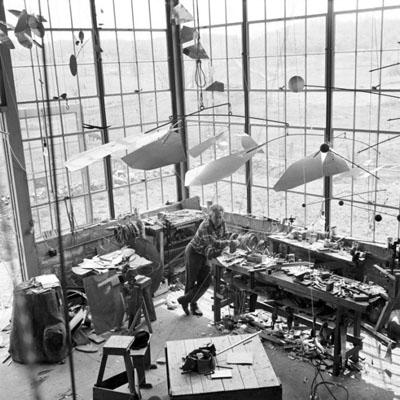
Every architectural student has probably tried to incorporate the spatial fluency of a Calder into a plan, a section or circulation diagram. Trying to retain the lightness and delicacy of the Calder in the heavy and rigid embodiment of architecture and like most students tried and I failed. A Calder is like a dance, it is an event that happens in a space and is not the space itself. The Calder exhibition is charming. The work is filled with the desperation to create beauty out of nothing. Its context is either between wars or immediately postwar. The materials used are minimal, the tooling simplistic and the ideas initially colloquial. Out of all this emerges a kinetic abstraction and a new international modern. This is an impressive biographical exhibition of one mans life’s work. A must see.
141115 – Distance – The National Portrait Gallery, London > words
The high windows of the café at the National Gallery make the space conducive to reading. I have chosen Satre’s Intimacy an essay I have not read for decades and short enough to be read in an hour. The space is empty as we always arrive for breakfast as soon as the doors open. Intimacy upon its second read seams disjointed, unfocused. It seams to be trying too hard as it jumps from city space to the space captured by a caress. It crudely generalizes on gender and nationality describing each through the micro details of body odour or the roll of skin. The story has no rhythm or poetic but it is haunting as they are the spaces that we all know but never talk about.
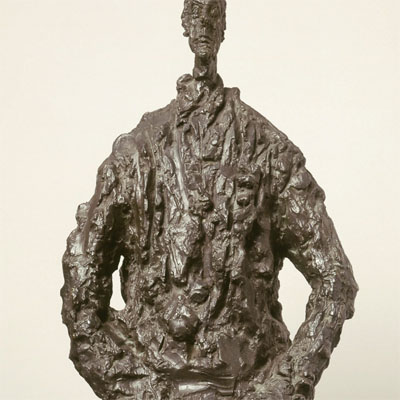
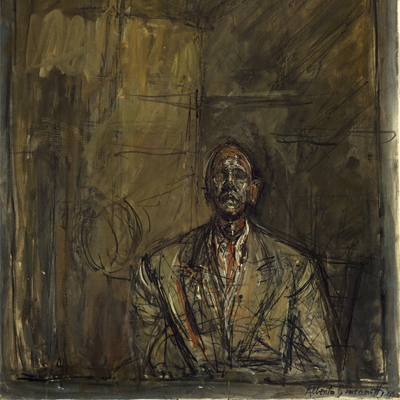
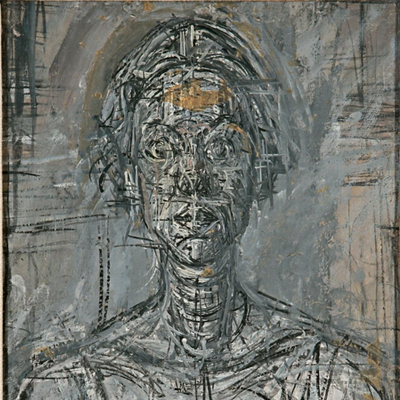
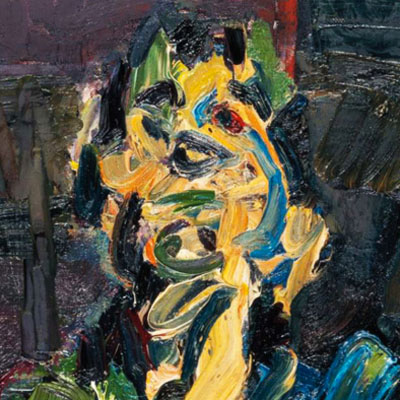
We are off to The National Portrait Gallery to see the Giacometti exhibition and a small gem it is to. We are all aware of Giacometti’s ideas or presence and distance and the techniques used, the undefined edge, the elongated body and shrunken head. We are aware that the subject and background are given equal weight and that a moment and a distance are captured unique to that space and time and then vanish forever. What struck me most about Giacometti’s work was the similarity of working method across both 2D and 3D mediums. The constant building up of background, of mass and volume followed by the sharp cutting back, the incision that delineates an overlay that is the micro second before completion, the line on paint or the cut made by the knife on clay. Giacometti’s frenetic back and forth was not too dissimilar to Sartre’s spatial descriptions, so Intimacy was an appropriate prelude indeed.
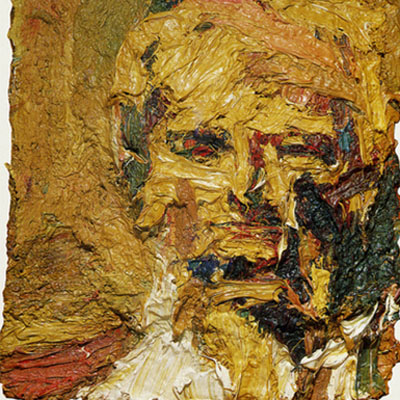
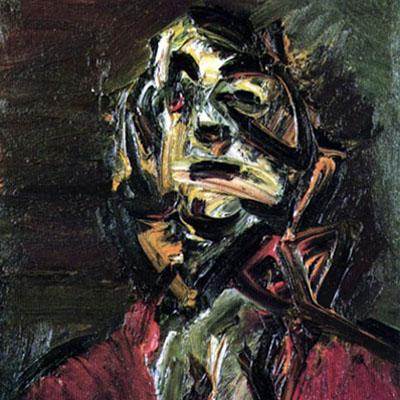
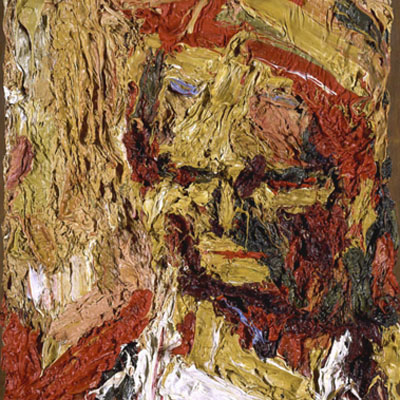
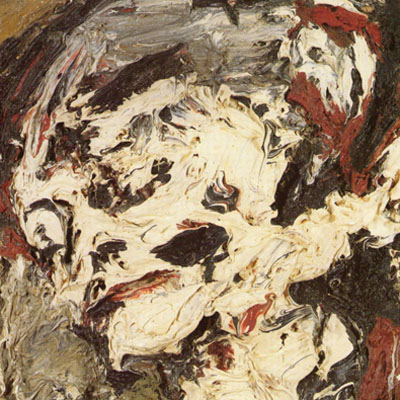
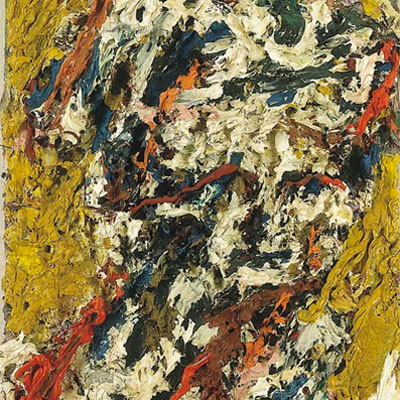
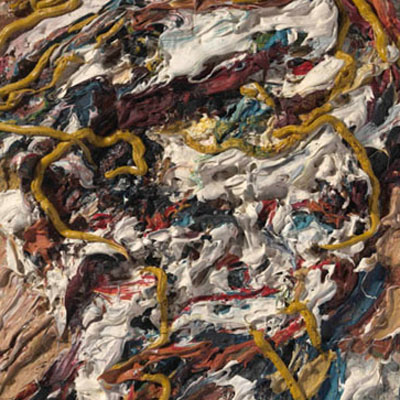
311015 – Frank Auerbach – Tate Britain, London > words
Imagine a 1970’s habitat jumbo cord sofa in beige covered in matted Afghan dog hair and Persian cat fur balls. Smeared onto this are the remnants of an exploded lava lamp and stains left by spilled coffee, angel delight, cherry coke and a TV dinner. This is then dusted with years of joss stick and cigarette ash that has been repeatedly scraped clean until patches are threadbare. This is an Auerbach.It makes no difference whether this is the 1950’s or 1990’s this is always an Auerbach.
The three dimensional texture of thickly applied oils on canvas has huge appeal I am wondering if I can find a computer programme that can weave or knit textiles into a 3d matrix.
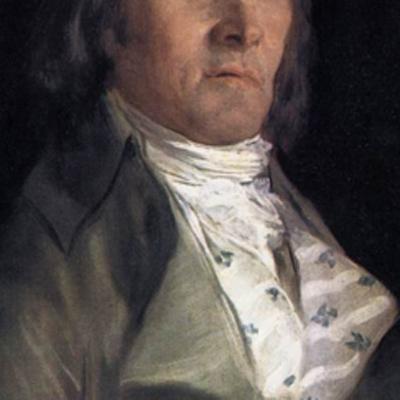
231015 – Goya – National Portrait Gallery, London > words
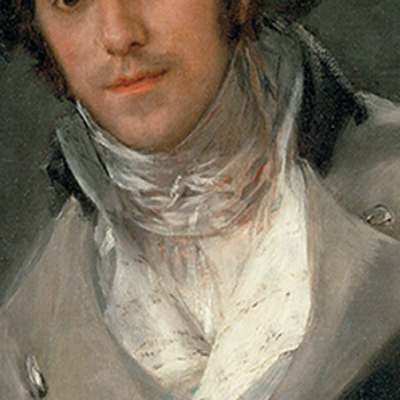
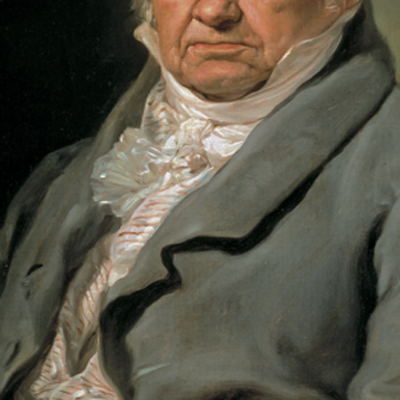
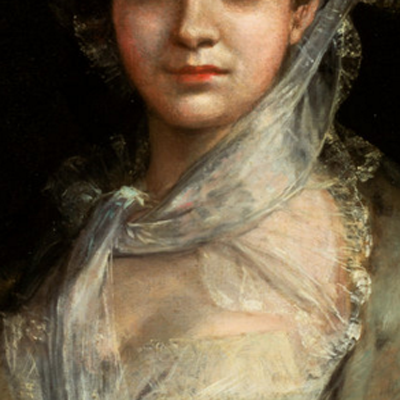
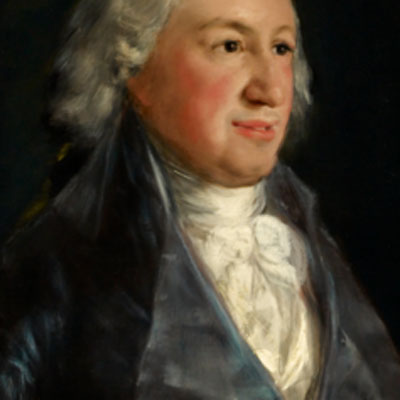
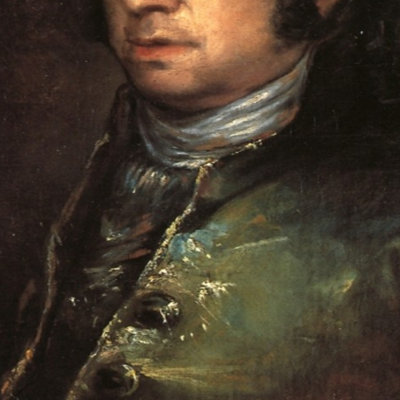
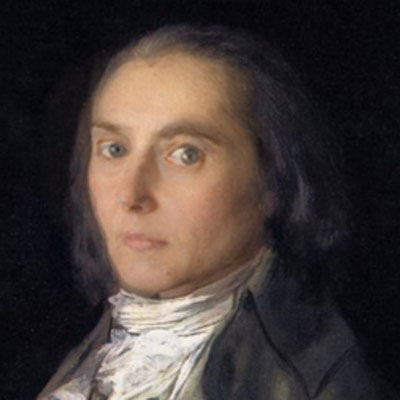
I came to the National Portrait Gallery to look at Spanish lace, border embroidery and how to tie an eighteenth century Spanish shirt. The exhibition is not large and the work ranges from masterful to mediocre. The crowds were impossible and even my membership pass helped little. Viewing paintings whilst in a queue or when standing three people back is pointless so I will return to this exhibition later in the year when things quiet down. And yes that’s me on the end, sorry couldn’t help it.
200915 – Gilbert and George – Bethnal Green Road > words
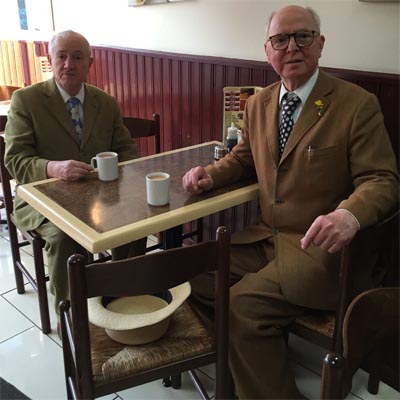
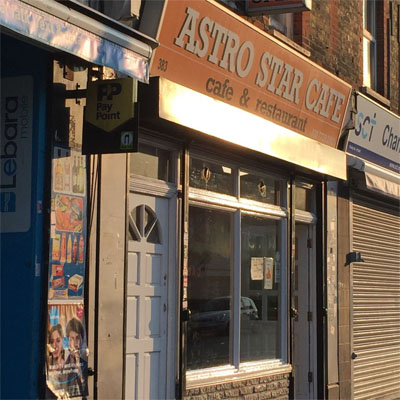
Special treat today, 8am driving along the Bethnal Green Road heading east and we see Gilbert and George walking in the same direction. I haven’t seen Gilbert and George since I last worked with them on the Serpentine exhibition in June 2002. I was lucky enough to visit their house, a house without a kitchen. We stopped the car and jumped out to say hello only to catch them as they popped into the Astro Star Café for breakfast. Here’s a wonderful photo. I would have liked to discuss yesterdays Pop exhibition at the Tate but a potential new Westwood campaign was shouting for attention. I’ll have to ask Vivienne. Thanks for the photo Gilbert and George.
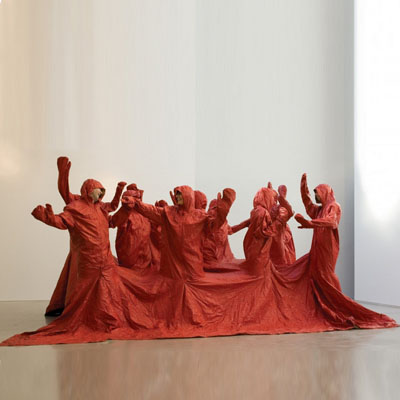
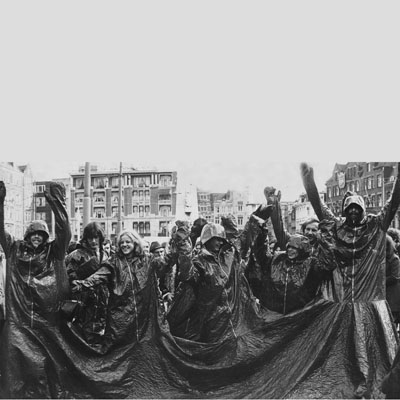
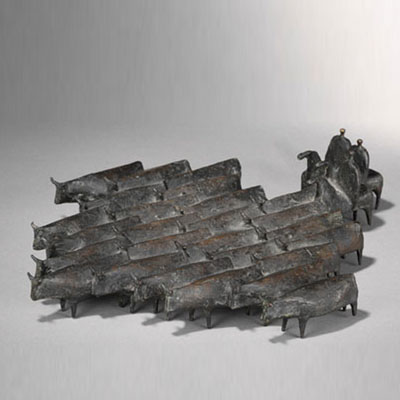
There were three highlights to this show. A painting that can be displayed either way up, a re-composition painting and Nicola L’s Red Coat. Group clothing here used to represent the political collective reminded me of Fritz Koenig’s Herd bronze sculptures of earlier years.
I have always found Pop Art difficult as I find it shallow and immature, an endless string of one liners. We discussed this (husband and I) at the show and concluded that pop Art was teenage youth trying to escape Edwardian values. All that separated the youth of the sixties and the Edwardians were the Great recession and two World Wars. Not a strong foundation to argue for evolutionary art.
Image left to right. 1-2 Nicola L’s Red Coat, 3 Fritz Koenig, Herd.
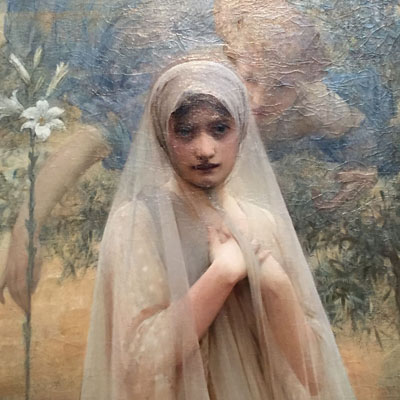
Visiting Tate Britain today to view the Pre-Raphaelite collection on permanent display. The Annunciation, by Arthur Hacker, 1892 is a stunning, otherworldly painting, a subtle, emotional dreamscape that generates a powerful and hypnotic reflection. Contemplation continued in the member’s room overlooking the Thames, also the perfect setting for tea.
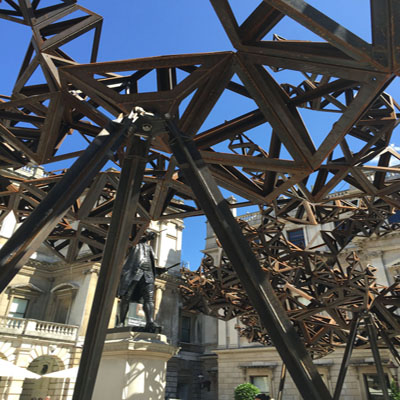
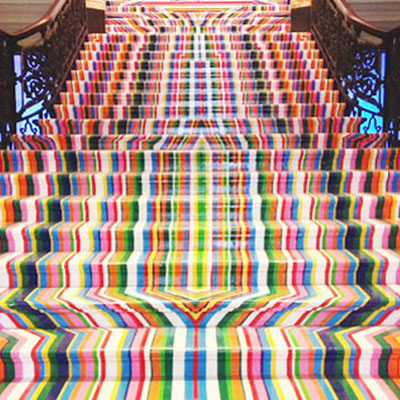
Sculptor Conrad Shawcross’s canopy of welded-steel clouds artwork entitled ‘The Dappled Light of the Sun’, in the Annenberg Courtyard outside the Royal Academy and Jim Lambie’s staircase installation.