

170616 – Biomimicry – V&A London, SW7 > words
Biomimicry the latest hyped trend does what many have previously tried to do utilise and learn from natures billions of years worth of R&D. So what is different this time around? The answer is thirty years worth of useable desktop computing. In the late eighties desktop computing became accessible, affordable and useable although they then had very limited CAD ability their power has increased exponentially over the last three decades. Information that was once the reserve of NASA or the military is available to all within a few clicks and new information is globally distributed from every bedroom or coffee bar laptop or ipad. Equally unprecedented is the intensity with which we are able to see. We have learnt new ways of seeing. We can look at the macro cosmological or micro intercellular, we can x-ray, gamma ray, infra-red and spectrum analyse. We can time delay photography over decades or nanoseconds speeding up or slowing down time and subject. At the same time access to information has, at last, allowed multi-disciplinary groups to form, expediting our transition from compartmented scientific studies to understanding systems and symbiotic synergies. The speed at which this transition has taken pace has been an exhilarating roller coaster ride sadly leaving many wrong footed or with displaced skills on route.
Today’s series of lectures ran from 2pm to 6pm. Talks by academics and practitioners on a range of implications and applications of biomimicry from the obvious to the incomprehensible. Our computers analyse and our robotic machines fabricate. There is a youthful optimism, a genuine excitement as new frontiers are opened and explored. Two things struck me from the talks, one to do with approach and methodology and the other to do with power and chronology.
One. Architecture use to be about problem solving; practising architects know how best to manipulate the rules. Light in relation to floor spans, distances between service cores, modulation of structural systems, thermal modelling, orientation and optimisation, procurement logistics – things like that. Cultural buildings, the ones architects love, have greater artistic license due to their inherent global semantic. Cultural buildings generally have large budgets justified by their symbolic and political agendas and not their pragmatic requirements but these architectures are still very much part of the problem solving approach.
The young architects presenting today do not problem solve as described above but instead edit. They edit algorithms that in turn control fabrication processes. At concept they have little idea of the purpose or form of their architectures. Form is generated through feedback, perhaps to a set of rules, abstract or otherwise but often simply edited by a strong aesthetic intuition to produce a scaleless landscape that can be occupied somewhere downstream during the design process. This approach may at first seem alienating but it has a long lineage of architectural precedent including the work of Cedric Price, Gordon Pask and John and Julia Frazer. In fact any system that is responsive and grows by accretion can be used as reference. Even cities, as these develop organically are generated by often abstract rules. Cities are occupied for purpose, how and when required and have a remarkable similarity to algorithmic generated form the difference is primarily scale, the length of the chronological evolution and the increased complexity of the editing criteria. The richness of the non-prescriptive algorithmic approach is, without doubt, its ability to generate new, previously unimaginable aesthetically intoxicating forms of exquisite complexity and beauty. Gordon Pask who once said “Whilst computer-aided architectural design is useful if repetition or standard transformations are required, it is inadequate to the task of producing new forms.” would be happily on his knees in disbelief. At numerous reviews within academia I have listened to a lot of ‘hot’ air and trawled through acres of equally ‘hot’ drawings all associated to the endless pursuit of new forms and the occupation of the residual consequence. Better critics than me have openly slept through whole presentations. But just as Gordon Pask, so understandably, missed the potential of computing we should remain optimistic that the residue will be occupied. That somewhere downstream, sense through reinterpretation or discovery will capitalise on this explorative pioneering.
Two. In ‘Skyfall’ Bond sits staring at Turner’s ‘The Fighting Temeraire’ oblivious to the ensuing parody that will follow. A spotty youth in the form of ‘Q’ sits alongside Bond and explains the melancholy that has been captured in oils. Q explains the inevitability of time and progress as the great three deck battleship is steam driven to dock to be broken up, now old and out dated.
Talented innovative youth is not a new phenomenon. Mozart, Borromini, Picasso, Pascal, Piaget and Ampére immediately come to mind along with the millions of innovative youths that never become famous. However today’s innovative youth with the help of social media and the Web have access to previously unimaginable influence. Ideas and personas are grown virally creating disruptive opportunities for those with little real world experience. Hopefully within this flux, where new ideas battle for longevity, natural filters will distinguish whom, which and what is relevant. The last two decades has witnessed start up CEO’s and their businesses valued at billions while they are still in their twenties. Businesses and influence of this stature would previously have taken multi generation companies decades to acquire. Handing the reigns to those so young, when their influence is global is an experiment in itself the consequence of which is for future historians to tell. But these are changing times and at a time when we need change and as an optimistic educationalist I can only say here are the reigns, now where are we going.
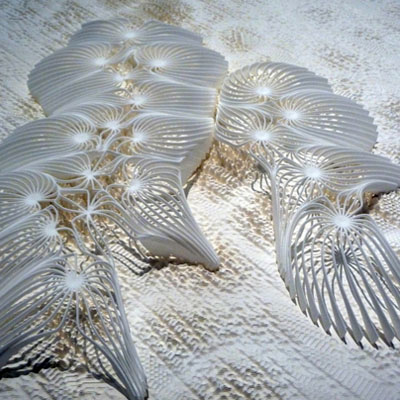
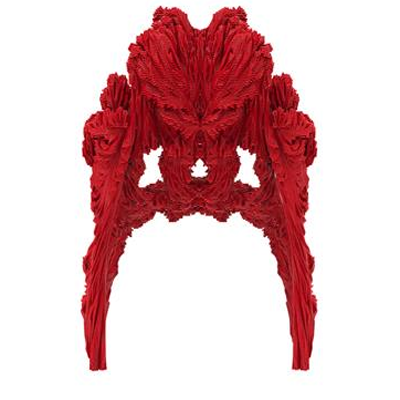
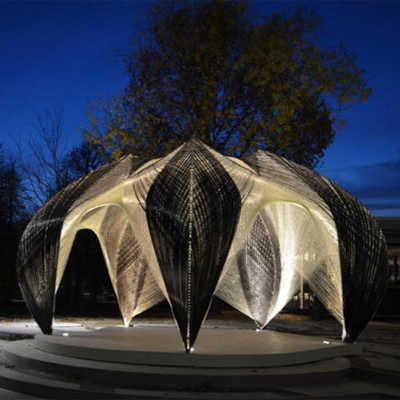
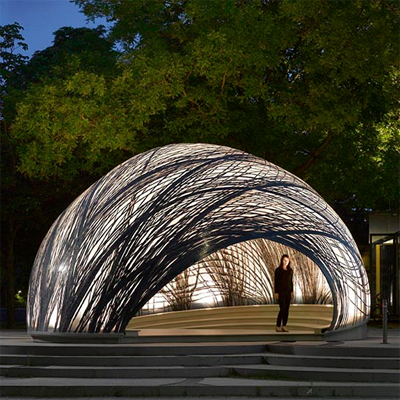
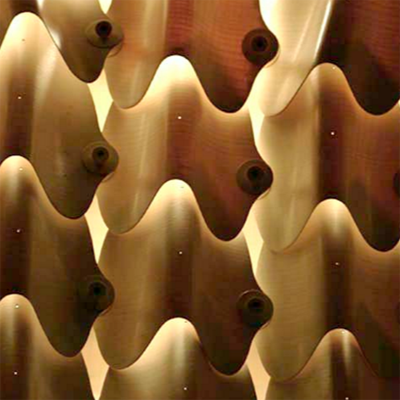
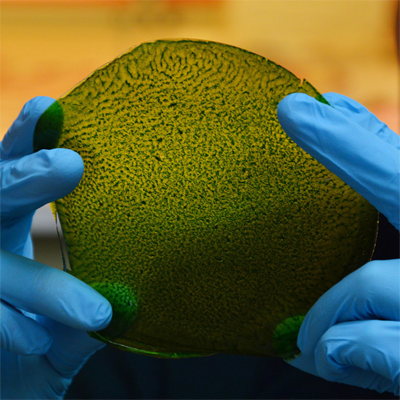
Images from left to right – Alisa Andrasek x2, Achin Menges x3, Julian Melchiorri, Michael Pawlyn.
The Surrogate Twin