
020517 – les petits rats – London > words
It is 1881. The Belle Époque is at its peak, midway between the Prussian War that ended in 1871 and the First World War that was yet to commence in 1914. The peace and optimism of the intervening years produced a flourish of engineering and artistic achievements with Paris at the epicenter. Café society, opera, fashion, cabaret, philosophy and art attracts the talented and this invigorates Paris with energy and productivity.
Two centuries prior in the Royal Courts at Versailles the only way to get ahead was to get noticed and then to slowly work ones way up through the ranks via friend, family and favour. The gardens, the courtyards, the corridors and the bedrooms were where the business of promotion and patronage were discussed. The principal destination and ultimate objective, was the kings bedroom, where all matters of importance or of State were decided. Lifetimes could be consumed waiting for your chance to be presented. If you were female, life at Court was considerably more difficult. The female courtesan was expected to be a woman educated in the arts of dance and singing. Her role was to provide entertainment and companionship to the rich and powerful, from this she could gain independence, wealth and access to education and the affluent Court society. Options for females during the Renaissance were few. Women of nobility with a rich dowry may have been able to achieve a political marriage to a powerful partner but a woman without lineage, dowry or independent means had few opportunities and the Courtesan route was often the chosen career path. There have been many famous courtesans but inevitably considerably more not so famous ones.
Two hundred years and two Republican Revolutions had passed between the Royal Courts and the Belle Époque. An aristocracy and the upper middle class have now replaced the Royals, a Nouveau riche of industrialists and financiers that now hold political and fiscal power. However, The Belle Époque was only Belle for a small percentage of the population. In Paris two thirds of the people still lived in poverty.
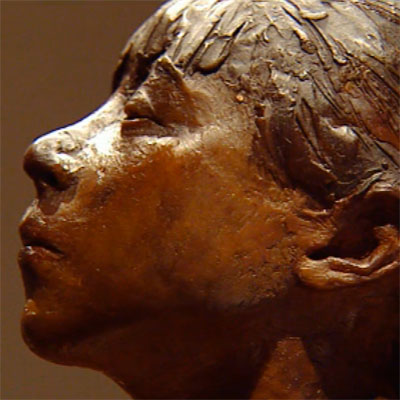
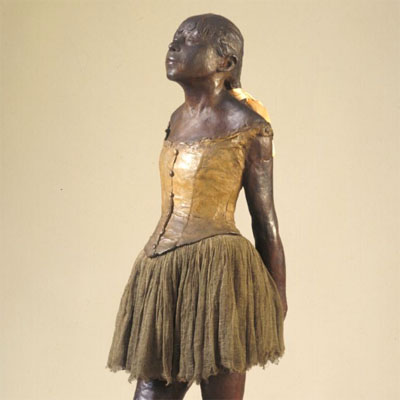
In 1881 Degas unveils La Petite Danseuse de Quatorze Ans to the shock of the critics. The wax model of a fourteen year old would be ballerina defied the classical laws of beauty expected by the Academies of the day. Wax as a medium was also an issue of contention, sculpture should be made in marble or bronze, lesser pieces perhaps in terracotta, but wax was the medium of the medical profession or the arcade. The Little Dancer was a peculiar thing, created from a steel frame, covered in clay then covered in wax, dressed in real clothes. The sculpture of a young girl posed in the fourth position right leg forward, hands behind her back. She wears a real tutu and ballet shoes. She has a wig of real hair and a fabric bodice both overlaid with wax, half real and half sculpture. Wax emulates reality with wax stockings complete with wrinkles. The whole figure two-thirds life size was to be shown on a plinth in a glass case. Offered as a specimen, reality captured and encased, a pose, an expression, hermetically sealed, straight from the dance class and into the art gallery. Degas was 45 when he began work on the Little Dancer and he rarely left Paris with the city as his inspiration, he was a painter of modern life. Degas came from a wealthy banking family, had no wife, no known mistress, no children, he was a loner, the voyeur that would paint some of the harsh realities of the Belle Époque.
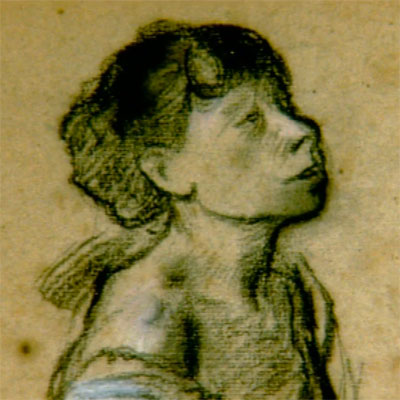
Dance was one of the few opportunities available for young poor women. Girls as young as ten were apprenticed to the ballet school, they were known as the ‘little rats’, as if ‘little rats’ could ever be a term of endearment. This Little Dancer was a real person. Her name was MarieVan Gœthen from Boulevard de Clichyin Montmartre. She was the middle of three sisters who all became dancers. Marie turned fourteen in 1879 and Degas drew Marie numerous times before he decided on the position of the sculpture. Degas was an artist trained in the classical tradition, to draw the body naked and to clothe it later, to draw with line and to clothe with colour and he drew Marie naked and clothed. One can imagine the naked wax sculpture before it was dressed. Not quite a pet, or a doll or a sculpture.
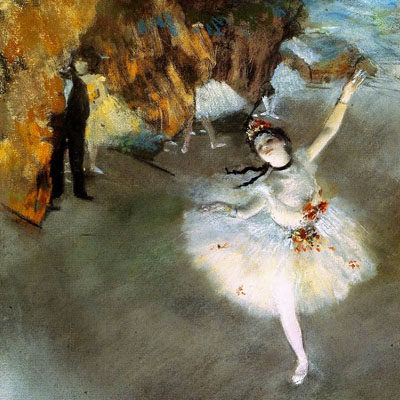
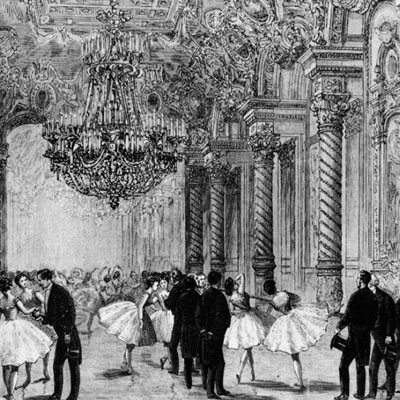
The Little Dancer was first to be shown at the 1880 Impressionist show but was unfinished, famously leaving an empty glass case in the midst of a gallery for a month. It eventually premiered in the 1881 Impressionist show. When unveiled the shocked audience did not see a dancer but instead a prostitute, ‘une fleur de la gouttière’. The sculpture was compared to a monkey, a primate, a criminal, a medical curiosity. It was accepted that teenage working class ballet dancers were expected to pay their way through school with patronage or favours. Their clients were the wealthy season ticket holders, the men in black with top hats that haunt many of Degas’ pictures. These were the privileged few that had access to Le Foyer de La Danse at the heart of the Opera House. Le Foyer de la Danse was a kind of gentleman’s club that only men and ballet girls could enter. After two hundred years of progress the clandestine and illicit workings of a Versailles plan have simply been rotated 90 degrees and can be clearly seen in the Opera House section.
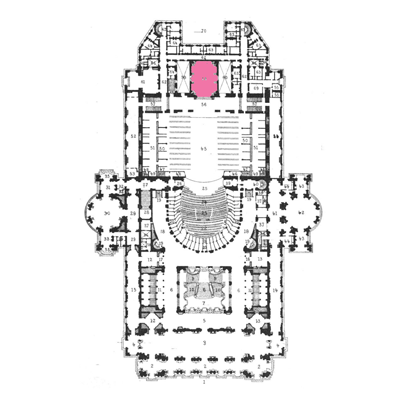
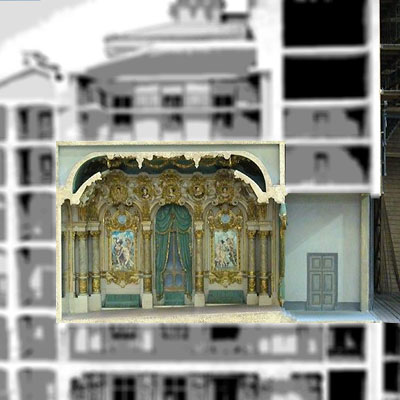
Charles Garnier built the Paris Opera House between 1861-75. The Opera house is of an opulent Beaux-Arts Second Empire style with extravagant Neo-Baroque details. The commission was won by open competition from 170 entrants. A commission Garnier won at the age of thirty-five. Built at the time of the Emperor Napoleon III the Paris Opera was to be an extravagant national symbol and monument. The Opera was always to be a meeting place of the rich and powerful, housing ample foyers, corridors and alcoves for private meetings. Yet the Paris Opera House has an unusual plan and section and these reveal a lot about the society that created it. In the heart of the plan and section, located directly behind the stage is a huge ornate room that serves as a mirror to the society that created it. The Foyer de la Danse was a space designed specifically for the meetings between the dancers and the wealthy patrons of the Opera. A space where a young dancer may find a patron or finance for favours that would help pay her way through training. This was not a space for a discrete casual meeting, the meeting that may have taken place in the bar or restaurant. Here it has been formalised, monumentalised at the heart of the building. This gentleman’s club is very much part of the internal mechanism that is the Ballet and also very much part of the society that supports it.
From a twenty-first century perspective this formalisation of exploitation is beyond belief, especially when the space has such scale and ornate embellishment. In the Paris Opera house Le Foyer de la Danse sits within the upper hierarchy of all its spatial types. In the city the Opera House is typologically within the upper echelons of public buildings. In Paris in this post revolution, post republic building we see revived the age of the Courtesan. Except here, in this public building, unlike the respected Courtesans of the Royal Courts the women are replaced with desperate fourteen year old girls that have little option outside of dance to make any life for themselves. Here the established relationship between the vulnerable and the powerful is formalised and adorned in Baroque splendour, built into the heart of a public building, vetted through councils and competition. The space of the Foyer de la Danse sits unashamedly, architecturally, central to both the plan and the mechanism that financed the ballet. In the pictures of the Foyer by Degas the dancer is the point of focus, the opulent space recedes and the men in top hats hover and haunt. The drawings are the reality sketched over the grand illusion proposed by the architecture. An architecture that is representative of a system that had changed little since the Royal Courts of Versailles.
Things did not go well for Marie Van Gœthen after the Little Dancer was unveiled. She first began missing classes that in turn incurred fines. Eventually in July 1882 she was sacked. Marie had been known to frequent Le Chat Noir, a notorious bar where her elder sister had been charged with theft and was now in prison. Marie’s younger sister Charlotte, would continue in dance at the Opera for the next fifty years eventually becoming Professeur de Danse. Nothing is known of Marie Van Gœthen after 1882.
Images from left to right 1-4 Degas, Little Dancer, 5-7 Palais Garnier
The Surrogate Twin