
270616 – IVH Future Couture – London > words
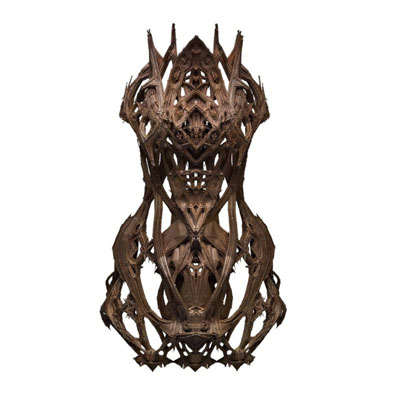
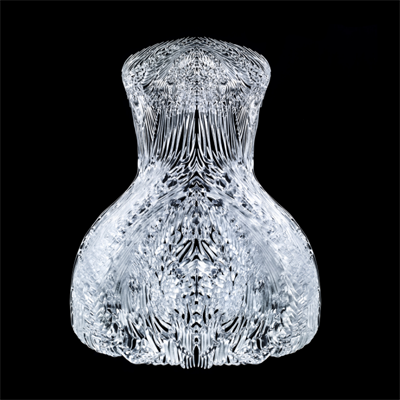
On the shelves in the studio is a book from 1992 Evolutionary Art and Computers by Stephen Todd and William Latham, a mathematician (Todd) and an artist combo. In this book now nearly a quarter of a century old lies an outline for the spatial form making of the art schools for the next few decades. The art is generated by simplistic rules typically scale change / rotate / move on xy or z axis – repeat. This basic algorithm generates spiraling patterns similar to fractal geometries. Minor alterations to the percentage of any of the three above radically alters the final form and the permutations are infinite. Add duplicate / mirror image and a 3d printer and you have the formula used to generate much of the work produced by architectural and industrial design courses over the last two decades. The formulas are perfect for work that is excreted. Over the past decade the work and research in this field has increased in refinement and sophistication. Algorithms sit on or inside algorithms so lacework can be integrated onto forms as part of the generative process. Colour and medium change can also be integrated into this seamless process. As the algorithmic input is infinitesimal so are the concluding forms. The artist/designers role is that of director/editor with the decision making process usually led by subjective aesthetic criteria. The next game change will come from AI’s contribution where performance criteria can be entered into the development process perhaps one day generating real time responsive form. As these ideas leave the research labs of the universities it has been adopted by industry and used in a range of unexpected ingenious and explorative ways.
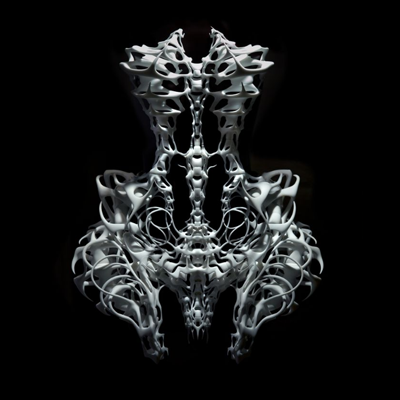
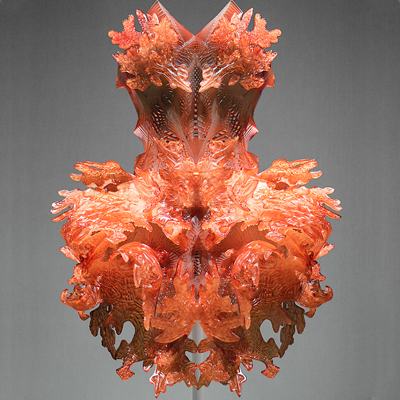
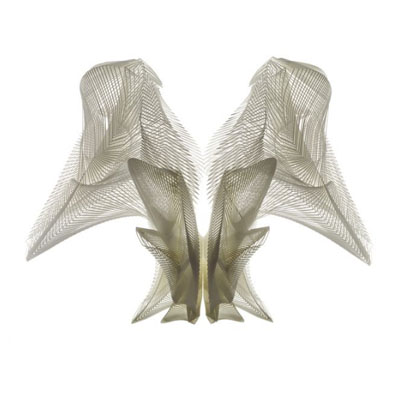
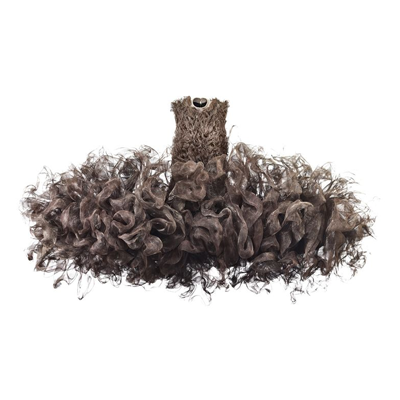
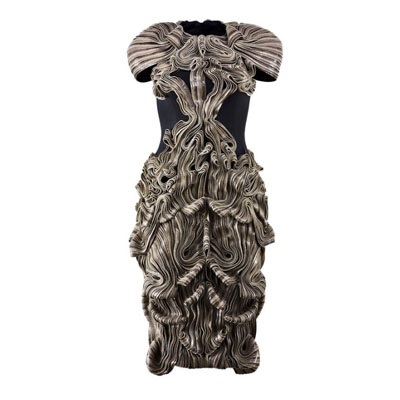
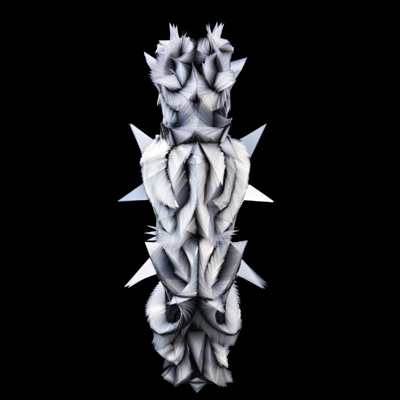
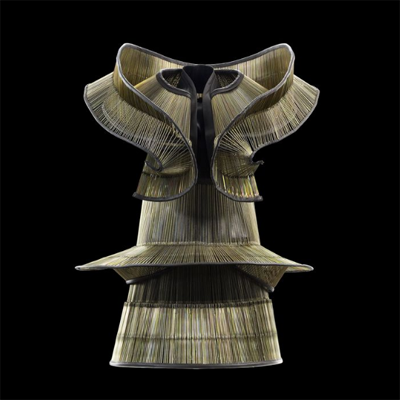
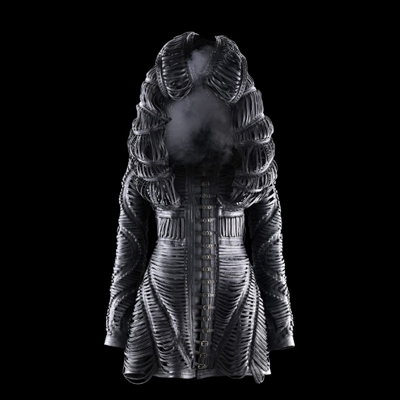
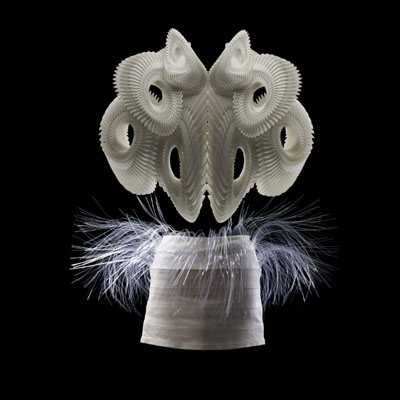
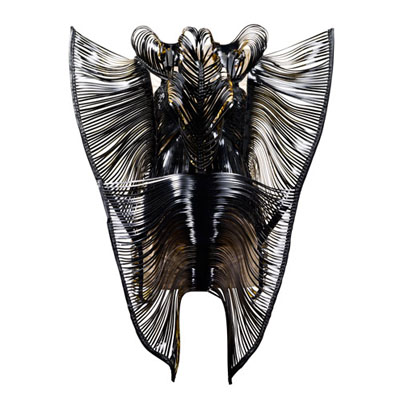
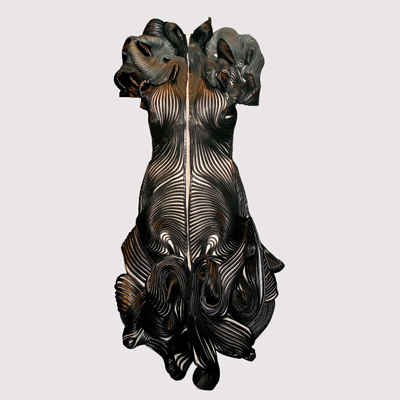
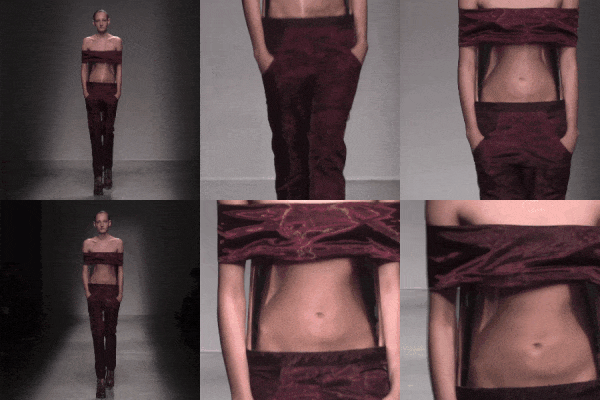
Iris van Herpen works with Couture that is both futuristic and sculptural, mixing traditional hands on Couture techniques with 3D printing and laser cutting. With collection concepts such as Hacking Infinity, Biopiracy, Hybrid Holism, Synesthesia it is clear that the intellect drives the work and the craft delivers the product. The clothes are structured to hold volume and form and movement is very much part of the sculptural choreography. The work is some of the most beautiful conclusions to the application of the above paragraph and as such is a logical progression to this area of exploration. Van Herpen’s studio has had a prolific decade and the exploration continues to gain pace and the coming show will be watched closely. Below are the beginnings of new concepts being formulated by this exploration and these are of intellectual interest beyond the aesthetic.
1 Scale. Algorithmic generated form is scaleless. Whether it be a Zaha Hadid building or a Van Herpen dress. One could shrink Zaha’s Al Wakrah stadium and wear it or increase a Van Herpen dress from the Lucid collection and inhabit it.
2 Surface. Many of the pieces in Van Herpen’s work occupy a space beyond the body and as such form a penumbra in which a silhouette is cocooned. I would predict that this outer penumbra will soon be the intelligent surface of most buildings, just as animals have fur and trees leaves.
3 Movement. Movement has always existed in fashion but here something different happens. Sometimes the piece is a kinetic dress that amplifies the movements of the wearer but when there is a dislocation between the silhouette and the penumbra there are two independent choreographies within each piece, one organic and sexual the other abstract and sculptural.
4 Distortion. The use of Optical Light Screens within the garments distort both form and body.
5 Responsive. Sensory fabrics, fibre optic, sound emitting, have been woven into garments that encourage tactile and soon virtual interaction. Our technology, always a prosthetic extension of ourselves, gains a new intricacy and intimacy. Perhaps our garments will soon be knowledge intensive, self growing and self repairing.
Related exhibition Manus x Machina The Met Fifth Avenue New York through to 140816.
The Surrogate Twin