
170817 – Space Drifter – London > words
When it is time to leave our planet to explore the unknowns of the Solar systems what form of craft will enable such exploration. To cross the huge distances of space humans require either some form of stasis in which we sleep throughout the journey or a multi generational ship. The idea of the tin can spaceship loaded with sufficient supplies to cross these vast expanses would seem naïve. In space there are no drive thru’s or convenience stores (as yet) from which to resupply. (Ref. Diary 271216 – Distance) To put Space distance into perspective the recent discoveries of the Kepler potentially habitable planets, 2011-2015, range from 500-2700 light years away. A light year is almost 6 trillion (6,000,000,000,000) miles. The space shuttle orbits the earth at 18,000mph at this speed it would need 37,200 years to travel one light year. The scale and breadth of space is still, to the human mind, incomprehensible. Spaceship Earth, a phrase coined by Buckminster Fuller, is the spaceship we need to replicate to traverse the above distances. Huge sail boats, drifting farms, acres on a wing.
In the Arizona Desert in the early 1990’s The Biosphere 2 experiment in which eight people were kept within a sealed enclosure for a period of two years. This experiment tried to create a fully self sustaining closed environment, producing its own air, water, food whilst recycling all of its waste. The Biosphere 2 was a three-acre by nine-story volume maintained as an independent controlled circular system in which all that was required by the eight inhabitants was provided from within its own ecosystem. This supposedly balanced system was supposed to completely support its eight inhabitants, a tall order and one that was doomed to fail. Ecosystems are multi complex elaborate symbiotic systems; they do not travel well in part. Biosphere 2 consisted of five biomes that replicated terrestrial biomes each working as an interconnected vivarium. The biomes were a rainforest, a grassland savannah, a mangrove wetland and an ocean and coral reef all enclosed via space frames and glass. The name Biosphere 2 was chosen as it was to be the second self-sufficient biosphere after that of Earth. There has been no valid follow up to the Biosphere 2 project and any hope of traversing the endless expanse of space requires a self-sustaining system. The Biosphere projects need to be reinstated and be of international concern and collaboration. The knowledge required to maintain a self regulatory sustainable Biosphere would not only be useful for space travel but of obvious use to the management of planet earth.
So space travellers are faced with immense distances and slow speeds. To cross the vast stretches of space, ships would need to be vast self-contained multi generational enclosed ecosystems. Flying farms designed by horticulturalists as well as by engineers. Sail boats that drift, as early plant life first propagated earth, randomly drifting, following the solar winds, clinging to outcrops of inhabitable surface wherever found. These would be delicate fragile structures that maximise surface areas to catch energy and produce food. The nearest prototype to a future Space Drifting craft would be the plankton clouds of the oceans. Plankton are simple intelligent life forms that work collectively as producers, consumers and recyclers, a collaborative team of ocean farmers. There is much to be learnt from plankton’s photosynthetic creators, they have the ability to use the energy of light and to soak up carbon dioxide whilst producing sugar and releasing oxygen. Around half of the world’s oxygen is produced via phytoplankton photosynthesis. The need to fully understand and be able to replicate photosynthesis will be a key component is long distance space travel and future space colonisation. To be able to build and maintain algae farms and understand and control cyanobacteria films may be an early prerequisite to both earth’s maintenance and space terraforming. It will be impossible to terraform any future planet without some form of panspermia. Controlling this seeding, monitoring and modifying its outcomes over millennia, will be an essential component of space conquest.
Mankind is a long way from being able to cross the distances required to reach any potential habitable extra terrestrial world. In the first instance there is a need to create fully autonomous circular systems/environs on earth. Then these would need to be tested by creating orbital habitats that can capture and store the suns energy. The most obvious orbital habitat would be the moon and it is here that the early experiments in space habitation should commence but only after we have achieved a fully self-contained biosphere on earth. At the same time autonomous robotic drifters could be sent out to initiate colonisation of planets and asteroids by seeding cyanobacteria. Simultaneously these autonomous robots could set up staging posts throughout space that would enable and assist future colonists on their long crossings through time. Autonomous robotic drifters could collect and assemble space debris, small asteroids and meteorites, using these as the building blocks of perhaps future habitable stations. This in turn would be a test bed for building planets or moving planets to within our own habitable zone (Goldilocks Zone) as this may also be key to maximising the few future habitable zones that exist throughout the many solar systems.
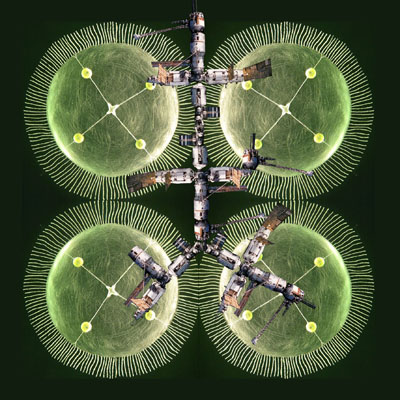
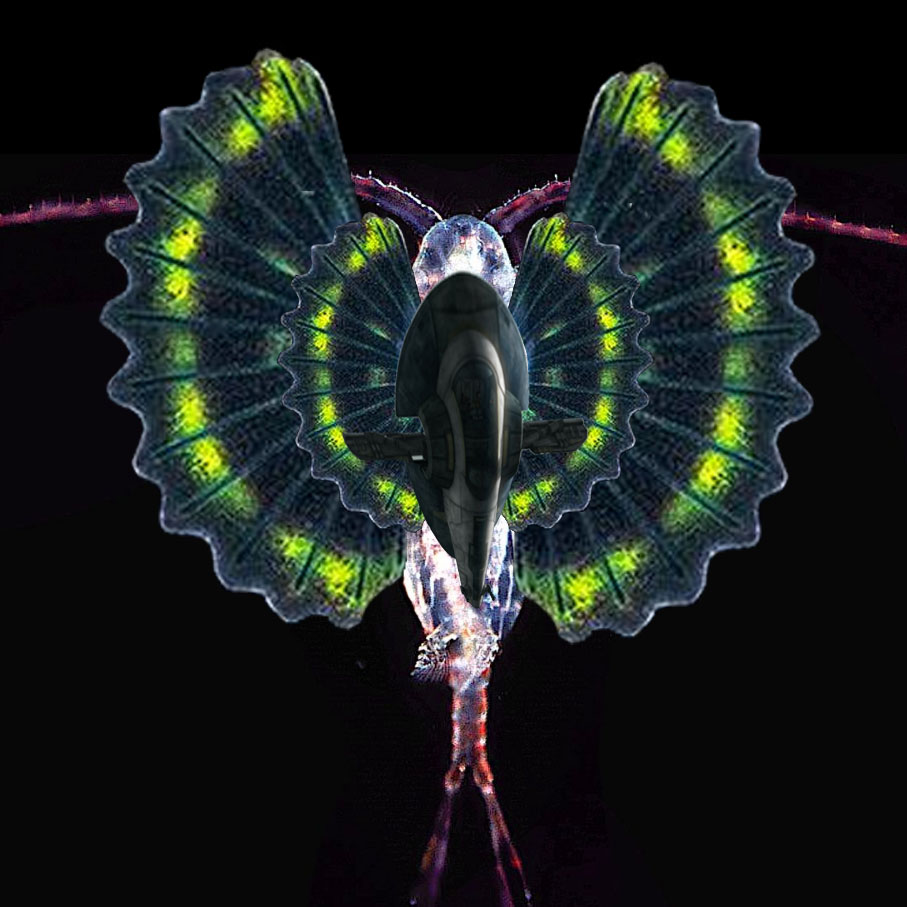
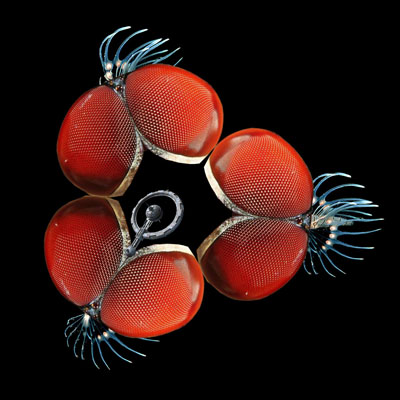
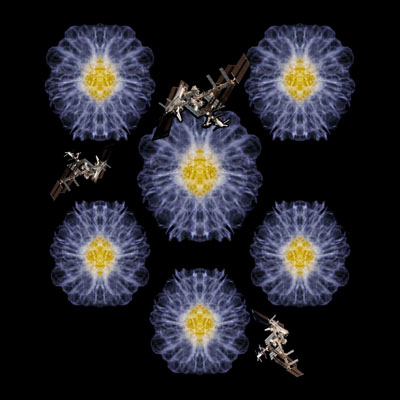
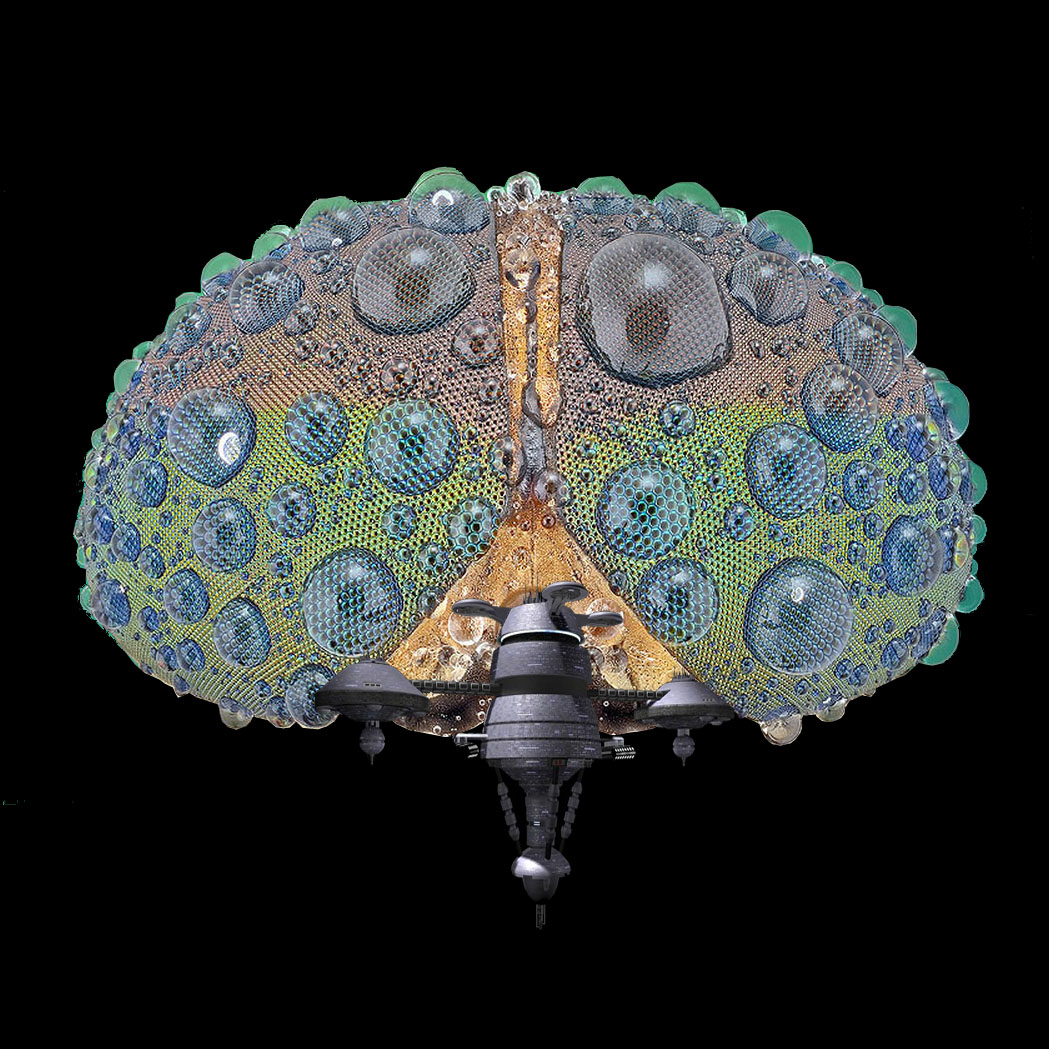
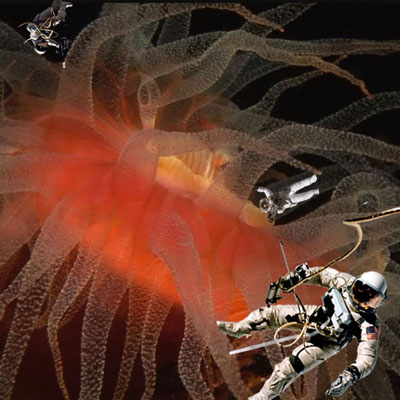
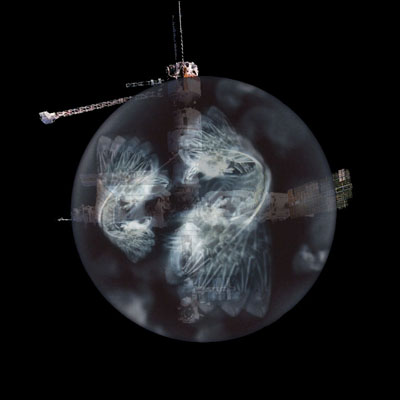
One can only speculate on what these space ships of the distant future may look like but they will probably look more like farms than space ships. So images below.
The Surrogate Twin
Images. 1-7 Space Drifters for the Infinite Abyss.