
281017 – Terracotta – The Natural History Museum, London SW7 > words
Terracotta figurines have been found that date back to 3000 BC, making it one of the oldest moulded materials used by man for utilitarian and decorative purposes. It has been used for the prosaic, roof tiles, drain pipes and flower pots but also used in the high arts for sculpture and religious buildings. In the 1800’s its use for architectural adornment was promoted through the work of Alfred Waterhouse. Waterhouse was a well-connected, well-educated architect; he had already completed numerous high profile commissions including Manchester Town Hall when appointed to undertake The Natural History Museum. Following in the tradition of the ceramic covered buildings of Louis Sullivan and Karl Friedrich Schinkel, Waterhouse was known to work in a wide range of architectural styles but his Gothic Byzantine style became the face of his public buildings in the late 1800’s.
The Natural History Museum (1873-81) was to be an exemplar of the use of architectural terracotta and in turn this became the best-known work of Alfred Waterhouse and the original study drawings can be found on the NHM website/archives. The London firm of Farmer & Brindley were the collaborating sculptors providing the three dimensional realisation of the Waterhouse drawings. Farmer & Brindley worked with Waterhouse on over one hundred buildings, the most significant being The Natural History Museum. For the NHM project, Farmer & Brindley employed a little know French sculptor named Dujardin who made one-twelfth oversize clay models of each piece (to allow for shrinkage when fired). Gibbs & Canning then made plaster moulds of these from which the final terracotta blocks were cast.
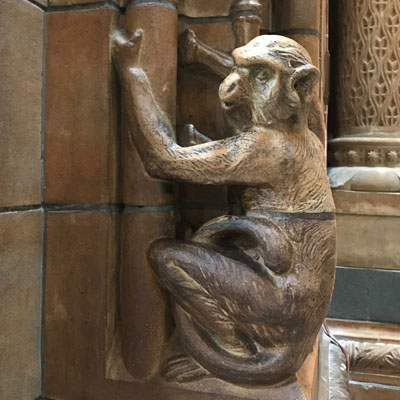
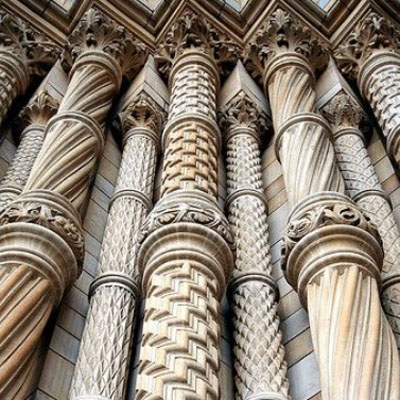
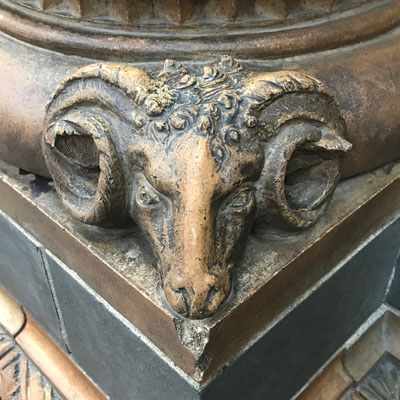
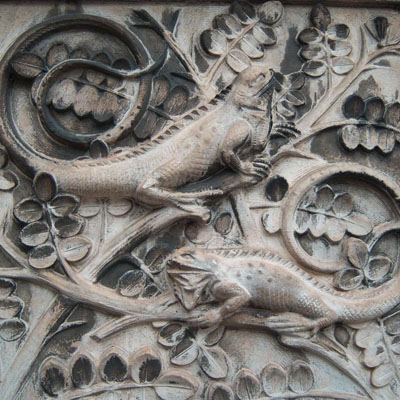
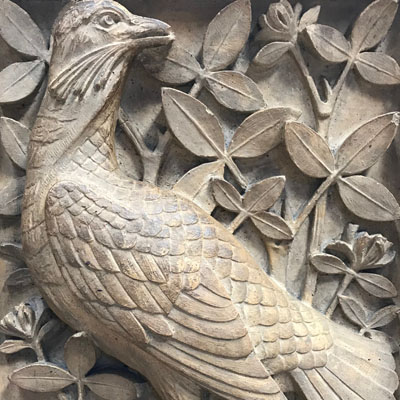
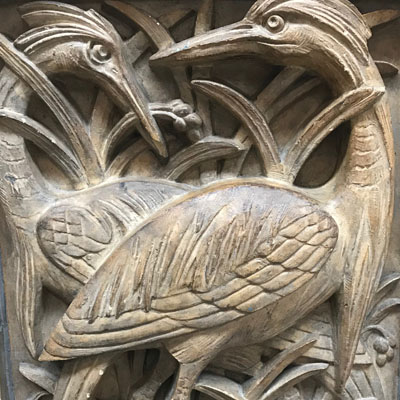
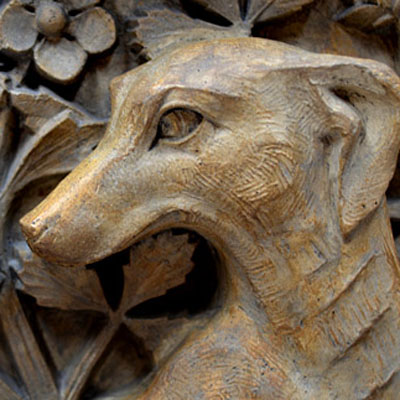
One hundred years on and the museum is still one of the most popular in London, its architecture full of humour and eloquence. Beasts peer down from the parapets, foliage adorns the windows and columns and monkeys, lizards and birds cling to every available crevice.