Posted on

010816 – Synthetic Landscapes 1 – The Sublime

​010816 – Synthetic Landscapes 1 – The Sublime > words

Synthetic Landscapes should be read 1 through to 4. 

The purpose of the Synthetic Landscapes essays 1-4 are the beginnings of an investigation into the planets primary problem of over population, that taboo subject all politicians and environmentalists avoid. Synthetic Landscapes will draw upon the extremes that man has reached to maintain the present rate of population growth. But the essays also look at man’s peculiar relationship with nature, the us and them as if the two are completely separate and alien. Man rarely sees himself as part of a larger system but somehow outside of it, as either an observer or master. There is much to learn from the natural ecosystems especially with regard to future infrastructure and city healing. Lessons from natures circular systems in which there is no such term as waste need to be introduced into every aspect of our lives rather than our linear systems that push the problems elsewhere either in time or space.

Without a global policy for population reduction, one that is desperately needed, a new short term solution of inhabiting even more extreme landscapes, or repairing existing eroded landscapes, will be required to continue to support life on earth. Areas of ‘terraformed’ landscapes will be needed to try to reclaim spent and eroded soils and rejuvenate the semi arid regions of the world that were once lush fertile plains and this will form the research base for extra terrestrial terraforming.

Synthetic Landscapes 1

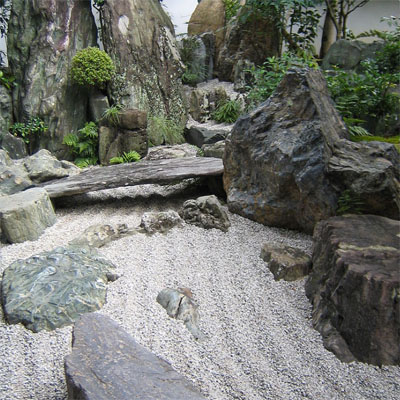
Inspired by Chinese gardens both the Japanese Rock Garden and the Japanese Garden were built to capture the intimate essence of nature in miniature. The gardens date back to the 8th century and have strong links to Zen Buddhism. The gardens were small and walled, often laid out to be experienced from one seated viewpoint whilst in solitary meditation. In these greatly simplified abstracted or stylised compositions, elements within the garden are representations of natural phenomena, raked gravel represents rivers or streams, rocks may represent mountains or islands. Miniature trees and shrubs, (Bonsai) are used to make the garden seem perceptually larger.

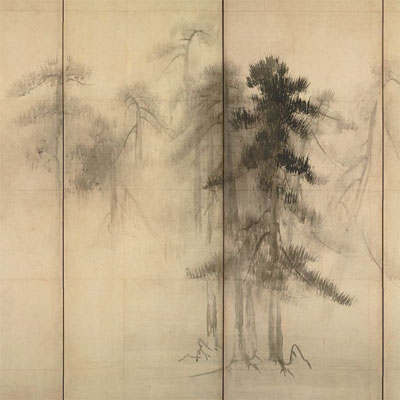
The development of the Japanese garden runs parallel to the development of Japanese and Chinese ink landscape paintings. Where a restricted pallete, an asymmetrical composition and large areas of white are all part of the composition. Occidental gardens were optimised for visual appeal whilst Chinese and Japanese gardens were modelled on spiritual and philosophical ideas. The Japanese garden can be seen as a three-dimensional text telling a story. Nothing in a Japanese garden is natural or left to chance, every plant is chosen for its aesthetic as part of an overall composition. Trees may be trimmed and shaped to make them look as mature trees and their autumn colours are of particular importance. Mosses are used to make the gardens seem ancient and flowers are chosen for their religious symbolism.

In conclusion, the gardens are transcendental, solitary, meditative and spiritual.

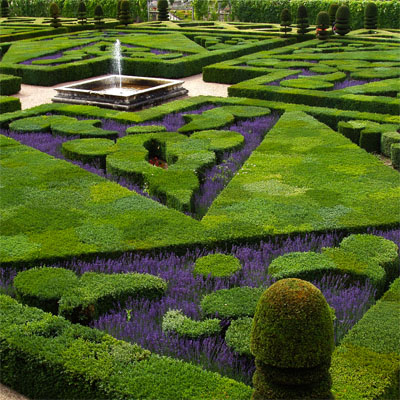
The 16th century Italian Renaissance garden was an extension of the architecture. It was ordered by symmetry, geometry and perspective. The gardens like the architecture symbolised mans control over nature. The gardens were usually walled and separate from the house, to be enjoyed as outside rooms with a rich tapestry topiary carpet.

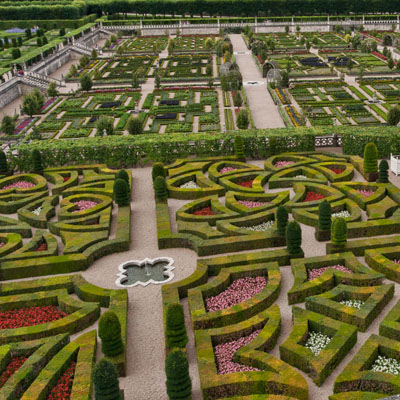
The 17th century French formal gardens expanded upon these principles both in scale and complexity of plan. The garden was integrated with the house setting up vistas deep into the surrounding landscape. The perspectives were visually lengthened with pathways narrowing and trees and topiary shortened towards the ends of vistas. The affect was to extend the gardens to infinity increasing the power represented by mans control. Geometry and mathematics lay the foundation plan, there were few ornamental flowerbeds and evergreen topiary was the principle medium. The gardens were used for entertaining, for gossip and politics, or to be to walked with surprises and discoveries such as fountains, statues and ponds en route. Technically the gardens required moving considerable amounts of earth to provide the level plain on which this horizontal tapestry could be laid. Bringing adequate water to the gardens both for plants, ponds and fountains was another engineering challenge often with water diverted from great distances. The planting was extreme and continuously labour intensive. The gardens are best described as horizontal paintings, tapestries or carpets and often best viewed in totality from the upper floors of the adjoining house or palace. The gardens of Versailles and the work of Andre Le Nôtre would be characteristic examples.

In conclusion, the gardens were social/political and very much part of Court life, symbolically they were about mans control over nature, and they were best viewed in two dimensions from above.

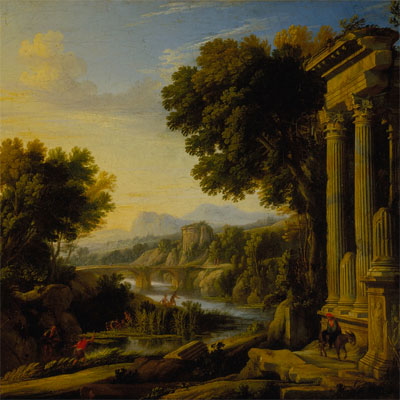
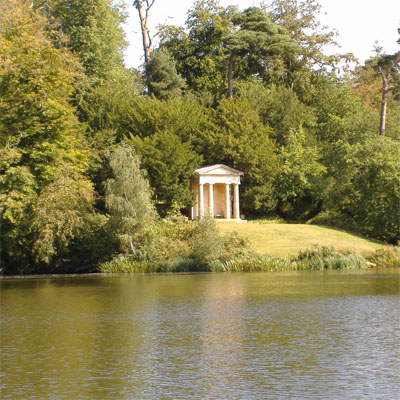
The English landscape gardens of the 18th century were first inspired by the romance captured in landscape paintings, typically those of Claude Lorrain and Nicolas Poussin. The paintings captured an idyllic wilderness where man and nature were at one. Domesticated animals and overgrown classical ruins recaptured by nature were recurring themes. The soft asymmetrical composition of Chinese gardens was also influential in breaking with the geometry and symmetry of the French Garden.

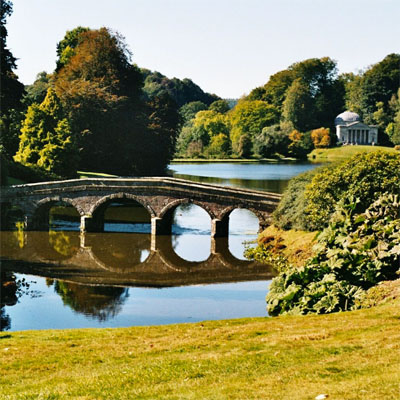
The English landscape gardens built these paintings as physical realities. One could ride the grounds and discover a ‘painting’ as a three dimensional reality, ride further and turn to discover another. Antiquity was represented in miniature, the temple, the obelisk, the rotunda, the Palladian bridge. Often these would be built as ruins, along with caves, grottos and sculpture all in the process of being retaken by nature. The garden architectures had limited practical use other than complementing the aesthetic composition of the gardens. The architectures act as focal points and places of destination where once one has arrived one turns only to discover another ‘painting’ across the landscape. In this way one is lead through a series of three-dimensional picturesque romantic sets and as such the landscapes are experienced sequentially.

The English landscape gardens undulated with rolling hills, indigenous woodlands, artificial lakes, rivers and streams. Deer, sheep, rare breeds of cattle, ducks, swans and fish all cohabit this picturesque idyll. Manufacturing this idyll was a massive undertaking of landscape manipulation, digging down to make lakes, moving the soil to make hills, pumping the water to maintain the streams that forever circled between the lakes. The gardens extended far into the horizon to eventually blend with the natural landscape or the farmland beyond. For the landed gentry, where wealth is measured by the acreage of their vast estates, an uninterrupted ‘as far as the eye can see’ was the objective. The gardens of Stowe, Blenheim and Stourhead, or gardens by William Kent and Capability Brown would be examples of the genre.

In conclusion, the gardens were sequential stage sets to be experienced at a leisurely pace. Politically they were about confidence, power and stability through ownership.
Posted on

​​080716 – The Potter – V&A, London, SW7

​080716 – The Potter – V&A, London, SW7 > words

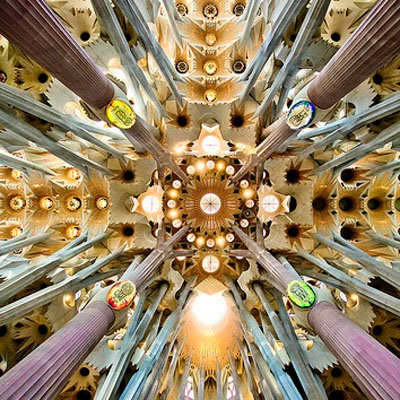
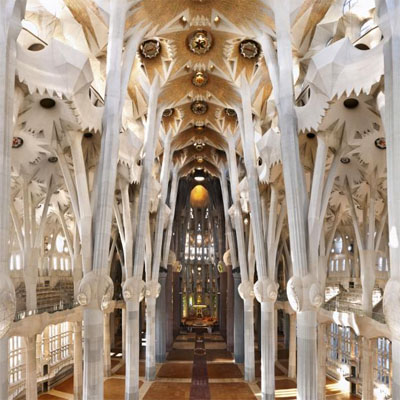
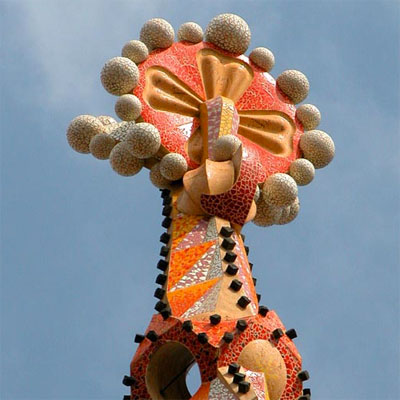
First Year, First Term. Like most design students back in the early eighties when first introduced to the work of Antonio Gaudi we were inspired. As our knowledge of architectural and design history grew we became less interested as Gaudi’s work stood outside the context of the historical international dialogue. His work is categorised as provincial or colloquial and it is; but what wonderful extreme excess. My first visit to the Sagrada Familia, along with every other Gaudi building, would have been in 1982 and I was surprised to really like the work despite the preconceived ideas set out above. The work is artisan, hands on, and you can feel it, Gaudi’s fingerprints are everywhere. The work is intimate and personal, like looking through somebodies sketchbook, with notes, thoughts, ideas and opinions scribbled in the margins. From our student days we all recall the story of the critic, who whilst leaning on his walking cane said to Gaudi that his buildings would not stand up with columns at all angles. Gaudi replied by kicking the critics walking cane away and the critic fell over disproving the critic’s structural logic. So when the V&A was to host a presentation on the engineering of the Sagrada Familia it was an event not to be missed.

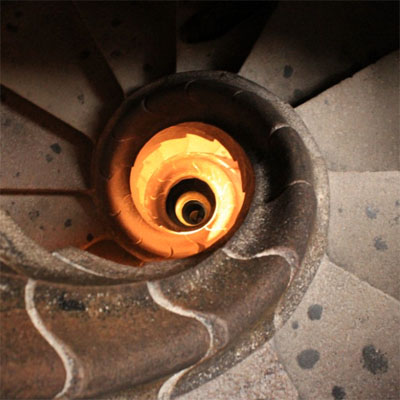
Work commenced on The Sagrada Familia in 1882 and it is still on going, the finish is some time away, possibly 2026, it is a one hundred and thirty four year old continuous building site. The engineers presenting the talks discussed matrix calculations, catenary curves, parabolic surfaces, earthquake resistance, pre-stressed cantilever staircases, post-stressed stonework and double volute twisting columns. They talked through the CAD modelling and fabrication of the thousands of unique pieces that go into making these forms. They showed pictures of huge teams, and one can only imagine equally huge budgets, all members diligently working to get the job done, to finish the project as near as possible to Gaudi’s original vision. Gaudi however, didn’t leave many accurate working drawings, mainly suggestive sketches and plaster models and that all leads us to ask the question could Gaudi have completed the Sagrada Familia with late nineteenth century technology and a bit more time? And the answer is a resounding NO…..followed by a resounding YES.

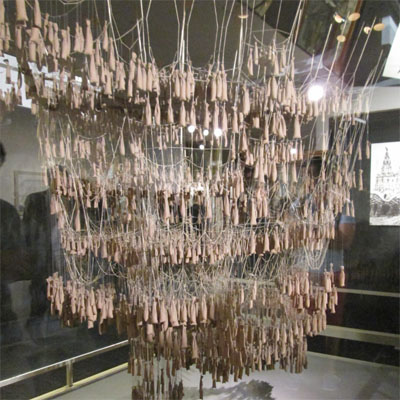
Gaudi was a very competent engineer, he understood catenary and parabolic curves. There exists an inverted model of all of the forces that flow through the Sagrada Familia, it is made of string and weights. Another model made of fine chain would be hung from the studio ceiling showing the inverted forms of towers and domes. The hung chain model was reflected with a mirror on the studio floor so that those working on the project could see the volumes. The inverted fine chain model was an abacus version of parametric modelling. If a chain end point were moved to enlarge or reduce the floor plan the whole volume would adjust to accommodate the new dimensions and settle in an optimised catenary geometry. In this way aesthetic composition and structural dynamics move in tandem. Gaudi would photograph the chain models and ‘colour fill’ the photographs to create a ‘solid block render’ and all this one hundred plus years before CAD parametric modelling. The engineers working on the Sagrada Familia today use CADD-S5 software, a design and production software usually used for ship design.

Gaudi was first and foremost a potter, from a family of potters; he worked in clay by adding and taking away, kneading and forming. He would hand sketches to his team of artisans for them to interpret. Gaudi’s immediate workforce were all local Catalonian’s from Tarragona that thought and worked as he did. One can imagine Gaudi the engineer inverting chains and nets and dripping slip plaster along their lengths until it solidified the form, inverting the resulting parabolic curve to form a dome or tower. But Gaudi the potter would also notice that the slip nets had additional residue, their own mini sculptures, he would know how to add to these, how to give them shape to compliment the form. He would add colour, ceramics, sculpture and religious symbolism. He would know how and where he could cut away mass to allow light to permeate the skin. He would also know when his vision was out of the technical reach of his artisans and he would adapt to that and the project would morph into its new form, the pragmatic hands on solution delivered with creative vision and tactile sensitivity. So the Sagrada Familia the he would have delivered would have been different to the one we have today. So does any of this matter? No not really, the engineering team completing the Sagrada Familia will build an incredible building but probably not the one that Gaudi would have built but one I am sure one that Gaudi would be proud. 

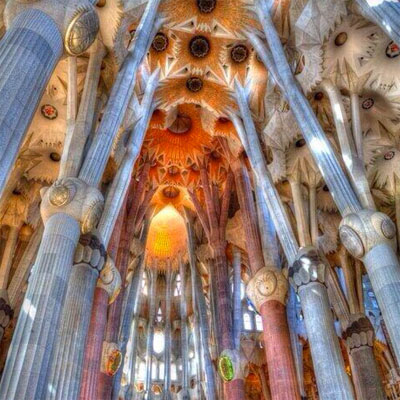
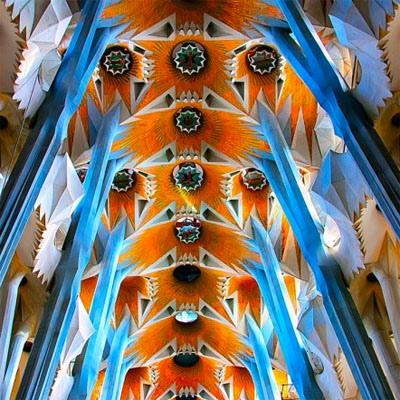
During the V&A presentation of Gaudi’s work it was impossible not to think of how contemporary it all looked, not so much in its composition but in its surface texture. The compositions break all traditional conventions, ecclesiastical rules are refigured, rules of symmetry and assemblage are also broken. Each façade is different, towers cluster, idiosyncratic eclectic forms meet standard gables that run in sequence from one collision to the next. The leaning columns and the parabolic curves cut on asymmetric lines feel 1950’s but the interiors are straight out of the Bartlett’s Marcos Cruz Unit 20 3D printing workshop. The ceilings an inverted landscape of abstract flowers and bifurcated columns create an interior as artificial woodland.
The Surrogate Twin

Posted on

010716 – Environs 1 – London

010716 – Environs 1 – London > words

We are constantly presented with new terminologies, smart materials, disruptives, robots, drones, virtual reality and wearable tech, we need first to remember that design is evolutionary (See text Environs 2). Todays amazing realisations have their roots in the conceptual projects of the past. These projects have been evolving incrementally in the research labs of architectural and design schools for many decades. Over time each isolated experiment has been collected and collated by the next generation into ever more comprehensive products and environs.

The 1960’s were one of the richest periods of liberal free thinking, many conceptual ideas that were crudely sketched or montaged then have since formed the roots for endless projects, some realised, some academic. Examples include The Mowbot, derivatives of which can now be bought in the high street, The Electric Tomato now comes in the form of an iPhone. The intangible sensory environments of the past are fast becoming reality with the growth of virtual reality, holographic projections and automated environments. The Internet of Things will soon spread from the home to the city. The potential of free solar power and wireless energy would mean that information and animated responsive environs are only a few years of development away. We are moving away from mono specific tools towards multi specific tools. Just as the computer, the phone, the watch were once mono specific tools they have now evolved into tools of multiple application. Other products will follow suit, the car will become the library, the energy storage centre, the entertainment centre, the bedroom, the office. As tools move from mono to multiple applications an overlap between products will make many objects redundant. Preexisting semantic forms will no longer have relevance. The move from micro to Nano will continue the pursuit of the ephemeral as objects slowly disappear. Everywhere access to a global cloud will enable the place less international nomad not so dissimilar to the ideals proposed by Superstudio. Micro climates of information and energy stitched invisibly into landscapes and ecologies are now a very feasible possibility.

So as a point of reflection here are some favourite projects.

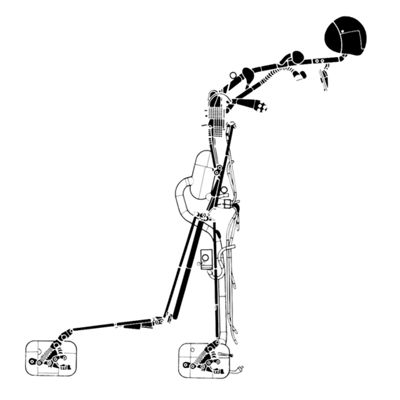
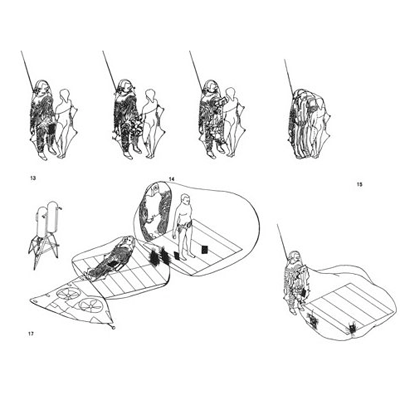
1967 – Suitaloon and Cushicle, Mike Webb. 

If it wasn’t for my Suitaloon I would have to buy a house. The Suitaloon is a wearable environment. Each suit has a plug. You can plug into a friend and two suits become one, or onto any envelope. The plug serves as a means of connecting envelopes together to form larger spaces.

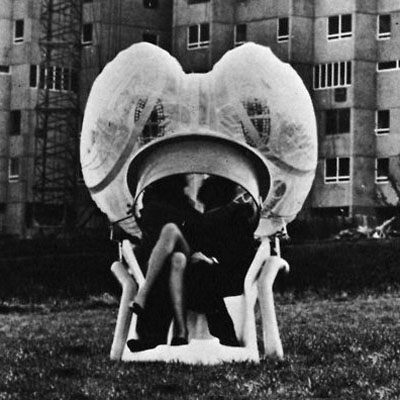
1968 – Pneumatic Space for Two, Hans Rucker. 

The all encompassing sensory environmental capsule for friends.

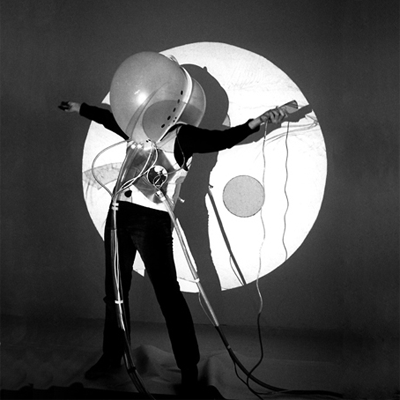
1969 – The White Suit, Coop Himmilblau. 

The White Suit has sounds, projections and a pneumatic vest for tactile transference. 

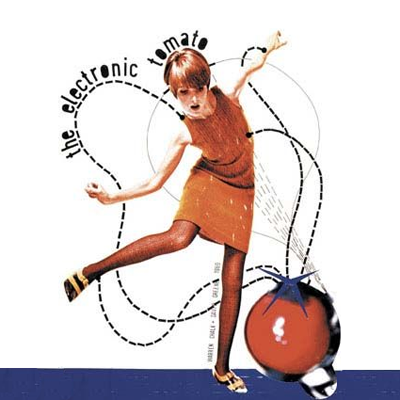
1969 – The Electric Tomato, Ron Herron, Warren Chalk, David Greene. 

The Electric Tomato or Manzak is your own cyber friend, all the sensory equipment you need for environmental information. 

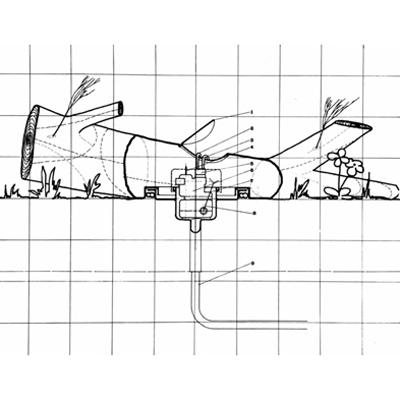
1969 – Logplug and Rockplug, David Greene.

A system of distributed nodes for energy, communication and services. 

1970 – The Mowbot, David Greene.

An automated work pet. 

And some favourite permeable environments.

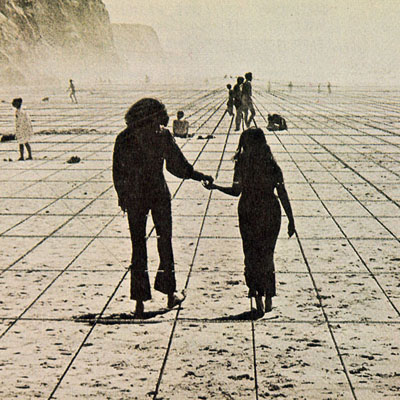
1967 – The Continuous Walk. Superstudio.

The world is imagined as a network of energy creating new artificial panoramas between man and the environment. This continuous permeable surface encircles the planet with its thermally controlled and modulated microclimate, it is without borders or enclosure. 

1968 – All Watched Over By Machines of Loving Grace, Richard Brautgan. (extract)

I like to think

(it has to be)

of a cybernetic ecology

where we are free of our labours

and joined back to nature

returning to our mammal

brothers and sisters

and all watched over

by machines of loving grace

The Surrogate Twin

Posted on

210616 – Louis Vuitton – V&A London SW7

210616 – Louis Vuitton – V&A London SW7 > words

Of late I seem to spend all day everyday reviewing the problems of the world investing on some forth coming resolution and losing all my capital from my belief and error. The papers are full of terrorism, pollution, population, climate change, nationalism, amoebic economics, weak politicians, corruption and incompetence. It has been a struggle to remain optimistic when the planet that holds seven billion can only sustainably support two billion, and we waste time and energy with naive populist protectionism.

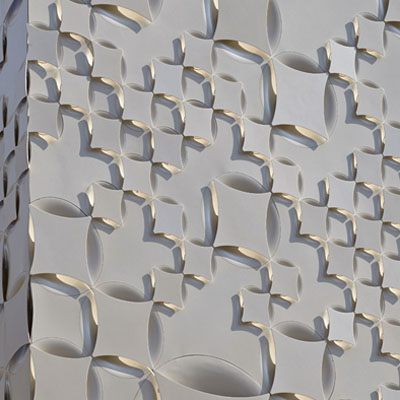
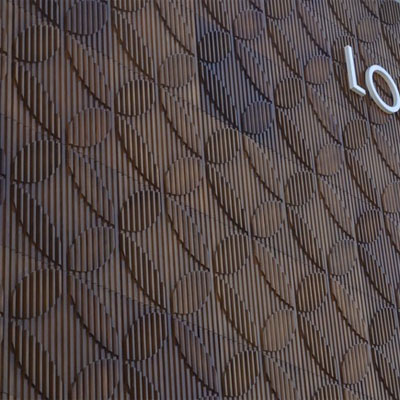
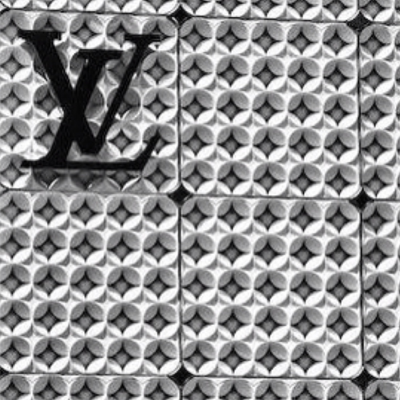
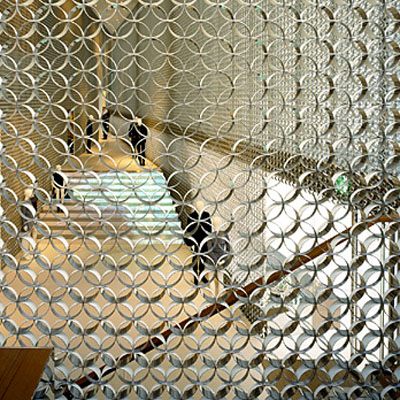
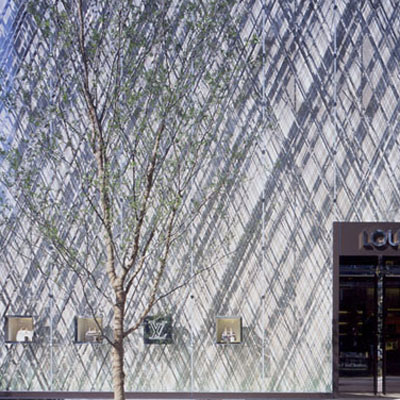
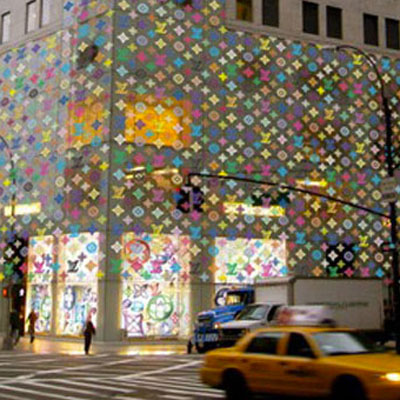
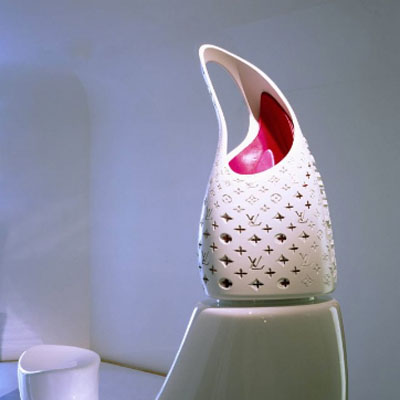
The Louis Vuitton lecture was so refreshing as none of the above was mentioned once and although I could be accused of congratulating fiddling Nero the short reprieve was a holiday in paradise. At Louis Vuitton the architects and designers simply get on and do what they do best, making exquisitely beautiful buildings and objects. David McNulty is Director of Architecture at Louis Vuitton and is responsible for 463 stores that require updating every six or seven years. The whole presentations focus was almost entirely on the translation of the LV valigia to a buildings skin. This focus continued from building to building and from country to country in an endless pursuit of reinterpretation and refinement. The building skin, a complex layering of elements that maintains thermal, acoustic, weathering, structural, light filtration characteristic along with thematic aesthetic manipulation. The presentation was a visual walk through projects rather than a technical and detailed appraisal of each façade and this was well paced for this presentation. Closer details, means of fabrication and materials used would be a welcome addition but have proved difficult to find.

The Surrogate Twin

Posted on

210616 – Zaha Hadid – V&A, London SW7

210616 – Zaha Hadid – V&A, London SW7 > words

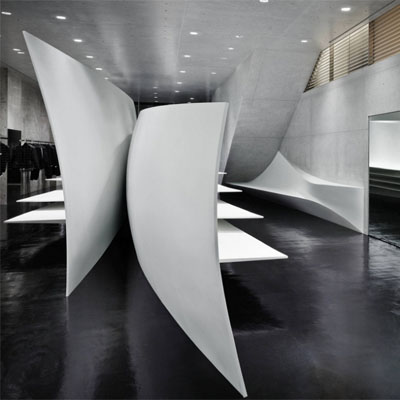
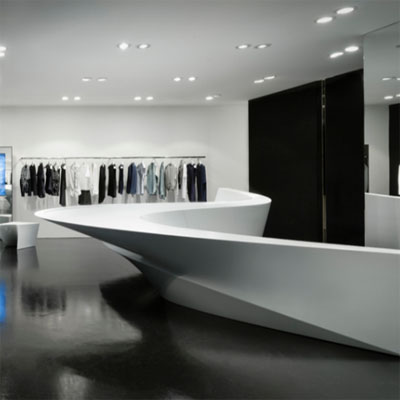
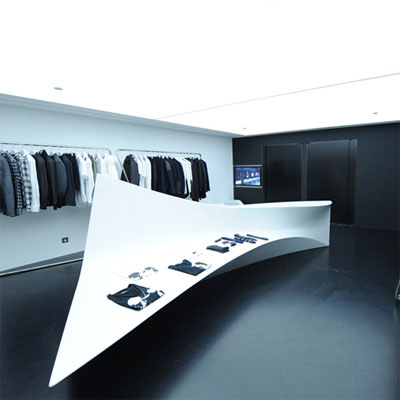
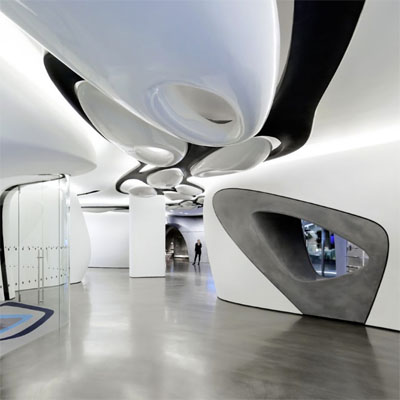
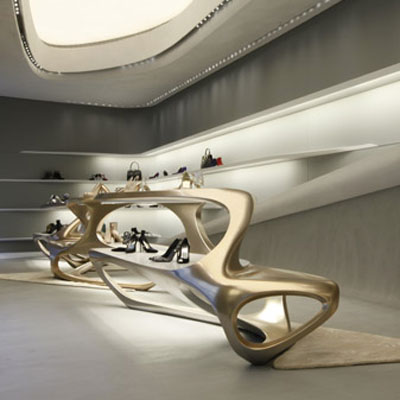
The crisp folds of the collars and cuffs of a well ironed white shirt were the inspiration for the Neil Barrett shirt shop in Tokyo. This concept delivered with such sculptural simplicity and clarity brought a wry and unquenchable smile to our faces, a smile that just kept returning. Kar-Hwa Ho, Head of Interior Architecture at Zaha Hadid Architects presents recent retail projects. Zaha Hadid’s studio must be one of the very few design studios that can deliver innovation, integrity and quality through a full range of scales from the bracelet to the city. In this presentation each interior is a clean box into which a sculptural display piece is inserted. The echo of influence from the central display to the rest of the shop follows like ripples around a pebble dropped in a stream. A totally fluid and liquid space is generated, the effect assisted by glossy floors and subtle lighting. When the container, the store, is kept rectilinear the sculptural pieces sliver through the space as if on their way to another destination. All so incredibly beautiful!

The Surrogate Twin

Posted on

170616 – Biomimicry – V&A London, SW7

170616 – Biomimicry – V&A London, SW7 > words

Biomimicry the latest hyped trend does what many have previously tried to do utilise and learn from natures billions of years worth of R&D. So what is different this time around? The answer is thirty years worth of useable desktop computing. In the late eighties desktop computing became accessible, affordable and useable although they then had very limited CAD ability their power has increased exponentially over the last three decades. Information that was once the reserve of NASA or the military is available to all within a few clicks and new information is globally distributed from every bedroom or coffee bar laptop or ipad. Equally unprecedented is the intensity with which we are able to see. We have learnt new ways of seeing. We can look at the macro cosmological or micro intercellular, we can x-ray, gamma ray, infra-red and spectrum analyse. We can time delay photography over decades or nanoseconds speeding up or slowing down time and subject. At the same time access to information has, at last, allowed multi-disciplinary groups to form, expediting our transition from compartmented scientific studies to understanding systems and symbiotic synergies. The speed at which this transition has taken pace has been an exhilarating roller coaster ride sadly leaving many wrong footed or with displaced skills on route.

Today’s series of lectures ran from 2pm to 6pm. Talks by academics and practitioners on a range of implications and applications of biomimicry from the obvious to the incomprehensible. Our computers analyse and our robotic machines fabricate. There is a youthful optimism, a genuine excitement as new frontiers are opened and explored. Two things struck me from the talks, one to do with approach and methodology and the other to do with power and chronology.

One. Architecture use to be about problem solving; practising architects know how best to manipulate the rules. Light in relation to floor spans, distances between service cores, modulation of structural systems, thermal modelling, orientation and optimisation, procurement logistics – things like that. Cultural buildings, the ones architects love, have greater artistic license due to their inherent global semantic. Cultural buildings generally have large budgets justified by their symbolic and political agendas and not their pragmatic requirements but these architectures are still very much part of the problem solving approach.

The young architects presenting today do not problem solve as described above but instead edit. They edit algorithms that in turn control fabrication processes. At concept they have little idea of the purpose or form of their architectures. Form is generated through feedback, perhaps to a set of rules, abstract or otherwise but often simply edited by a strong aesthetic intuition to produce a scaleless landscape that can be occupied somewhere downstream during the design process. This approach may at first seem alienating but it has a long lineage of architectural precedent including the work of Cedric Price, Gordon Pask and John and Julia Frazer. In fact any system that is responsive and grows by accretion can be used as reference. Even cities, as these develop organically are generated by often abstract rules. Cities are occupied for purpose, how and when required and have a remarkable similarity to algorithmic generated form the difference is primarily scale, the length of the chronological evolution and the increased complexity of the editing criteria. The richness of the non-prescriptive algorithmic approach is, without doubt, its ability to generate new, previously unimaginable aesthetically intoxicating forms of exquisite complexity and beauty. Gordon Pask who once said “Whilst computer-aided architectural design is useful if repetition or standard transformations are required, it is inadequate to the task of producing new forms.” would be happily on his knees in disbelief. At numerous reviews within academia I have listened to a lot of ‘hot’ air and trawled through acres of equally ‘hot’ drawings all associated to the endless pursuit of new forms and the occupation of the residual consequence. Better critics than me have openly slept through whole presentations. But just as Gordon Pask, so understandably, missed the potential of computing we should remain optimistic that the residue will be occupied. That somewhere downstream, sense through reinterpretation or discovery will capitalise on this explorative pioneering.

Two. In ‘Skyfall’ Bond sits staring at Turner’s ‘The Fighting Temeraire’ oblivious to the ensuing parody that will follow. A spotty youth in the form of ‘Q’ sits alongside Bond and explains the melancholy that has been captured in oils. Q explains the inevitability of time and progress as the great three deck battleship is steam driven to dock to be broken up, now old and out dated.

Talented innovative youth is not a new phenomenon. Mozart, Borromini, Picasso, Pascal, Piaget and Ampére immediately come to mind along with the millions of innovative youths that never become famous. However today’s innovative youth with the help of social media and the Web have access to previously unimaginable influence. Ideas and personas are grown virally creating disruptive opportunities for those with little real world experience. Hopefully within this flux, where new ideas battle for longevity, natural filters will distinguish whom, which and what is relevant. The last two decades has witnessed start up CEO’s and their businesses valued at billions while they are still in their twenties. Businesses and influence of this stature would previously have taken multi generation companies decades to acquire. Handing the reigns to those so young, when their influence is global is an experiment in itself the consequence of which is for future historians to tell. But these are changing times and at a time when we need change and as an optimistic educationalist I can only say here are the reigns, now where are we going.

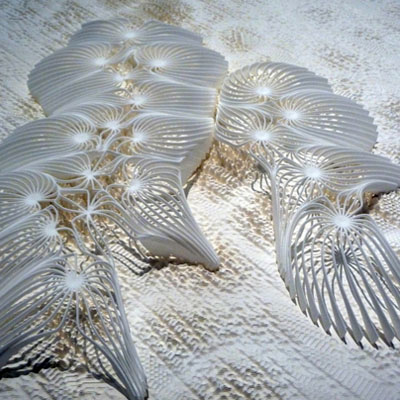
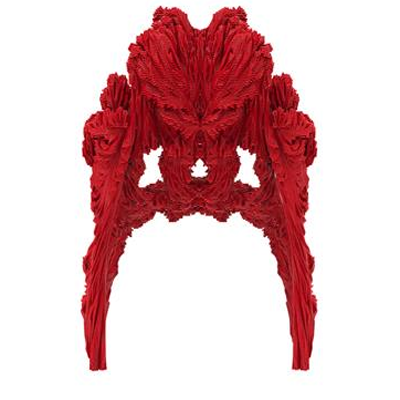
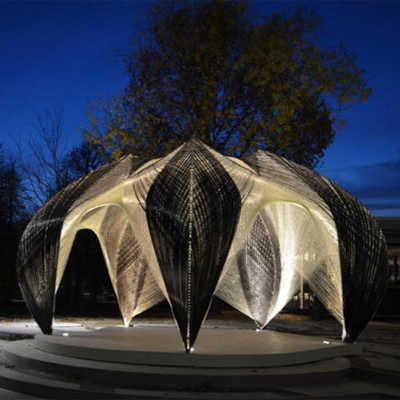
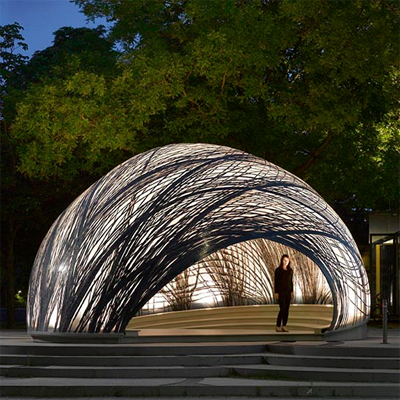
Images from left to right – Alisa Andrasek x2, Achin Menges x3, Julian Melchiorri, Michael Pawlyn.

The Surrogate Twin

Posted on

150616 – Switch House – Tate Modern, London SE1

150616 – Switch House – Tate Modern, London SE1 > words

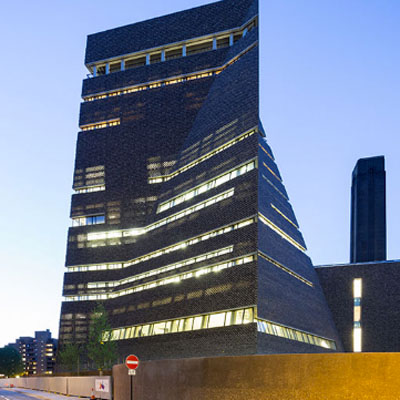
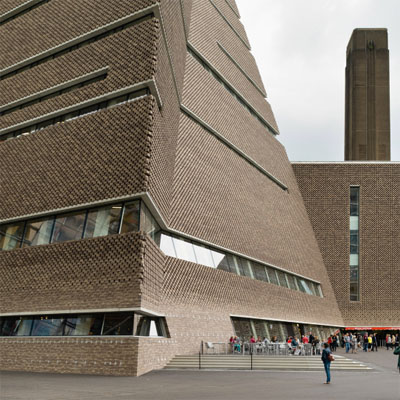
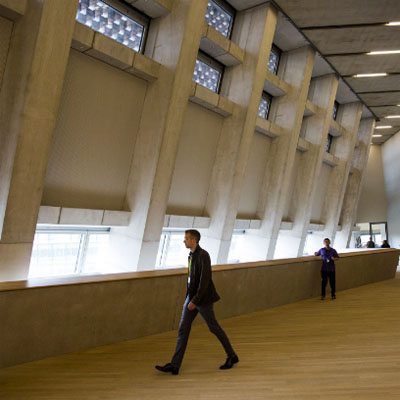
Joining the endless queue of Tate members for the preview of the new Switch House building by Herzog De Meuron I was aware that any kind of appraisal would be difficult. The galleries were rammed shoulder to shoulder with eager viewers crawling over each other to see the unseeable. From this position we produced our first opinion of the new galleries so with time this may change. This is an intuitive and contrarian view.

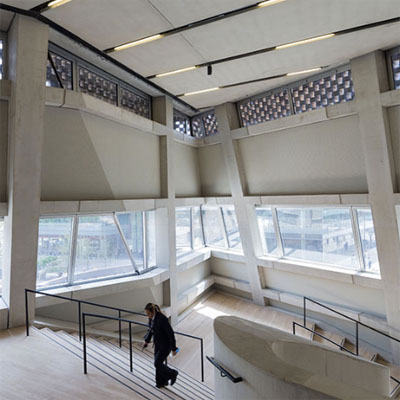
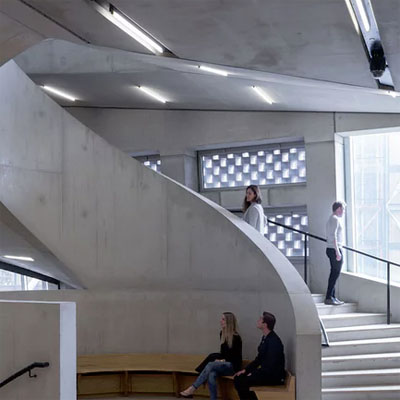
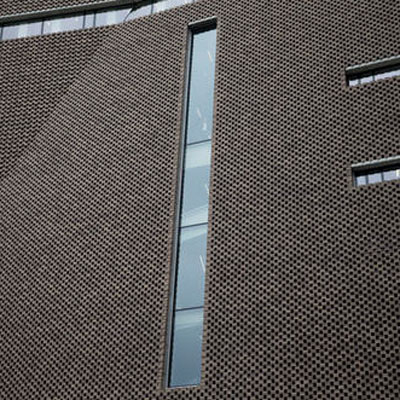
The Switch House has a strange initial feel, that of disjunction. The building has huge weight, a perverse introspection, a colossal structural cage combined with car park detailing. It doesn’t feel like a new build but instead like a conversion and a conversion with many twisted constraints. It is as if the architects first built a monument and were then forced to structure and inhabit it. It is like Gustave Eiffel’s Statue of Liberty where a smooth external skin hides a crude grid lattice of steelwork. One is aware that one is inside the other but the two never become a complementary totality. It is a film set in which architectural items may hang. In part this is driven by the lack of genius loci and is inevitable for a gallery that offers introspective spaces to view a collection of multi national decontextualized pieces.

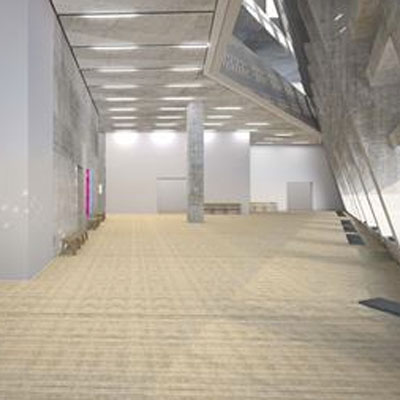
There is little precedent for tower galleries. Typologically galleries tend to be wide low buildings, of sequential spaces that maximise light from above. The idea of a tower gallery is intriguing as there is a need to be creative with natural light coming from the side. This would usually be the type of problem that architects enjoy but not here at Switch House where natural light is ignored. A suite of sequential spaces that are artificially lit can be anywhere, they could be underground so why put them around the perimeter of a tower with potentially incredible views of the river and city? Why put the service cores central to the plan and emphasise their importance as the expected route of circulation? Why even in the café space do we sit with our backs to the view? None of this made any sense……and I usually like Herzog and De Meuron buildings. So here is what should have happened.

The service cores should be moved off centre towards the north façade, towards the river. Between the service cores and the north façade should be a zone of circulation and meeting spaces with cafes and viewing platforms on route. To the south of the service cores would be the internal galleries lit both artificially and naturally from the side. The galleries would be punctuated discreetly with vista points. In a pyramidal form where the façade retreats as it climbs and open circulation space along the façade would open up equally to the sky and views enhancing the sequence of movement from gallery to circulation and back to gallery. In summation we would climb the river and sky to return to the gallery.

It seems counter productive to write a critique of a building by setting up an agenda for another but here Herzog and De Meuron have so missed the potential of this site that reviewing it in situ seems nonsensical. Perhaps I am looking for a national gallery building and this is an extension to an existing gallery? Perhaps with time I will be able to look at this for what it is but for now why is it as it is and what were they thinking? None of it made sense. Herzog talk to me?

The Surrogate Twin

Posted on

220516 – Refined Industrial – Newport Street Gallery, London

220516 – Refined Industrial – Newport Street Gallery, London > words

Damien Hirst’s Newport Street Gallery is an impressive building, part of which was once the artist’s studio but over time he has bought several adjoining buildings and joined them to make one gallery in which to display his personal collections. Damien Hirst self financed the gallery (£25m) pays for the running costs, provides the collections and lets the public in FREE. All anyone can say is WOW thank you Damien, much respect. The building by Caruso St John (of Gagosian fame) is an essay in understated refined industrial and consists of exquisite, beautiful spaces, minimal details and considered materials. The building alone, even from just the outside is well worth a visit.

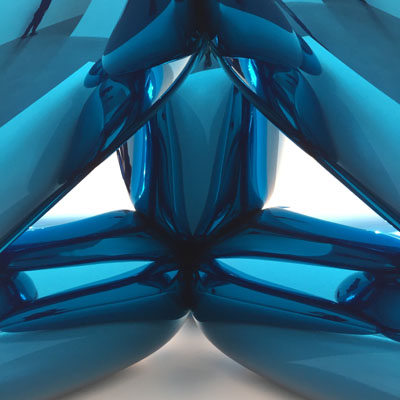
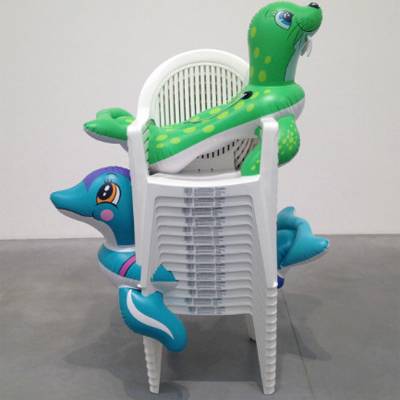
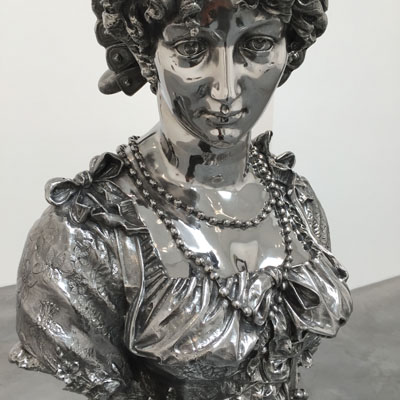
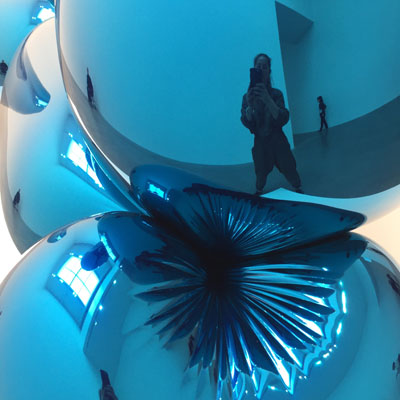
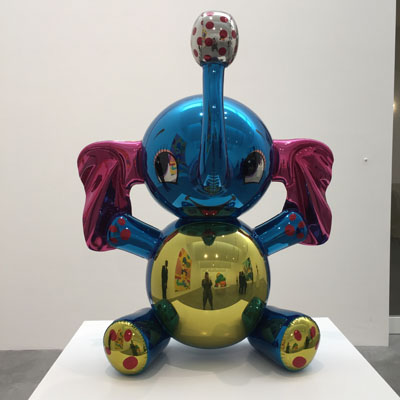
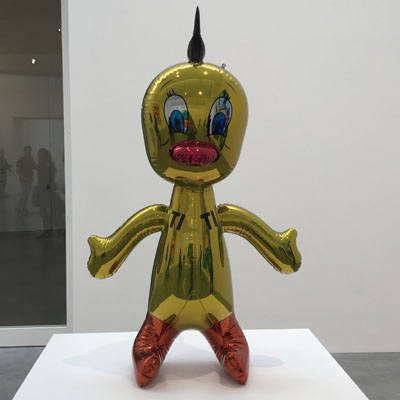
I have never had much time for contemporary art. I would tell my students that art stopped in the 1960’s with Robert Rauschenberg and nothing but marketing has existed since. This never went down well but much of what has been produced since seems without intellect or skill. There were always a few that have stood out, marketer extraordinaire Jeff Koons being one. Damien Hirst’s personal collection of Jeff Koons’s work is on display at the Newport Street Gallery and a gem of a collection it is. Many of the works have been seen before but the production techniques used are still baffling. Arnold in Germany produces the cast aluminium and stainless steel pieces but give little technical information away.

Making copies of inflatables and plastic disposable items with such permanent and difficult materials and techniques re-evaluates the objects. A further re-evaluation comes from the presentation and The Gallery context and inevitably the cost and price of production and resale. To then make the cast aluminium piece look identical to the temporary inflatable piece right down to creases, faulty seams and sticker details is a perverse indulgence unique to the art world and wonderful it is too.

It is difficult to establish how ‘Seal Walrus (chairs)’ (image 3) was actually made but that’s all part of the illusion. Are they plastic or aluminium and can we sneak a touch when the heavy-handed security are not looking (no chance)? It was a shame that the balloon Monkey was not a Balloon Dog of the same scale as the space in which it was housed was like a huge kennel but the Balloon Monkey is an amazing piece that is guaranteed to make each visitor smile.

This is an exhibition and a gallery well worth seeing.

Posted on

310316 – Zaha Hadid – London

​310316 – Zaha Hadid – London > words

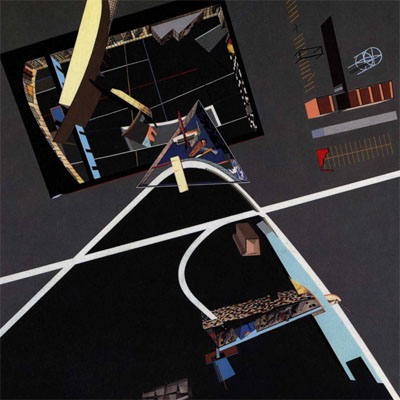
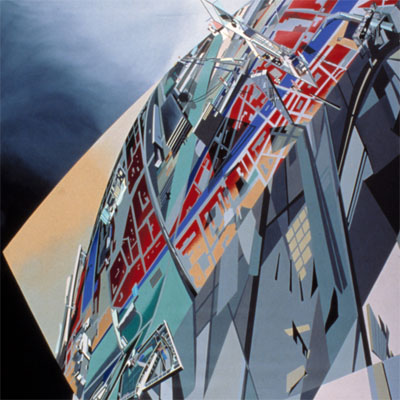
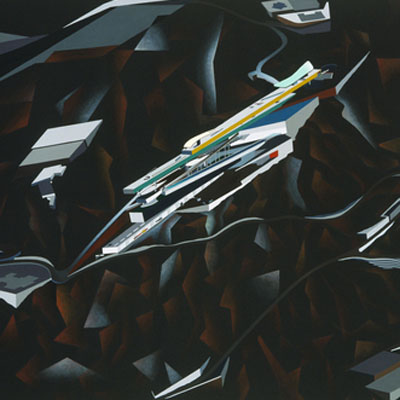
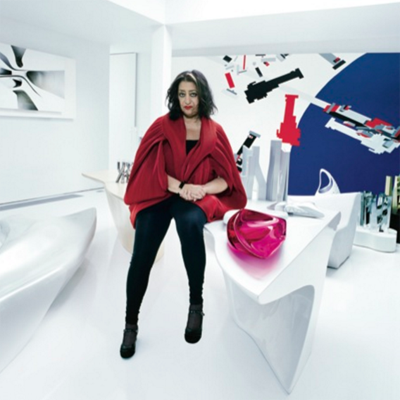
It all started here, with the image on the left. The Architectural Association was a unique institution throughout the 1960’s – 1980’s. It was the most creative place to study architecture and it housed the best tutors and thinkers. Archigram, NATO, OMA all came from its studios and have had huge influence on both academic and architectural developments since that time. In 1972 a young female mathematician joined its student ranks and she would go on to influence the world of architecture more profoundly than any living architect of her time. Zaha Hadid’s student work was good but still very much under the in house style of the AA tutors of the 1970’s. However, one year post Diploma she completes a project for the Residence for The Irish Prime Minister, Dublin 1979 that was totally her and raised the bar on what architecture could be. Within a few years she would produce The Peak Competition and the rest is history in the making.

Her paintings were compositionally stunning. I can remember seeing an exhibition of her paintings at the AA in the early 1980’s and the impact was unforgettable. At first the shear scale and prolific intensity of the drawings dominate but soon the walls move, every surface is liquid, twisting and turning making the viewer shuffle left to right as they align to another layered perspective. As a student it was frightening, intimidating, how does anyone produce so much work and how could my work ever come close – which of course it didn’t. Zaha was in a league of her own, her presence was immediate and the impact has lasted a lifetime. She is irreplaceable and she died way too soon. 

The Surrogate Twin

Posted on

110316 – Dimensions – UCL, London

110316 – Dimensions – UCL, London > words

It has been decades since I sat in front of acres of complex drawings and been expected to say something constructive at the end of a students short synopsis. Diploma level architecture at UCL has always been heavy duty and it has not let up either in its ambitions or its production. The site for the Unit’s work was Marseille – yes, all of it, the sub plot was the Internet – yes, that infinite space. The simplified version of the brief was how aspects of the virtual world could affect Marseilles’ urban fabric. The student’s task was to represent this architecturally and there you have the dilemma. Architecture hasn’t the vocabulary to deal with multiple simultaneous spaces, time shifts, scale less locations, compressed distance, instant subject or culture transition, varying perspective, reversal, fact/fiction parallels, metamorphosis, distortion, warping, etc. When attempted once solidified into the language of architecture these meanings lose all potency. There is no shortage of intellect at UCL and the bright and prolific struggle on and some will get very close to a solution. A wonderful way to spend an afternoon and evening surrounded by the disrupters of tomorrow. 

The Surrogate Twin