110416 – Memphis – Milan, Italy > words
I am writing this as my wife heads off to Milan for the annual furniture fare. She will be staying in Vivienne’s flat above the Westwood store in Corsa Venezia; lucky her. She leaves me at home to struggle on, failing to do all those things she does so well. It seems like almost a lifetime since I was last in Milan. When I was there I was a different person, with a different mindset and a different body, in fact I was another person altogether so unlike the person I am now. I was the existential nihilist, The Outsider, searching out other Outsiders with whom to work. So I can now use the excuse of Lorraine’s trip to Milan to recollect on my time there so many decades ago.
In the summer of 1983 I did the poor man’s version of the European Grand Tour. Fresh out of University and armed with a 1971 mini van that would be both my home and transport for the next few months I toured the architectural Greats of Europe to eventually end at my destination – the front door of Via Borgonuovo 9, Milan. I had come to work for Ettore Sottsass, he had no idea I was coming, no idea who I was and I didn’t speak Italian. My plan was simple, I would knock on the door, ask for a job and start work the same day. Only a student could come up with a plan like that. I was completely broke and camping at Monza. I had been introduced to the work of Sottsass by Penny Sparke and had written a dissertation on his work that was well received, from this I believed I knew Ettore. All I had to do was knock and he would say welcome, great to see you, we’ve been waiting for you, your desk is over there, the whole process shouldn’t take more than a few minutes. OK, so it wasn’t a same day start but I soon would work in the Sottsass studio at Via Borgonuovo, 9 and continue working there throughout 1983 and 1984. During this period I would also be fortunate enough to assist with the work of Studio Alchimia. I was exactly where I wanted to be exactly when I wanted to be there. My punk teens had drifted into the melancholy of Joy Division and Echo and the Bunnymen whilst at University. The world had problems. The 1970’s and 80’s I knew had little to do with the efficiencies of slick modernism. Working in a trendy High Tech London office would have been like drowning in corporate antiseptic. I’m sure I even had an allergy to the lime green studded rubber floors used in these offices that reeked of hospital and institution. So to Milan it was and to the Masters of Counter Design or Anti-Design. I was going to be happy anywhere that undermined the autocracy of Functionalism, hello Milan, hello Memphis.
At the same time, although young I was no fool, I was aware even then, that Memphis and Alchimia were not solutions they were merely reactions. They grabbed the dislocated complacency of modernism by the shoulders and gave it a good shake. A shake it well needed. Post Modernism was confusion, a search for the next direction. It was a confusing time to be a thinking student in any of the creative arts. Post Modernism was wise enough to see the many faults in the existing established systems but not wise enough to propose answers. We had entered the information age where we were bombarded by connectivity, symbiosis, numerous interrelated associations and yet the tools we had to decipher these were based on a Victorian scientific approach of compartmentation and analysis. The tools we had were inadequate, they were too slow and inflexible. The creatives that did well explored aspects of the complexity, structuralism, formalism, semantics, typology, regionalism etc. Three decades on and this work is still on-going. We still live in a time of flux, perhaps we always will, perhaps there was never, and never has been, any clarity or cohesion across capital, politics, sociology and technology. One system is always out in front waiting for the others to catch up, there is always imbalance and perhaps this is progress. Memphis in its own way was an aggressive agitator an ‘up yours’ to the status quo. It played with Kitsch, with the discarded, cheap laminates, bad junctions, clashing patterns and garish colours. It explored unusable items, it gave them characters, humour and personality. It questioned established taste with a ‘why not’ approach and the media that were at first abhorrent soon were enthusiastically supportive. Milan was the place to be and the basement floor of the Sottsass Studio was where the work was done. There were between 16-20 of us working side by side on anything from architecture through to fashion. At my desk I had fashion on my right and graphics on my left, one Hong Kong Chinese and the other Japanese. I was working mainly on furniture and products. The studio was multi cultural. The workforce had travelled from all over the planet to be there. All languages were spoken but the collective language, luckily for me, was English. Studios like this did not exist in England, fashion, furniture, industrial design, interior design, architecture and graphics were all mix up. Everyone had dead lines and as they approached we would all assist on each other’s projects, so as an architect I may be asked to assist on a graphic or fashion project. It was a rich environment to be in.
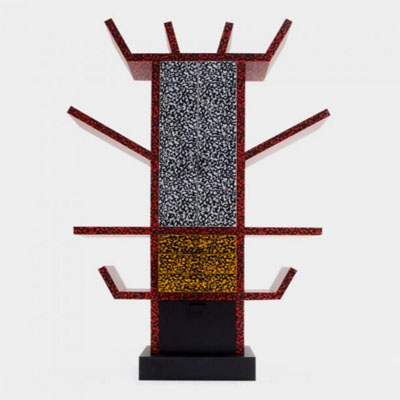
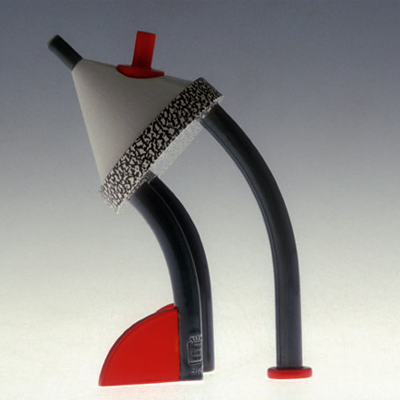
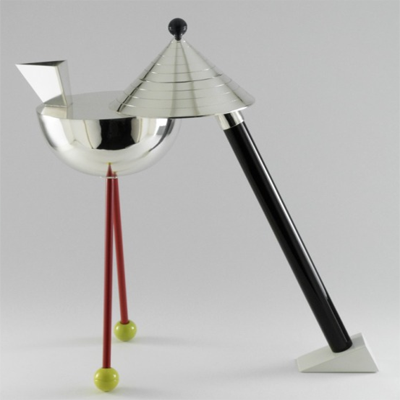
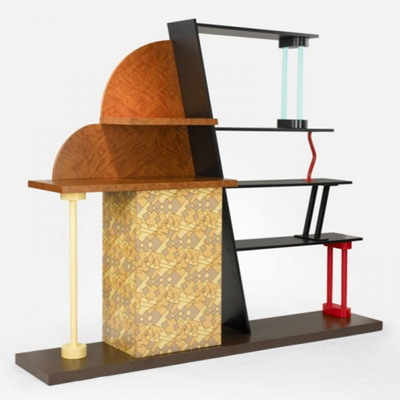
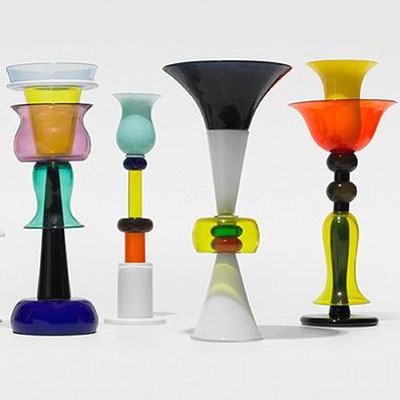
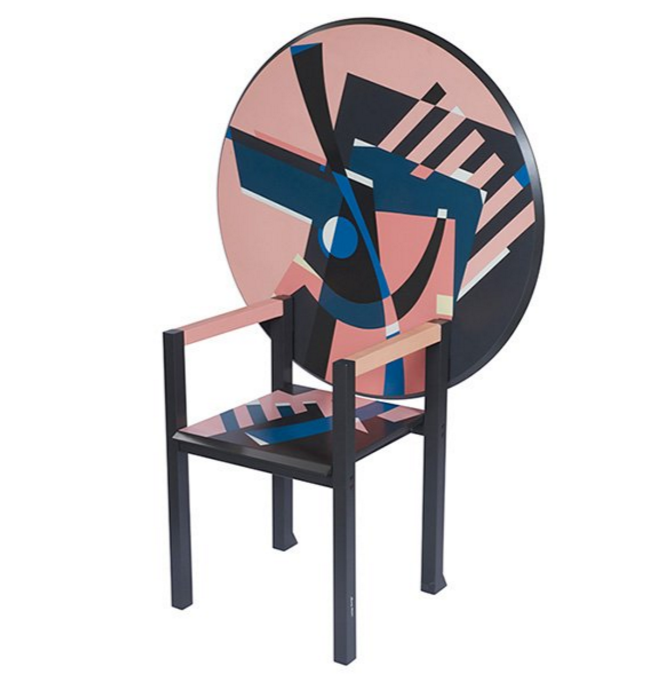
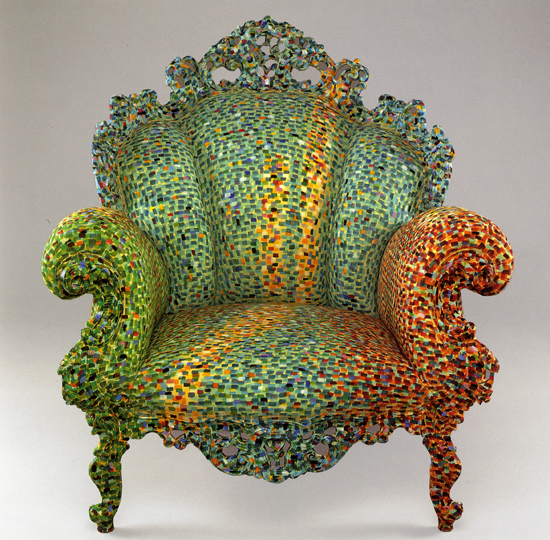
One of the reasons that I had queue jumped and managed to get a job at Sottsass was that they had recently undertaken a lot of work in America. The American architect in the office was soon to be leaving and they needed someone who understood feet and inches. I was English, that’s like American they concurred or at least more American than European and the English had once used imperial measurements so I was their man. When asked if I could fluently convert decimal to imperial the answer was a resounding “of course, yes”, I wanted the job. If I’d been asked to courier their work via jet pack I would have said “no problem, we have these at home” and somehow found time to read the manual before my first flight. So I am working on a large private house in LA and some showrooms across the US all in feet and inches. The drawings that I was sending out people were going to build from. I had no way of telling my new employer that the UK had dropped the imperial measuring system long before I had reached secondary school. So I am thinking in metric and then swapping all the dimensions to imperial, the process was slow. As one dead line approached I can remember screaming at the American architect “what retarded developed country still uses feet and inches anyway”. He was not impressed, he stared me straight in the eye and said “we took a man on the moon in feet and inches” touché, so once put in my place I never complained again. The architecture was architecture, crazy but still architecture. There was lots of industrial and retail work but the most enjoyable was product and furniture. It was all so spontaneous. A sketch would be developed to a set of crude working drawings, refined by a 1.5 model, a further set of 1.1 drawings produced and the piece would be made. The whole process might take only a couple of days. The studio was crammed full of maquettes, half finished models of projects, projects that had been shelved, projects that were picked up and restarted, or chopped up and used as part of another project. Ideas bounced around the studio as quick as new ideas could be formed. So it was highly probable that someone would be finishing your idea before you had finished it yourself. It was a wonderful chaotic, productive madness and the work the studio produced was beautiful, relevant and very influential. The work of Studio Alchimia, although more craft based, was as equally important in changing attitudes towards what design could be. Memphis and Alchimia reintroduced mannerism, character, humour, the tactile, the sensorial and the referential back into design. This opened a way for others to follow increasing the richness and vocabulary across a whole range of mediums for generations to come. It was a good time to be in Milan and here are some of my favourite pieces from that period.
Images 1-5 Memphis, 6-7 Studio Alchimia
The Surrogate Twin