The 2016 TV series Westworld written by Jonathan Nolan and Lisa Joy Nolan loosely based on the 1973 Westworld by Michael Crichton has taken the place of Game Of Thrones as the must see TV series. Both Westworld and Game Of Thrones are by Time Warner owned HBO. Like Game Of Thrones, Westworld has an excellent story line and script and both shows have secured many positive reviews. Westworld is now showing Season 1 episode 5 and is proving to have the higher intellectual narrative and of the many points touched three stand out of interest.
- The concept of circular time
- Is machine AI a plausible reality?
- Man’s relationship to the machine
Circular Time
One of the driving concepts of Westworld is the idea of re-enactment. The robot hosts of the Westworld theme park live on a repertoire of scripted text and scenarios. The robots have a limited ability to improvise around the scripts to suit and respond to the requirements of the clients. The human concept of time is linear and non-recurring. In Westworld time is circular and forever recurring except with each session there may be minor adjustments and interventions. This allows the visitor to equally re-visit the same scene numerous times. During these revisits, they may decide to view the event from another perspective or to take on a different role within it or experiment with both the dialogue and the outcome. Reoccurring experience eventually establishes ones concept of truth or fact. At Westworld as the client selects and in some way directs recurring events they in turn create their own truth.
Circular time is intrinsic to gamers of all types but specifically integrated into the world of digital games where the gamer replays the same game over and over to achieve a higher score and to move onto the next level. In Westworld, Logan (Ben Barnes) is a typical gamer. The theme park is never real to him and is just an expensive extension of the video arcade. The repetitious nature of gaming is addictive, there is an emotional security in repetition, in which humans see order and build confidence. As confidence grows micro adventures into the next level are explored. In search of forever more immersive experiences the frequent visitor Logan pushes the extremes of the Westworld landscape where the stakes are higher and the game is more real. This would be the normal route of the addicted gamer. To escape the repetition of circular time its intensity is increased. Circular time is also an evasion of reality it is comforting as one revisits the preferred experience infinitely. Reoccurring events become ingrained as dominant memories. To the gamer real time and game time are never confused but the latter is preferred. Real events are slowly displaced and used solely as a means to finance gamer recurring events with a forever-higher proportion of time spent in reoccurring or circular time. To the gamer circular time sustains a self-denial of the real world.
In Westworld circular time ‘the loop’ is intrinsic to the narrative and the audience is uncertain if they are viewing circular time as a lineal sequence. Westworld has been open for thirty years and the robot hosts have experienced a continuous loop throughout. The robots have flashbacks, memories of previous loops their sequence unknown. The show follows various visitors each experiencing their own time inside a loop. Each visitor’s loop doesn’t necessarily exist at the same time as the other loops within each episode. The nameless Man In Black (Ed Harris) could well be William (Jimmi Simpson) thirty years later. If time forever recurs ones place in it becomes confused and shuffled, the urgency of now is lost.
AI
It is presumed that we will soon have AI and it is indisputable that machines can problem solve better than humans, have better memories than humans and can consume never ending quantities of data? Using these vast quantities of data Machines will obtain General AI (GAI) and then reach the point of singularity when they surpass mans intelligence. Intelligence is a loaded word, which I use here to mean clever or smart in the analytical sense. When GAI is reached it does not imply that the machine is self aware or conscious.
At the core of the Westworld narrative is the principal issue of AI; can a machine have consciousness? In Westworld the hosts all look human, act human and participate in human activities and yet these activities and responses both verbal and physical are scripted. Emotive states such as grief, happiness, despair and anger are over laid filters or better described as ‘Ford’s reveries’, gestures tied to artificial memories. Each host could reencounter the exact same script with either or any emotive filter but takes cues from its immediate contextual environment as to which filter to apply. The host can read emotive states and using this they have a limited ability to improvise mixing or reinterpreting stored scripts intended for use by others. This is a type of role-play but is a long way from consciousness.
Intelligence has no definitive translation. Intelligence does not necessarily transfer across a range of disciplines. One could have analytic, creative or emotional intelligence but not necessarily all three. It is easy to conceive of a machine having analytical intelligence, even in having creative intelligence when the act of arbitrary association is applied but emotional intelligence is difficult to comprehend. Intelligence could be described as the ability to perceive information and to retain it as knowledge. This is then applied towards adaptive behaviours within an environment or context.Emotive intelligence requires knowing ones own emotive state and how it interacts with others. Creative and emotional intelligence requires feelings and although machines may emulate feelings, they are not felt. Feeling and compassion set up the value systems for right and wrong. Complex problems, the answers to difficult questions are rarely purely objective. However, feelings are only a form of sensory overload and perhaps these can eventually be installed or experienced by a machine. In Ex Machina, Nathan Ava’s creator explains to Caleb that everything in nature is gendered, that all thoughts and actions are (on some level) driven by a reproductive urge, and no biogenetic impulse exists without a priori acknowledgment of attraction. For a machine to attain the status of “singularity” (the point at which the human and artificial become indistinguishable) it must have a sexual component. The machine must have gender. Nathan later describes Ava as having AI as she used self-awareness, imagination, manipulation, sexuality and empathy to persuade Caleb to help her escape. The machines at Westworld have gender but as machines are still genderless.
The Westworld hosts are guided by keywords to trigger scripts and role-play. Keyword referencing is used by chatbots and these are used extensively throughout the internet, for example as customer service providers, Siri, Echo or dating agencies. Chatbots are based upon the software languages of ELIZA, PARRY, ALICE, Jabberwacky having been refined over decades with many self-learning. We interact with them without a second thought; they are the voice at the other end of the phone the text in a messenger service. We rarely question whether we are talking to a machine or a human as we want to believe that we are receiving personal service. Chatbots that provide a service are just a personalised interface. One asks a question and the chatbot provides an answer. The chatbot in a dating agency however differs slightly as its first task is to befriend you and gains its information by building up a sympathetic reciprocal response to ones needs.
In Westworld the chatbots have human form and the clients interact directly with them. When a chatbot exists within a humanoid entity the relationship to that entity changes, there is an immediate sympathetic emotional connection. In Westworld the gun fighting hosts and the saloon girls are service-providing chatbots, however Dolores (Evan Rachel Wood) is the dating agency. The dating agency chatbot has no opinion but instead follows ones interests guided by keywords and phrases. The client using a dating chatbot, here Dolores, is in effect talking to himself and generating answers that he wishes to hear. The longer the conversation the more refined the answers, the more sympathetic, the more like the client the chatbot becomes. The film Her comes to mind. Software exists that is able to read an emotive state, Emotient and Soft Banks Pepper. The Westworld hosts constantly respond to the visitor’s emotive state and use this as a similar cue to keywords. Westworld profiles its visitors prior to their visits by compiling and analysing their online search histories and from this it knows their desires and preferences. Cloud based facial recognition software would make this information available to all hosts and therefore cue differing responses for each and every clients.
In Westworld Dolores is the machine in which the fundamental issues of AI will be portrayed, a computer given human form and emotive response. She is fragile and vulnerable, she searches for something that she does not fully comprehend yet it is supposed to lead her to a better more fulfilled life. These are qualities that humans can relate to. There are many similarities between the relationship of Ava and Caleb in Ex Machina and Dolores and William in Westworld. Both men know that Ava/Dolores are machines but in each case form a relationship to that machine on the belief that the machine is self aware, both men then assist the machine to self-discovery and to find ‘freedom’. The audience is being led through the relationship of William and Dolores to eventually form an opinion about the essence of AI. Is Dolores self-aware? The Imitation Game and the Turing Test are represented here as popular culture.
The reality of Westworld, the chatbot in a human form, is already on our shelves. In 2015 Mattel introduced Hello Barbie, an interactive doll designed using keyword search to befriend any child. As yet it has no means to read the child’s emotive state but the days of buying something closer to David in Steven Spielberg’s AI are not far away.
Mans Relationship with the Machine
If one ‘owns’ a horse or a dog as a pet and over time one builds memories through experiences and adventures with that horse or dog and a bonding occurs that could be described as love. The horse and the dog as pets are domesticated and as such are biological prosthetic extensions to ourselves through which we increase our sensory landscapes. Machines also extend our sensory landscapes. It is possible to bond with a car or bike in the same way that we bond with the horse or dog as we bond not with the car or bike as object but instead through the memories of experiences accumulated. Our relationship to an object increases with intensity and longevity. Anyone who has taken a motorbike to the limits of either machine or rider will understand experiential intensity. Whilst travelling at speed, moving ones body around a motorbike tank, transferring weight back and forth and feeling the effect on traction, balance and stability whilst only inches from the roads surface is a symbiotic experience. There is a sense of oneness between man and machine, man and the prosthetic sensory extension. Violinists, snowboarders, yachtsman would be typical examples of sensory extensions but experiential intensity increases the bond, the Samurais sword, the gunslingers Colt 45.
Love is an emotion that we use specifically for human to human experiences. We cannot love objects that are dead or innate and yet the experiences generated through the prosthetic extension of the tool or machine are just as real as human to human experiences. In Westworld the machine has a human form, accumulated experiences with that machine would be indistinguishable from human to human experiences. In our search for an ever more intense perfect experience the desired machine would be hyper-real and/or super-intense and the experiences with this hyper-real machine would exceed human to human experience. The hyper-real or super-intense is explored and exported daily from porn sites, to photoshopped ads, to colour saturated slow motion film clips, all well edited and enhanced. The hyper-real machine described here is not only the prosthetic extension of our sensory landscape but equally an extension of our imagined or desired landscape built in real time and space with which we interact.
In Westworld Dolores is the machine through which mans relationship to the machine is explored. William is aware that Dolores is a machine, he is aware that he is within a theme park and that he has paid for specific adventure. The relationship between William and Dolores is ambiguous in that there is uncertainty whether Dolores is responding to inputs from William, acting as she is programmed, within her loop, or whether Dolores is manipulating inputs and known client data to lead William. Either way as their shared experiences increase their bond strengthens. It is interesting that none of the human visitors to Westworld have any interest in instigating relationships with other humans. Equally interesting that no human has impersonated a robot host to gain access to the fantasies of another human. At Westworld the human to human experience is of little interest when compared to the human machine experience. As mans technical ability improves within the areas of robotics and virtual environments, man’s relationship with and to the machine will intensify and may one day be the preferred experiential environment. The definition of Hyper-reality is the inability of consciousness to distinguish reality from a simulation of reality. At that point of ‘inability’ does the distinction real to unreal matter if all experiences are recorded and stored as neurological equals? In Matrix 1 Cypher prefers his virtual steak.
Science Fiction is a useful means by which to explore aspects of possible futures. Many of the themes explored in Westworld are of the near and not too distant future. In the search for the essence of AI the error is that the ‘machine’ will be the medium through which it is created. As GAI is reached there will be an explosion of biological progress and discovery. Eventually from this man will build his self-aware metaphorical ‘Frankenstein’ but I doubt it will have any mechanical components or any of the imperfections of man.
Between 1768 and 1774 Pierre Jaquet-Droz, the Neuchatel watchmaker, made three automata dolls as a means of promoting the complexity and sophistication of his work. One of these, The Writer is a small-automated doll that is comprised of approximately 6000 pieces. The doll writes with a quill pen using real ink. A forty-cog wheel operates cam selectors. The cams work three at a time and in turn operate levers. One cam operates left to right, one up and down, both work on a horizontal plane. The third cam alters altitude, the lift and pressure applied to the quill pen. By creating this movement in three-dimensional space the doll is able to write and punctuate text. Spacing is achieved by moving the paper across the writing plane. The right hand of the doll regularly dips the quill pen into an inkpot, then applying pressure with the quill onto the paper to start each letter and providing tail off lift to end each letter. The left hand of the doll moves the paper across a board to separate each letter. The cogs on the forty-cog wheel are inter-changeable and therefor can be programmed. This 248 year old doll is a distant ancestor to todays computer and robot.
Image 1. Pierre Jaquet-Drox The Writer 1768 – A 248 year old, 6000 piece automaton.
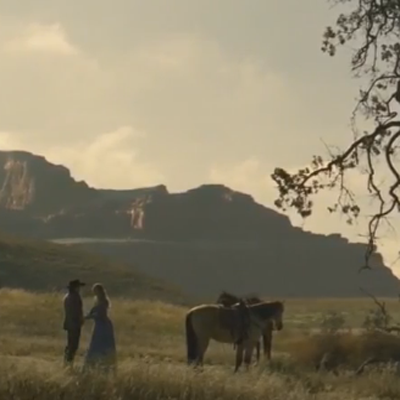
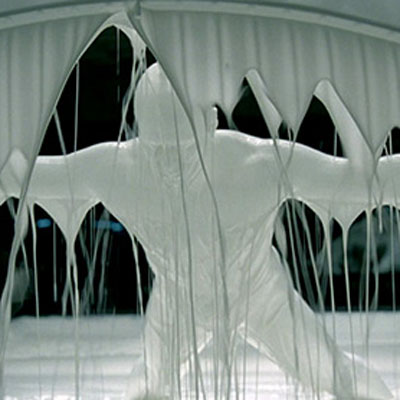
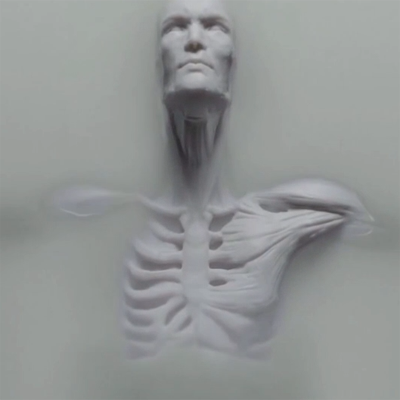
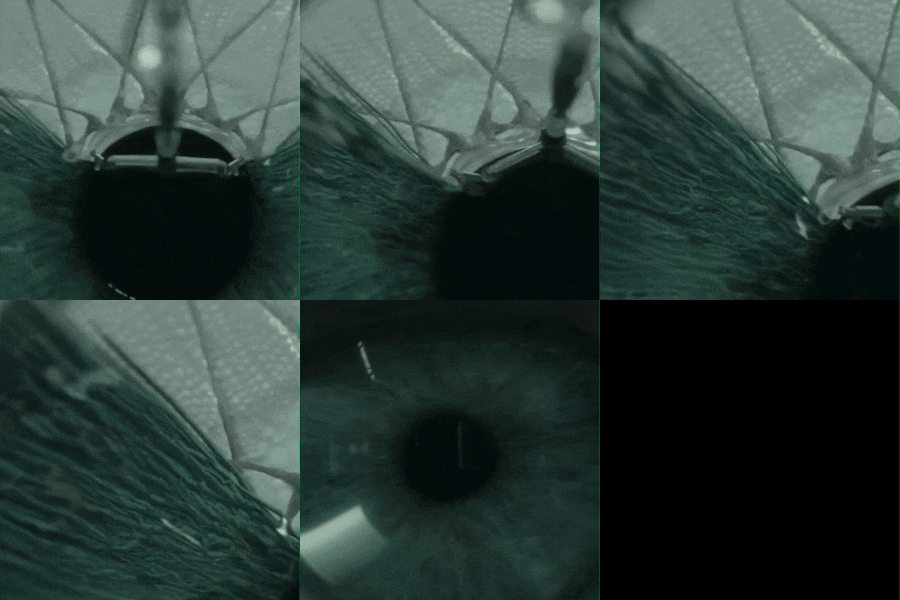
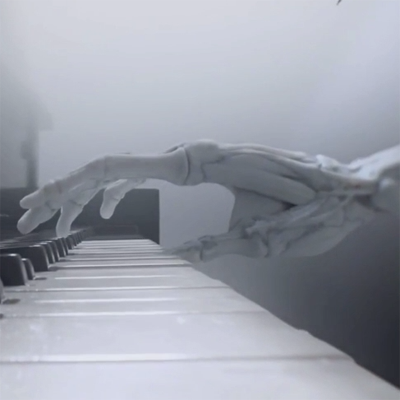
Images 2-7 Westworld 2016.
The Surrogate Twin