Posted on

​​060716 – Valentino Elizabethan – Paris

​060716 – Valentino Elizabethan – Paris > words

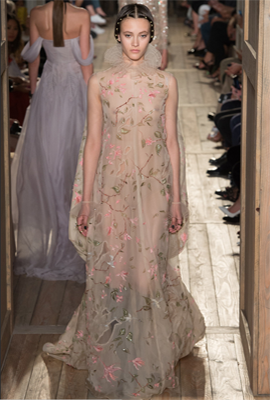
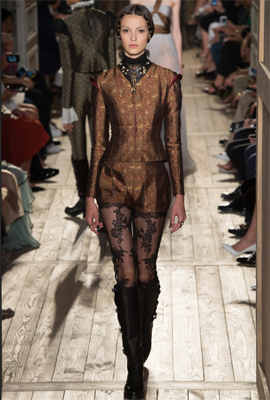
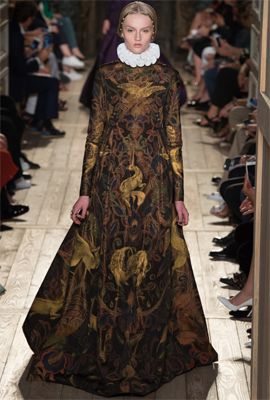
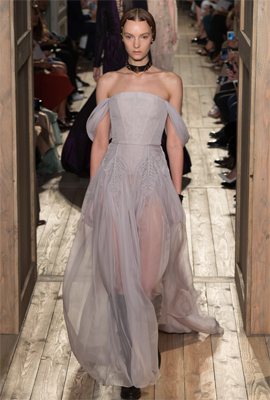
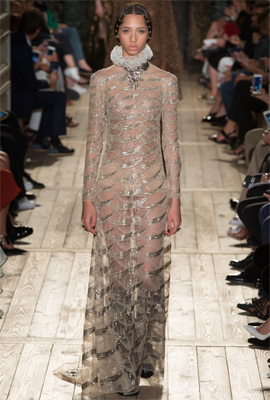
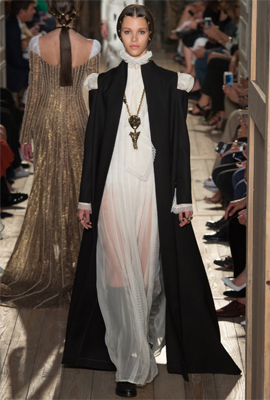
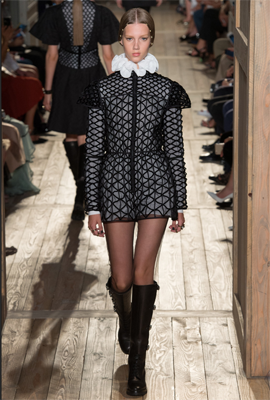
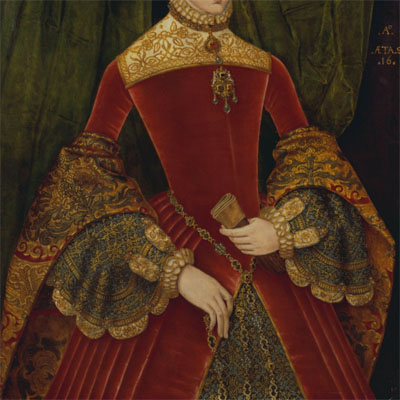
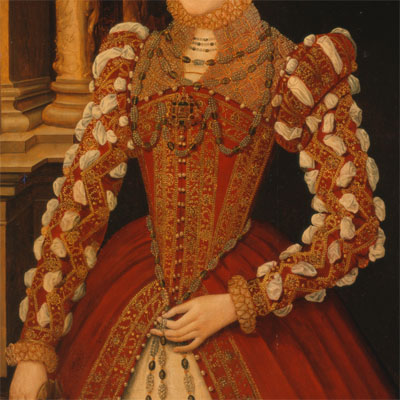
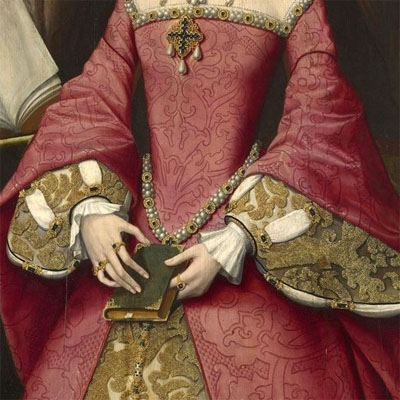
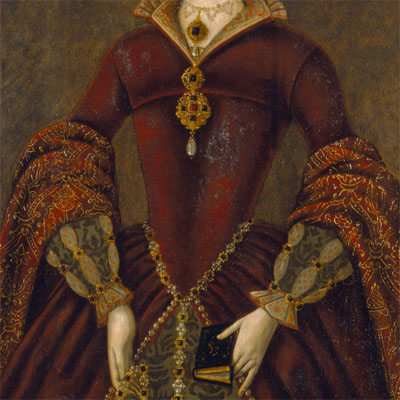
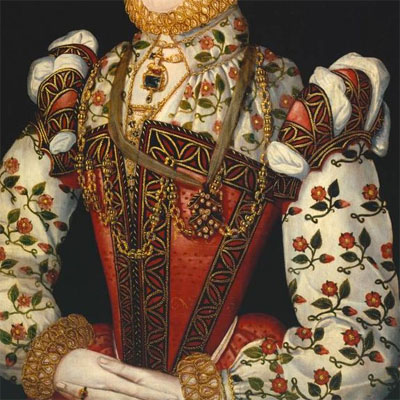
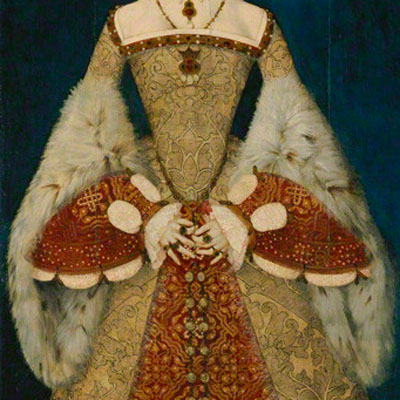
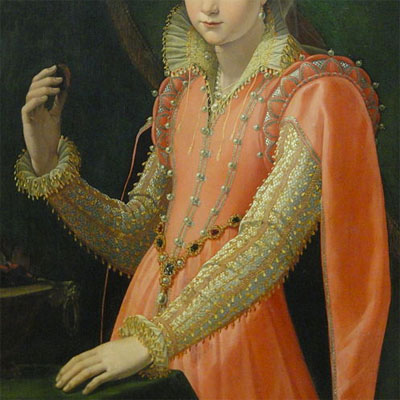
Original Elizabethan clothes were heavy and stiff, they had two primary functions that of representing status and that of keeping warm. Layer upon layer were built up to keep out the English cold, with tapestried woollens over furs and cottons. Elizabethan clothes were often held together with lace or pins as buttons were mainly decorative. Tight fitting corsets made waists look as thin as possible and hips and shoulders were exaggerated in a form of power dressing. Intricate detail and needlework especially on the doublet, sleeves and collars was the norm. Satins, silks and velvets in gold, purple and crimson were also desirable among the Tudor elite. These were colours that ordinary people were not allowed to wear. Clothes had hierarchy and rank by order of law. (See Diary 160814 – Cut and Fold)

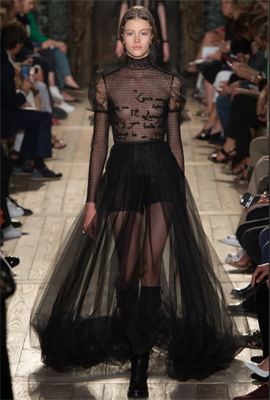
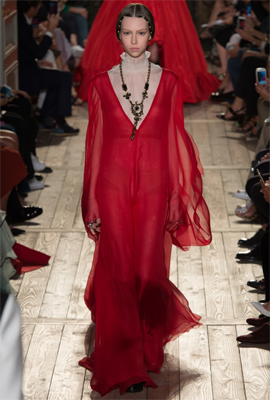
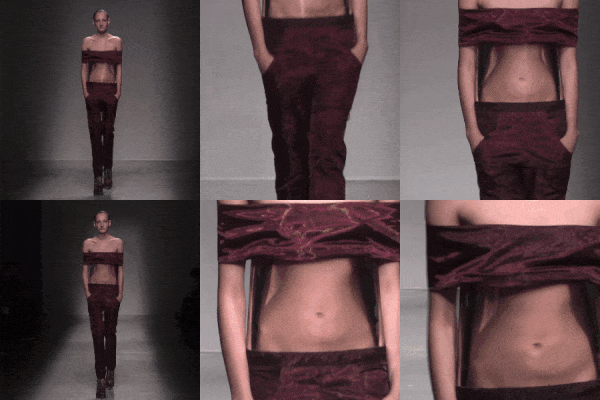
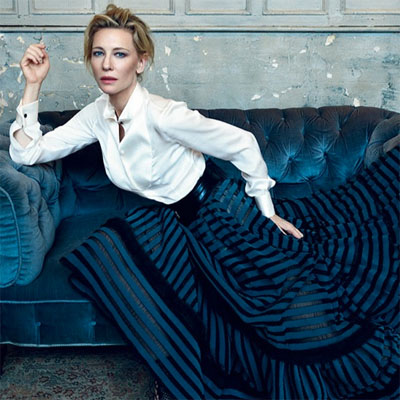
Due to the 400th year anniversary of Shakespeare’s death, Shakespeare has been a theme of many exhibitions and installations so far this year but none come close to the mastery of Valentino’s Elizabethan collection for Fall 2016 Couture. The language of ruffs, doublets, bodices, clerical robes and puffed sleeves has been given a soft, sheer 21st century interpretation by Pierpaolo Piccioli and Maria Grazia Chiuri. It is very difficult to reinterpret historical clothing made with a different purpose, material and function all of which are now so alien to the 21st century. However, the intricacies of Elizabethan detail work fits comfortably in the world of today’s couture. The soft ruffs, the sheer materials overlaid with intricate embroidery brought a new sexuality to the interpretation. Bare arms with light lace cuffs were particularly soft and feminine. The formal clerical robe with cut away shoulders, juxtaposed with lace and transparency allowing enough sensuality to enhance the female body with power and confidence. Elizabethan inspired men’s slit breeches here make a boyish figure. It was disappointing that there was not a reinterpretation of the cod-piece for 21st century woman, probably to political.

The Shakespeare quote woven into a lace blouse.

“Love me or hate me
both are in my favour.
If you love me,
I’ll always be in your heart,
but if you hate me,
I’ll always be in your mind.”

Posted on

300616 – Primal – Tate Britain, London c2008

300616 – Primal – Tate Britain, London c2008 > words

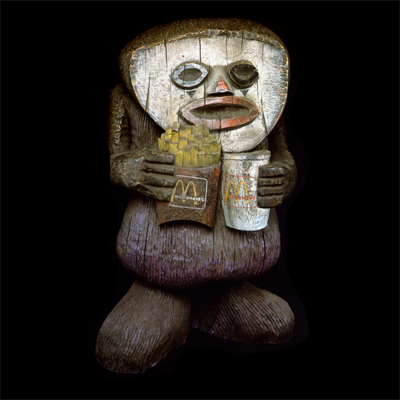
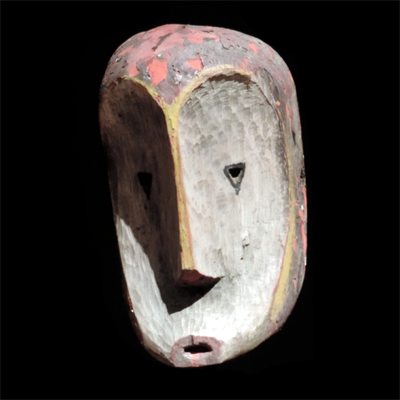
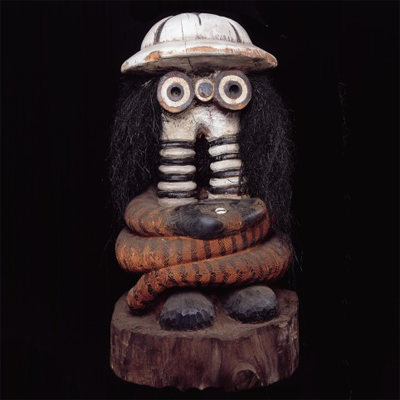
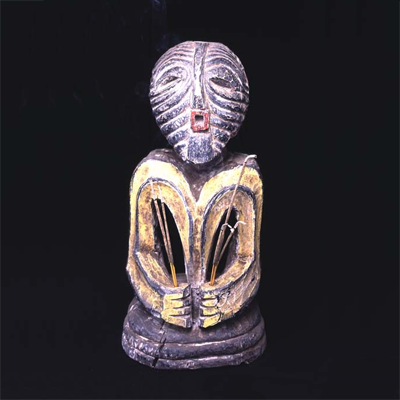
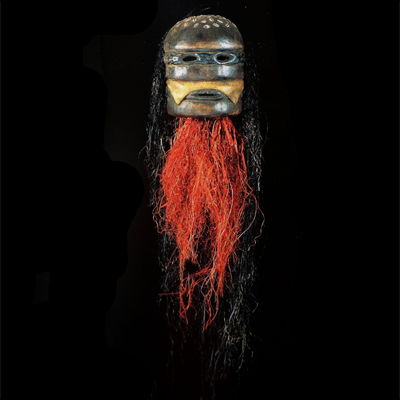
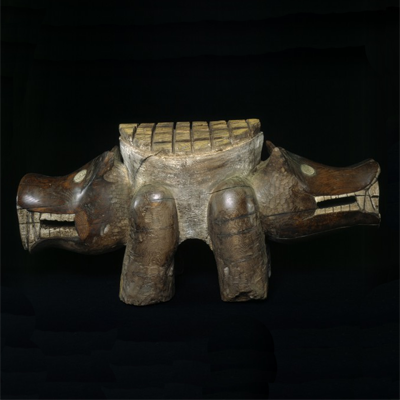
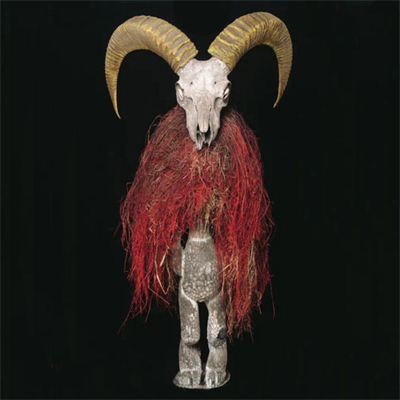
It has been eight years since we visited the Tate Britain to see the Chapman Brothers ‘The Chapman Family Collection’. “ an extraordinary collection of rare ethnographic and reliquary fetish objects from the former colonial regions of Camgib, Seirf and Ekoc, which the artists Jake and Dinos Chapman’s family had amassed over seventy years”…..Indeed!

I came across the work again recently and was touched by its simplicity.In a world that is changing at an ever increasing pace, fast becoming so dominated by technologies and their associated sophisticated professions. The pace of the change has alienated the democratic masses so it seems apt to reflect again at these primal pieces. The Chapman Brothers exhibition reminds us first that we are human and like our forefathers we struggle to comprehend the scale and complexity of the world and our place in it. The totem or reliquary packs all that is incomprehensible into a neat iconic package, a magical explanation of the misaligned and the misunderstood. They are the means by which we explain the unexplainable, simplified and all encompassing. Whether Gods of old or Corporates of new as individuals we are the same, displaced and lost.

Primal is accessible, child like, comforting, we have an emotive response to it that is non-intellectual. Primal objects are easily understood, easily manufactured, the original symbolism lost, misinterpreted or no longer relevant. Here the pieces can be read any way the audience wishes. As humans we are imperfect, contrarian, we have a sense of humour, and are lead by emotion, impulse and opinion. Being human is rarely rational, our creative being exists within our irrationality. Our ability to adapt and respond to the happy accident of the creative process drives progress. It is intuitive and ‘hands on’ which also reminds us, that unlike other species that share this planet… humans make things.

The Surrogate Twin

Posted on

280616 – Taxidermy – Jamb, London SW1

280616 – Taxidermy – Jamb, London SW1 > words

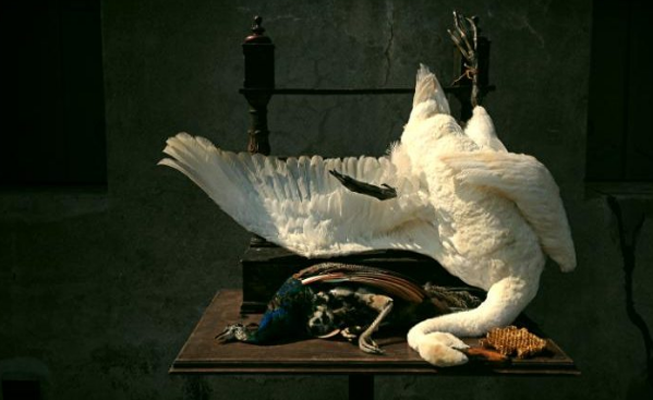
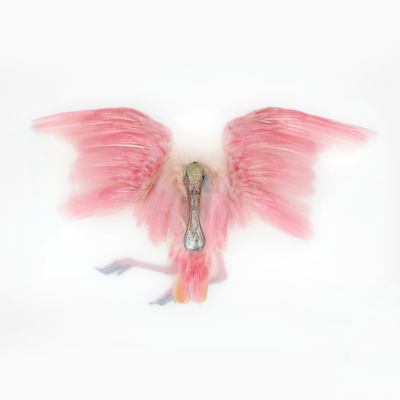
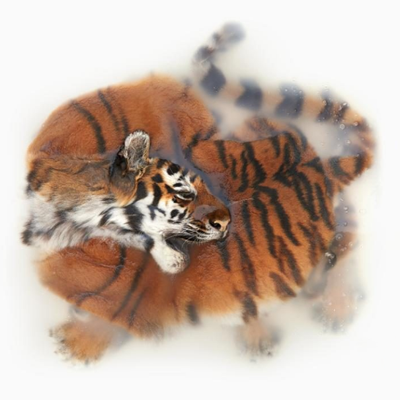
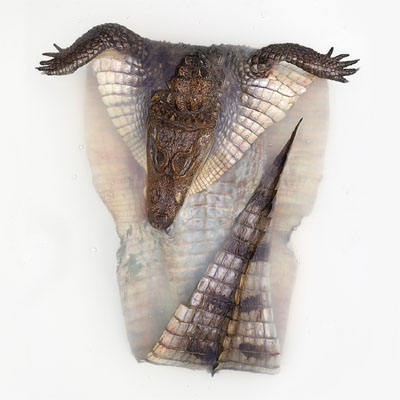
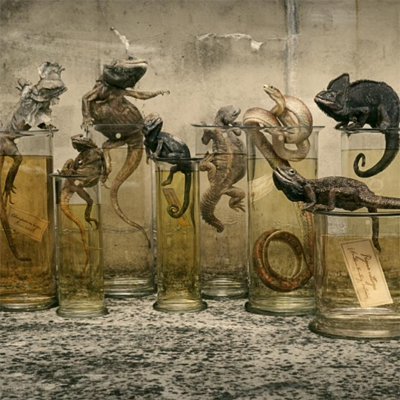
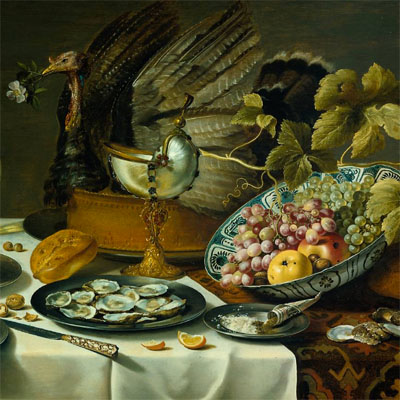
Revisiting and re-evaluating century old traditional skills is a curious pastime in a world of computer clicks and taxidermy is probably one of the last traditions one would expect to be revisited. Stigmatised with associations to crumbling Victorian country mansions and Carry On horror films. Contemporary works by Damien Hirst have helped the public re-evaluate the medium and anamorphic representations have been prevalent in many of the works of Alexander McQueen. Here taxidermy may refigure compositions from 17th Century Dutch paintings as three-dimensional still life or be the subject of unsettling contemporary portraits. Process is meticulously photographed, a white soapy water forms a distilled background from which radiates the subject’s ghostly beauty, a very modern interpretation of the medium.

Nature is beautiful but wisely cautious, we rarely see exotic creatures up close. Perhaps it is this proximity that really opens our eyes. We are forever confined to the human world with its unnatural cities, its miles of motorways and acres of glass and concrete. We are used to mechanisms and fabrications, our organising systems rely on grey grids and pure geometries, within which the biological is a masterpiece of aesthetic composition. We are reminded just how far detached we have become from the other species that occupy the planet.

The work of Ferry van Tongeren and Jaap Sinke can be seen at the New Masters exhibition Jamb London through to 080716.

The Surrogate Twin

Posted on

270616 – IVH Future Couture – London

270616 – IVH Future Couture – London > words

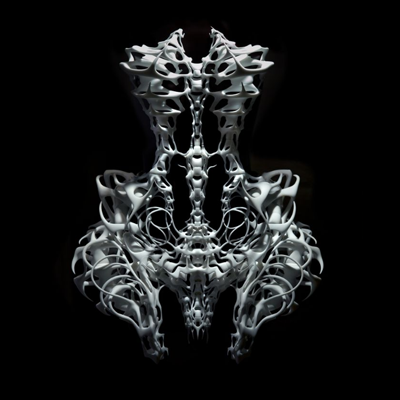
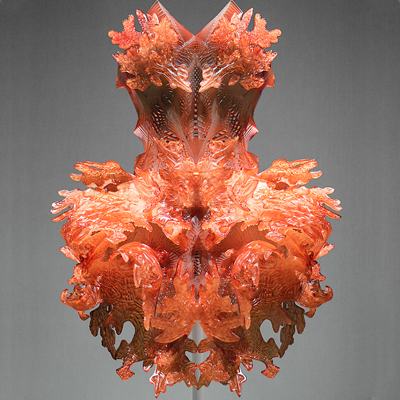
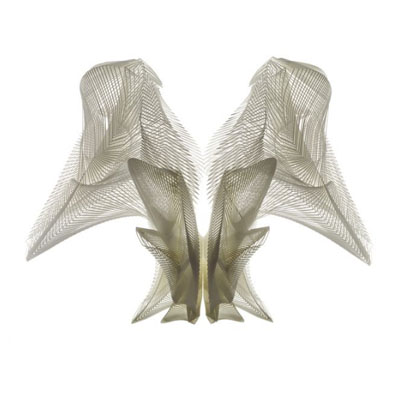
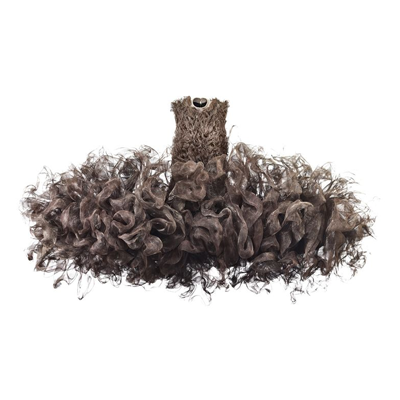
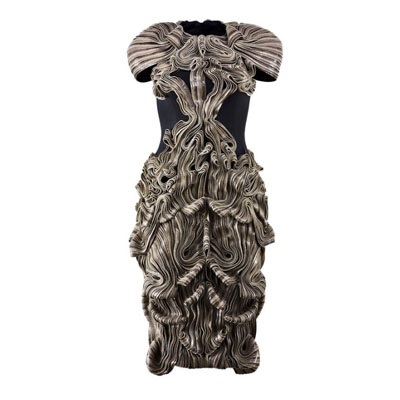
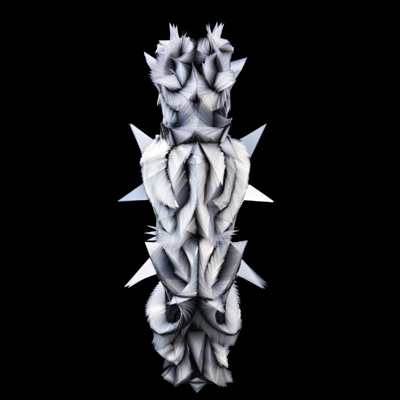
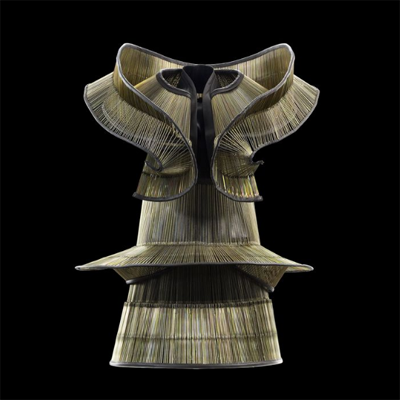
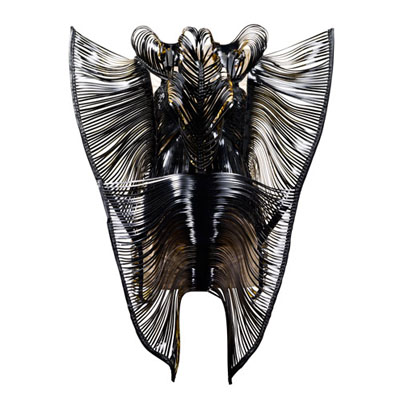
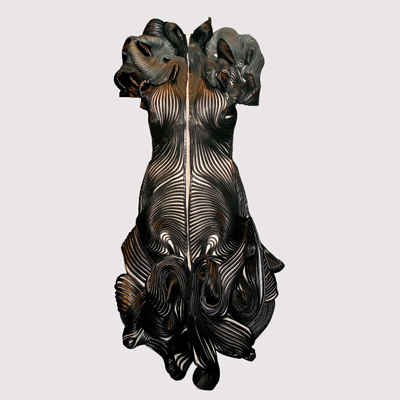
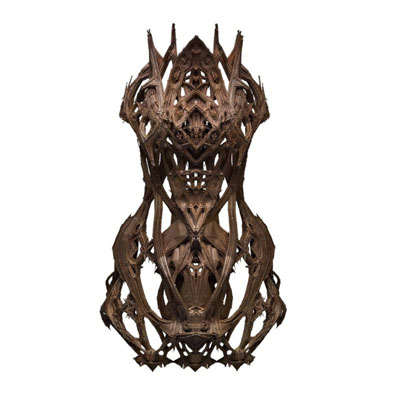
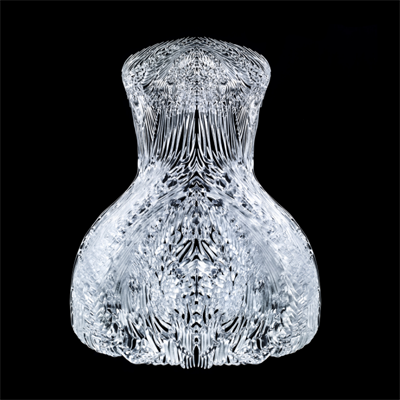
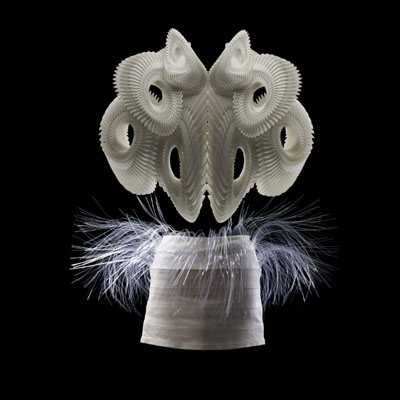
On the shelves in the studio is a book from 1992 Evolutionary Art and Computers by Stephen Todd and William Latham, a mathematician (Todd) and an artist combo. In this book now nearly a quarter of a century old lies an outline for the spatial form making of the art schools for the next few decades. The art is generated by simplistic rules typically scale change / rotate / move on xy or z axis – repeat. This basic algorithm generates spiraling patterns similar to fractal geometries. Minor alterations to the percentage of any of the three above radically alters the final form and the permutations are infinite. Add duplicate / mirror image and a 3d printer and you have the formula used to generate much of the work produced by architectural and industrial design courses over the last two decades. The formulas are perfect for work that is excreted. Over the past decade the work and research in this field has increased in refinement and sophistication. Algorithms sit on or inside algorithms so lacework can be integrated onto forms as part of the generative process. Colour and medium change can also be integrated into this seamless process. As the algorithmic input is infinitesimal so are the concluding forms. The artist/designers role is that of director/editor with the decision making process usually led by subjective aesthetic criteria. The next game change will come from AI’s contribution where performance criteria can be entered into the development process perhaps one day generating real time responsive form. As these ideas leave the research labs of the universities it has been adopted by industry and used in a range of unexpected ingenious and explorative ways.

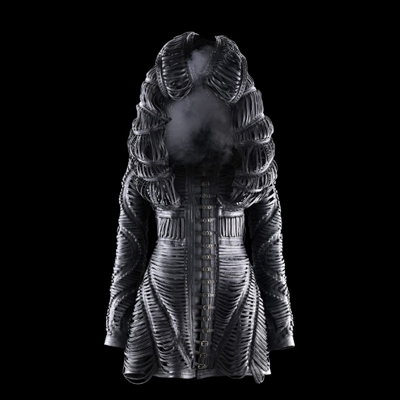
Iris van Herpen works with Couture that is both futuristic and sculptural, mixing traditional hands on Couture techniques with 3D printing and laser cutting. With collection concepts such as Hacking Infinity, Biopiracy, Hybrid Holism, Synesthesia it is clear that the intellect drives the work and the craft delivers the product. The clothes are structured to hold volume and form and movement is very much part of the sculptural choreography. The work is some of the most beautiful conclusions to the application of the above paragraph and as such is a logical progression to this area of exploration. Van Herpen’s studio has had a prolific decade and the exploration continues to gain pace and the coming show will be watched closely. Below are the beginnings of new concepts being formulated by this exploration and these are of intellectual interest beyond the aesthetic.

1  Scale. Algorithmic generated form is scaleless. Whether it be a Zaha Hadid building or a Van Herpen dress. One could shrink Zaha’s Al Wakrah stadium and wear it or increase a Van Herpen dress from the Lucid collection and inhabit it.

2  Surface. Many of the pieces in Van Herpen’s work occupy a space beyond the body and as such form a penumbra in which a silhouette is cocooned. I would predict that this outer penumbra will soon be the intelligent surface of most buildings, just as animals have fur and trees leaves.

3  Movement. Movement has always existed in fashion but here something different happens. Sometimes the piece is a kinetic dress that amplifies the movements of the wearer but when there is a dislocation between the silhouette and the penumbra there are two independent choreographies within each piece, one organic and sexual the other abstract and sculptural. 

4  Distortion. The use of Optical Light Screens within the garments distort both form and body.

5  Responsive. Sensory fabrics, fibre optic, sound emitting, have been woven into garments that encourage tactile and soon virtual interaction. Our technology, always a prosthetic extension of ourselves, gains a new intricacy and intimacy. Perhaps our garments will soon be knowledge intensive, self growing and self repairing.

Related exhibition Manus x Machina The Met Fifth Avenue New York through to 140816.

The Surrogate Twin

Posted on

240616 – Brexit – London

240616 – Brexit – London > words

Monday is market day, farmers from the surrounding areas are bringing their goods to the Spanish village market to sell. Spain is a country torn apart by two political parties. General Franco leads the Nationalist Fascists against the Socialist Republican Government.

At 4.30pm on a sunny afternoon a solitary plane flies over the market town and drops six bombs. Panic ensues as the buildings collapse to rubble. Terrified civilians, mainly women and children, run into the streets, by now the rest of the Luftwaffe Condor squadron has arrived opening with machine gun fire. As the villagers lay dying in the streets the Luftwaffe drop waves of incendiary bombs turning the village into a blazing inferno. The bombing continued for two hours. General Franco had ordered this bombing of his own people as part of a campaign to terrorise the civilians into submission and conformity. Thousands of innocent people die but then this is politics 1930’s style and as history confirms this was just a warm up for what was about to follow.

Manipulating the masses using populist opinion and irresponsible media to benefit the personal agendas of a selfish few is not the way to run a country.

This is the village Guernica Spain on 26th of April 1937.

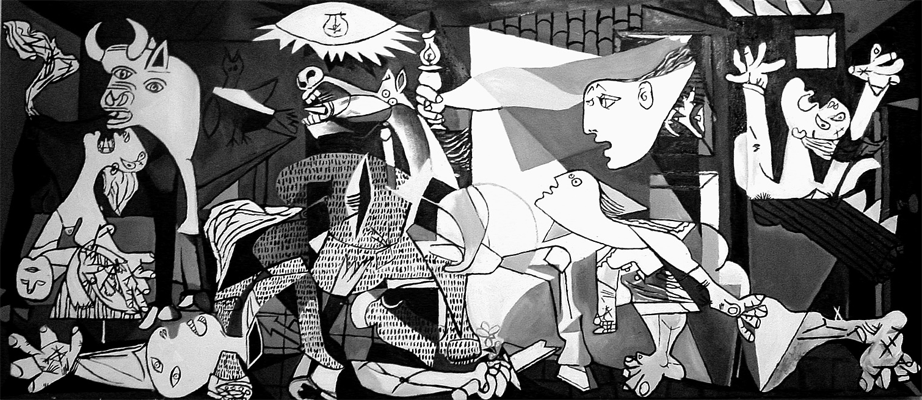
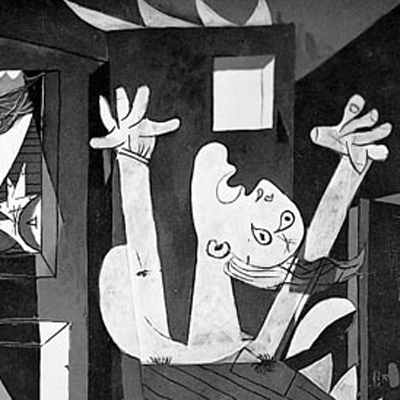
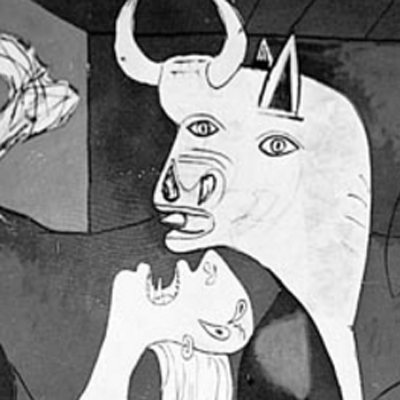
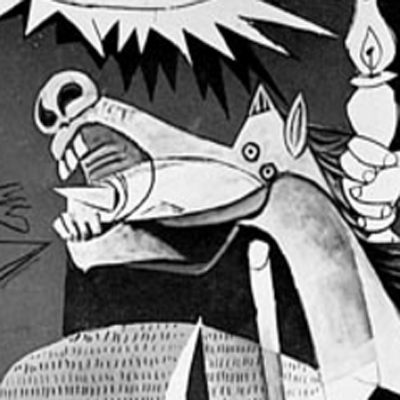
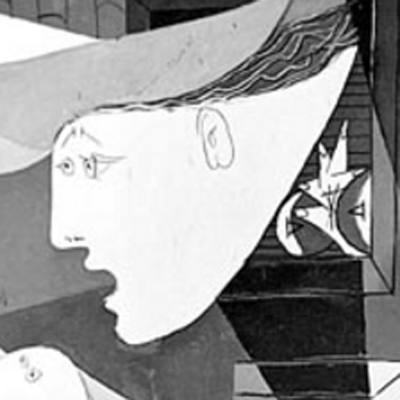
In Paris an artist works in his studio on a 7.8m by 3.5m mural produced with a palette of greys, blacks and whites. The mural is for the Spanish Pavilion and is to be shown at the Paris International Exhibition of July 1937. The black and white canvas has the immediacy of a photograph, its contents a chaos of suffering, there is fire, anguish and incredulity. A horse screams with daggered tongue, a mother cries holding her dead child. The only hope is offered is from a small candle but this is powerless under the light of the all seeing eye. The composition of chaos is split with a central pyramid of disbelief, to the left a Spanish bull, to the right a burning woman. It represents a country divided into two equal but broken halves. Newspaper text forms a visual static, it offers no clarity or legible explanation. The canvass writes a message of doom, all that is loved is going to be lost. The painting would go on to endure as a symbol for an appalled humanity at the devastation of war. The artist was Pablo Picasso and his assistant Dora Maar. 

This is Guernica the painting of 4th June 1937.

In London I wake to a country torn in half, to the right there are nationalist protectionists and on the left the liberal socialists. A referendum had been called and the nationalists won ousting Britain from the EU. The false promise of short-term gains was enough to swing the vote. The ensuing political brawl with its well-whipped media hysteria has been utterly shameful. The main protagonists all walk away once the damage is done. The chaos created leaves a country without confidence, trust, hope or dignity. The decision could well prove to be the catalyst of something much worse at a European or Global scale. It is a sad day as it proves that in a world of accessible information we are still unable to learn the lessons of history. The planet has global issues that urgently need to be addressed in unity and the sideshow of nationalism diverts the time and energies required for far more ever increasingly important considerations. Asking the UK citizen to make a life changing decision on a subject that no one understands the full complexity and complication of was irresponsible and gutless politics. The Brexit referendum should never have been allowed to happen.

Manipulating the masses using populist opinion and irresponsible media to benefit the personal agendas of a selfish few is not the way to run a country.

This is Brexit 24th of June 2016. 

The Surrogate Twin

Posted on

040616 – Infinity – Victoria Miro, London N1

040616 – Infinity – Victoria Miro, London N1 > words

The concept of infinity sits uncomfortably in a scientific world that relies so intrinsically on its units of measure. Infinity is an abstract, a mathematical or philosophical concept. Scientifically the idea of an infinite continuum does not exist, as all that is real requires a resource that is ultimately finite. Reality is a resource that can be measured and quantified.

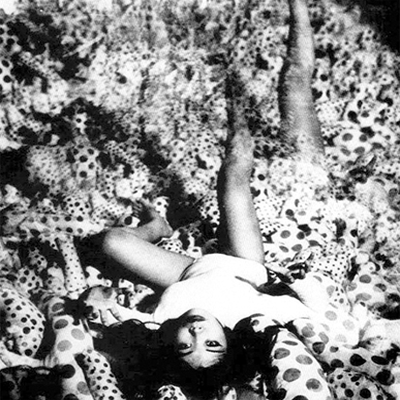
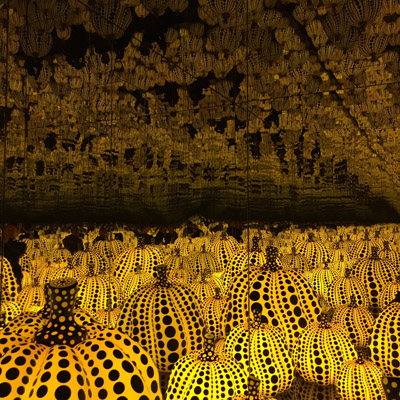
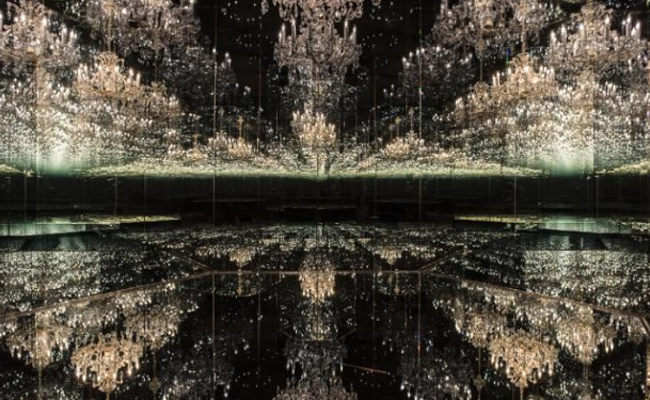
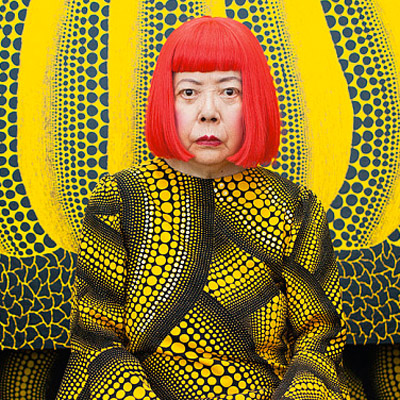
Infinity has been an obsession of Yayoi Kusama from her early works such as the ‘Infinity Net’ paintings of 1961 or the ‘Endless Love Room’ of 1965. This obsession continues in the recent installations at the Victoria Miro Gallery that pursue the concepts of a finite space enclosed by the boundless perimeter. The spaces created are solitary, peaceful, meditive, cosmological, ethereal, like the endless spaces created by Superstudio or the infinite white space of Space 2001. These spaces are deeply rooted in the culture of 1960s philosophical ideology and have an idealised physical and conceptual beauty.

The Koch Snowflake is a mathematical curve and one of the earliest constructs of fractal geometry. Its area converges and is therefor finite while its boundary diverges and is therefore infinite. A fixed area bounded by an infinite border or enclosure, a very Yayoi spatial conflict.

Lucy, from the film Lucy and the only person known to have accessed 100% of her cerebral cortex explains the paradox simply – “Humans consider themselves unique so they invented their theories of existence based on this belief of uniqueness. One is their unit of measure, it is the means by which we quantify all systems but our units of measure have been conceived to make the world comprehensible. We have quantified all systems to bring them down to a human scale, to make them comprehensible we have created a scale so that we can forget its unfathomable scale.” 

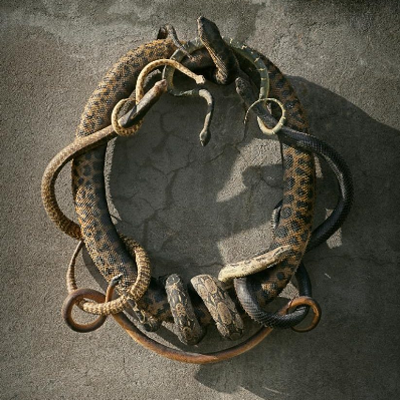
Infinity is a circular system.       

The Surrogate Twin

Posted on

150516 – Concept Art – Tate Britain, London

150516 – Concept Art – Tate Britain, London > words

Conceptual Art In Britain 1964 – 1979.

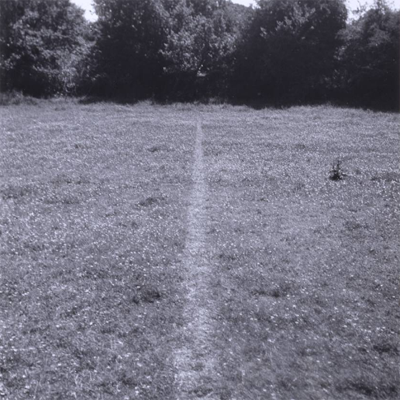
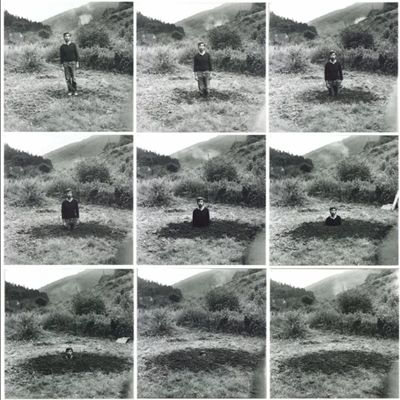
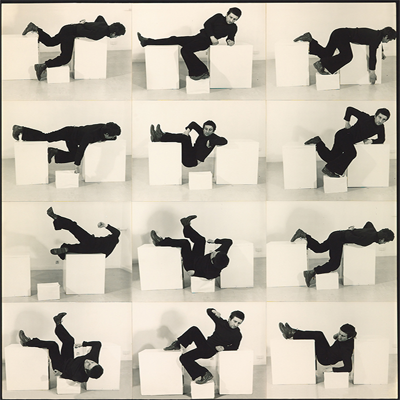
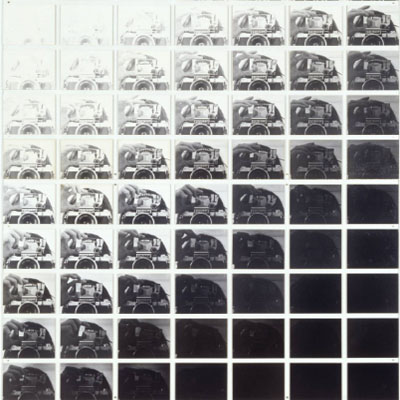
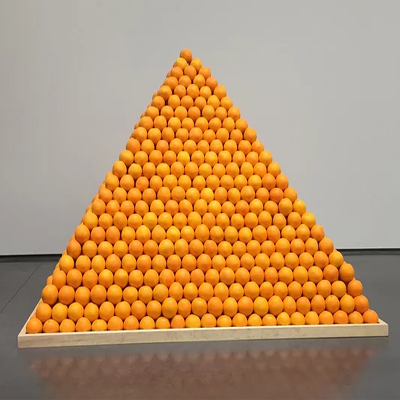
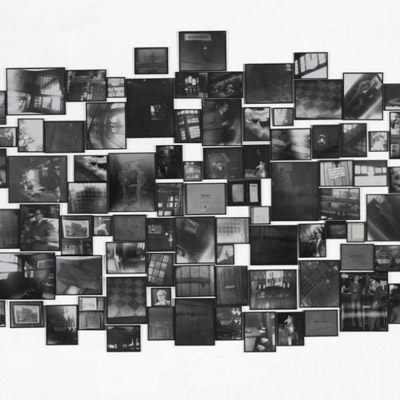
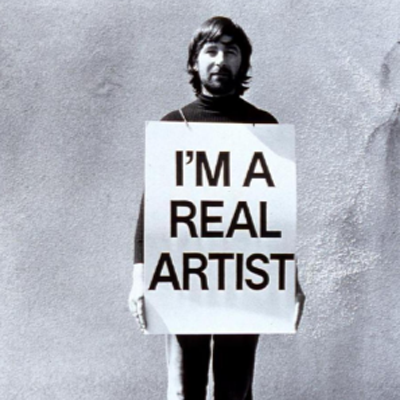
Art has often had to redefine its role in society. With the invention of photography the impressionists addressed this with conveyance of mood over pictorial representation. Between 1964 and 1979 Conceptual Art readdresses arts roll valuing process over product. The numerous pieces on display at the Conceptual Art exhibition at Tate Britain have little aesthetic value and are incomprehensible without pages of descriptive text. Art as a conclusive product becomes totally redundant and the process of making art, the idea behind the art is the art itself. This process is ephemeral, a passing event, the deliverance of an idea. When the idea becomes art, technique, skill and conclusion are secondary and this makes a lot of the early conceptual art less credible.

One of the questions raised by the conceptual artist is the value that the art establishment puts on the aesthetic. Representational art is first valued aesthetically. Is it beautiful? There is a philosophical dilemma in valuing art primarily on beauty. Should battles, war, famine and hardship be aesthetically beautiful? This was an apt question during the years of the Cold War, The Vietnam War and the student uprisings of the late 1960’s. An equally apt question is the purpose of the concluding art image in a time when TV, film and advertising begin to saturate and de-contextualise meaning in image. Historically Conceptual Art is pigeon holed into a narrow time frame but much of art produced today is conceptual. Scale, context, inversion, invasion, juxtaposition and repetition are common tools used in contemporary pieces and the early Conceptual Arts opened the doors to enable these investigations.

The Surrogate Twin

Posted on

090516 – Glamour – London

090516 – Glamour – London > words

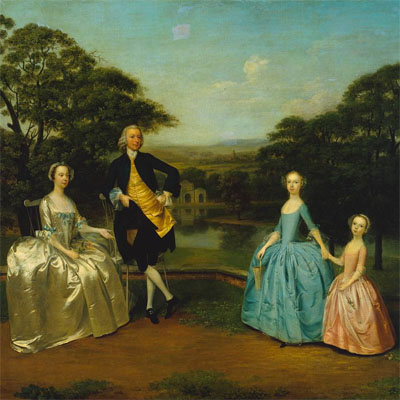
Oil painting celebrated private property. Ownership is measured in quantity and quality, vast landscapes of the country estate, elegant details of the jewellery collection, exquisite fabrics, rare porcelain and sculpture. The quality aspect of ownership puts emphasis on fine detail and from this the hyperreal super intense assemblage develops as a genre in which to indulge in excess. The viewer is to envy the excess as they are excluded from it. The digitally manipulated image continues this collation of detailed and elegant excess and uses it to advertise a lifestyle via desirables. The advertisement encourages envy but simultaneously offers hope as it sells the idea that lifestyle can be purchased through products. Lifestyle is sold on association so new products are juxtaposed against established lifestyle criteria. The hyper-real is tactile and touchable, being within reach is part of its selling power. The advert differs from the oil painting in one very important aspect. The oil painting reaffirms ownership; it is a picture of products, property, landscape already owned, an authentication of status. The advert promises a lifestyle if one could own. The advert has to first make the viewer dissatisfied with their existing lifestyle to encourage them to buy into the lifestyle promised. Adverts play on the anxiety that if you have nothing you will be nothing. The oil painting was a summation of wealth at a particular time and was therefore painted in the present tense as a record to be handed down to the next generation. The advert is always in the future tense, what could happen if you bought into the proposed lifestyle. Most people can rarely afford the whole lifestyle so they buy a symbol of it, the designer t-shirt or the signature sunglasses. Advertising aimed at the middle class does so by selling lifestyle combinations, complete outfits or complete interiors.

Glamour is a twentieth century invention and presents the enviable. To be enviable it has to be achievable and within reach. True beauty, genius and supreme talent are not envied as we appreciate their rarity and their genetic good fortune. These are not glamour. Glamour is envy added to the everyday.

Glamour’s true potency begins with the cinema of the 1930’s and is a twentieth century marketing invention. The exponential potential of dispersing media with the invention of film and television puts emphasis on the visual above all other characteristics. Glamour capitalises on the distribution and manipulation of the visual. The digitally enhanced image becomes the symbol and identity of the person. The person is assessed completely through the visual image. Markets are saturated by recurring images and these substantiate the ideas of glamour. The concept of glamour is most tenacious in urban conglomerations, in large cities, such as Paris, Rome, London and Los Angeles. Previously here the glamorous image could be quickly distributed. Today the concept of city has little relevance as glamour is propagated globally online. Glamour is international and tied to modern economies. It is a sellable commodity. As advertising develops, the visual image is increasingly used to provoke yearning for a lifestyle. As glamour is always advertised in the future tense, achievable through purchase, it is insatiable and enduring. Modern man exists within the contradiction of what he/she is and what he/she aspires to be. Advertising and glamour exploit this contradiction and this life of envy. Advertising gains credibility and longevity by bringing the unobtainable within reach only to offer the next desirable once reached.

Celebrity culture specialises in selling glamour, it packages the normal in a wrapper of envy. The viewer realises that the only difference between themselves and the glamorous is the wrapper. Today the glamorous are made over night they need no special talent other than being exposed to an audience. Reality programmes have taken the most banal and repackaged their product as celebrities. Marketing loves the celebrity, as they are able to capture a wide audience through a single character. The increased normality of the celebrity the greater the catchment potential for the marketing teams. Not too pretty, not too bright, not too talented the girl and boy next door all wrapped in glamour selling envy and desirability. As the marketing of glamour captures a forever widening audience with new mediums of distribution the subject of glamour reaches a new low. The greater the market-reach the lower the common denominator needed of the subject. Maximising market catchment becomes the driving force behind glamour. Glamour is an illusion. Glamour keeps the viewer at a distance and it needs that distance to maintain the illusion, this is why glamour works so well when distributed via the media. 

Glamour may have peaked during the 1950s and 1960s. At this time glamour and style were intrinsically linked and the marketing of it was personalised and limited enough to retain its credibility. Glamour today is mass produced, a factory product, a process through which each new prospective celebrity is churned. It uses a generic formula for what is glamorous and applies this to each individual, saturating the identity and qualities of the individual. Numerous talent shows have the ability to turn raw talent into tacky mediocrity via the glamour machine producing a poor derivative of the celebrity juror. The celebrity juror is often already a second or third generation derivative and this process is dilutive.

Glamour fortunately does still exist where the individual is in full control of the marketing machine. Glamour provides the platform for experiments in excess, where designers can explore the limits of luxury and the conventions of etiquette. The recurring red carpet events of the Twentieth and Twenty-First Century have become the substitute platform for The Royal Courts of the Seventeenth and Eighteenth Centuries and as such glamour has replaced pageantry.   

The Surrogate Twin

Posted on

050516 – Happy Yellow – London

050516 – Happy Yellow – London > words

Creativity is problem solving and is associative, it takes what surrounds us and uses it in a novel way to resolve new questions. Creative people see unusual connections that others may miss when problem solving. The problem with being creative is that one needs outside substantiation to verify that ones own creativity is not insanity. Creatives work best as a team bouncing ideas one to the next. Constructive creative links differ from random associations and being able to edit constructive from random is the key to true creativity. The difficult part of creativity is rarely solving the problem, it is recognising a relevant problem to solve in the first place. One thinks of problems in terms of pragmatic issues, product development, infrastructure, logistics but problems can be social and cultural and these may also need creativity to resolve.

The impressionists faced a problem at the turn of the twentieth century. Art previously had a representational and allegorical role within society. With the development of improved literacy, accessibility to printed text and the invention of photography arts conventional role was disrupted and its previously exclusive minority elite market broadened. Science had shifted the focus from the mythological to the everyday and the wonders of the everyday were all encompassing waiting to be discovered by those that were able to see. The Impressionist painters took to this challenge by trying to capture the mood or experience of the moment instead of an accurate figurative representation.

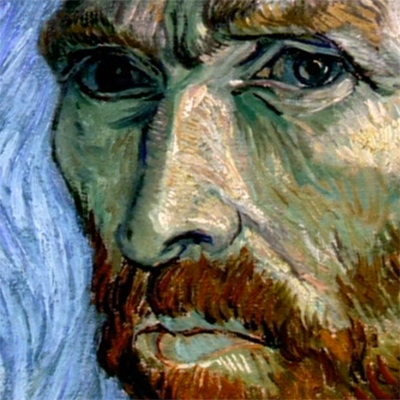
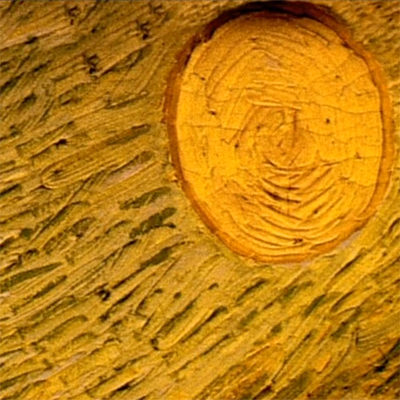
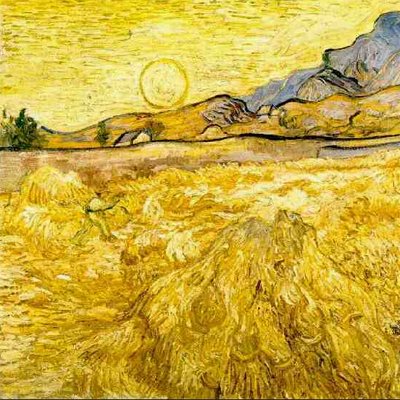
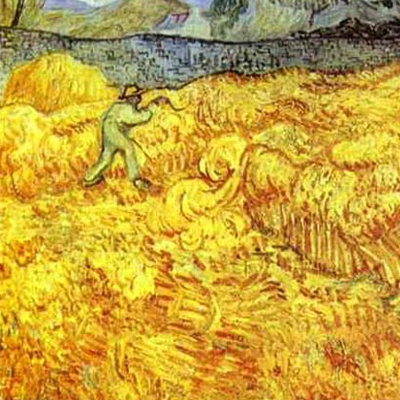
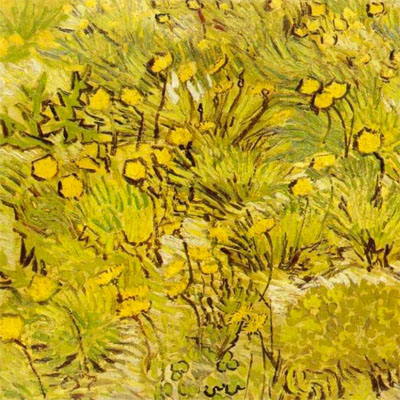
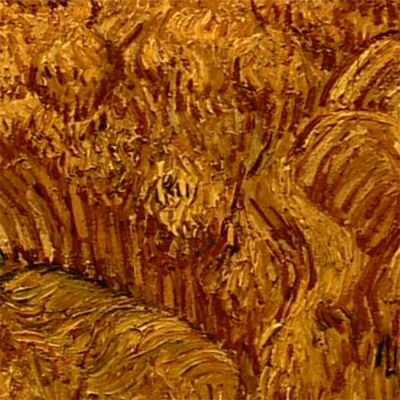
To Van Gogh a paintings feeling was its essence. Feeling is of course subjective but with Van Gogh capturing this feeling was a pursuit followed with a religious zeal. The feeling captures, sunlight, wind, heat, smell, sound, all of these things make up the experience of the moment and all are fleeting. The painters work is intense, quick, tactile, immersive and the result is the outcome of this outpouring. The canvas is not strategically composed, structured and balanced it is improvised on the spot, there and then. It is reactionary, and carries with it the mood of that moment, happy or sad, overwhelming or humble, hot or cold. When the canvas is finished the viewer should ‘feel’ the artists experience and in so doing share the moment with the painter. Feeling by definition is measured by intensity, the sensitive are the greater receptors of the atmospherics that set mood. Being sensitive and creative provides the perfect conduit for capturing this form of expression. Bias, emphasis, enhancement and magnification are part of the creative tools that help shift focus and reinterpret the feeling, enabling others to share and see. Van Gogh uses the medium of paint, with this medium he tries to capture the feeling of burning heat, of slow winds, of happiness. These are represented with intense colour and brush strokes that form an assemblage of micro foci. The viewer is drawn close to the canvass and sees the painting as the painter painted it. The viewer scans the canvas for areas of intensity and draws from it their own subjective conclusions.

Van Gogh as a creative, explores new ideas and means of representation and as such is isolated. There is no precedent by which to compare the results of his work. Success or failure depends on the acceptance and the interpretation of others. Associative thinking has no time for abstract society rules, all is equal and of equal measure and are part of the same alchemic mix. The creative that explores the unexplored walks a lonely path and in so doing questions the limits of their own creativity. During the creative process there is a continued dialogue between constructive and random associations and the artist is both editor and director. Van Gogh, like many creatives, had a personality of extremes, he was depressive, schizophrenic, bipolar. Exploring these emotional extremes enables access and interpretation of and to the creative tools of expression. To be creative one needs to question accepted norms and conventions but this experimentation needs affirmation through outside critique. When isolated logic is self-substantiating. For Van Gogh happiness was best represented by the colour yellow this is seen in many of his paintings. Yellow is a subjective representation of happiness but to Van Gogh eventually happiness and yellow become one and the same. Van Gogh concludes that to be happy the cure for his depression was to eat yellow. Potassium cobaltinitrite, Cobalt Yellow unfortunately for Van Gogh is a toxic cure for happiness. In the spectrum between what is normal and insane, between creativity and madness, one walks a dangerously narrow path but without those that question the limits of what is understood the world would stagnate. 

The Surrogate Twin
Posted on

280416 – Angry Light – London

280416 – Angry Light – London > words

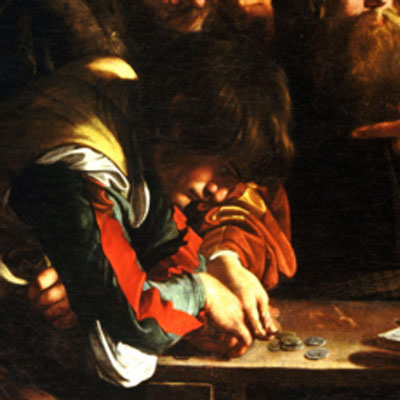
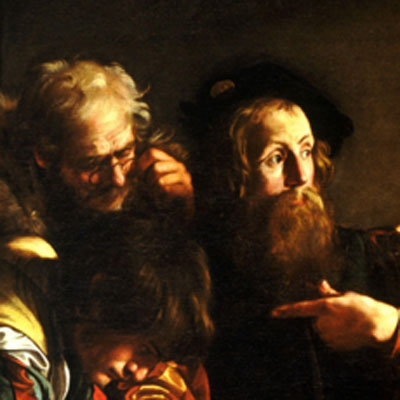
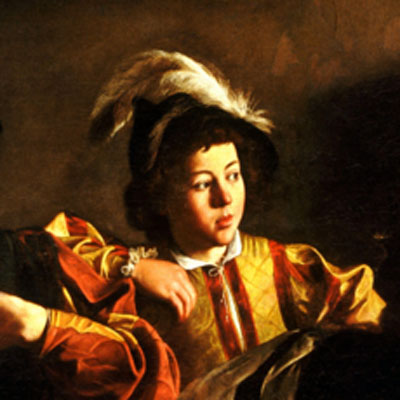
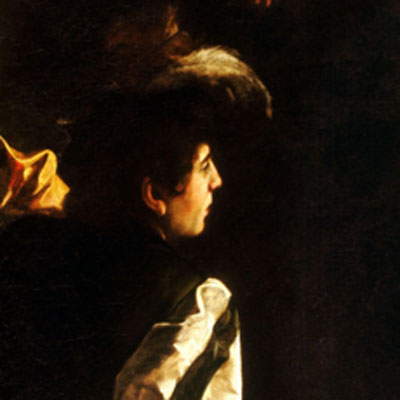
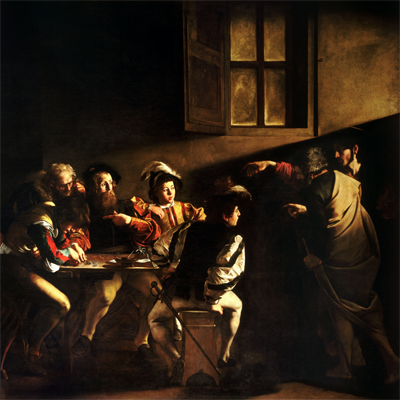
Rough and ready to brawl, rejecting the idealised compositions of the Renaissance Caravaggio painted up close and personal. He painted what was there, disease, decay and dirt all squashed into a flattened and compressed picture plane. Lighting flashing angry diagonals across the canvas, orchestrating the eye and unfolding the narrative, all set upon a darkened background. Caravaggio painted the light of the basement, the dive bar, the back street brothel, the light of the alley, intense one directional, splitting. Light that lands on his subjects like thrown fire burning patches from the canvas. The spaces are shifty, shady, squalid, the inhabitants dubious and suspicious. This was the Rome that Caravaggio occupied in the late 16th century. Doublet’s, daggers and dueling, ready to fight over a misplaced smirk or a poorly directed comment. Life day by day, hand to mouth, fight by fight, in the back streets of Rome, the underworld far removed from the Renaissance Papal elite. Supreme talent wrapped in a rough outer case.
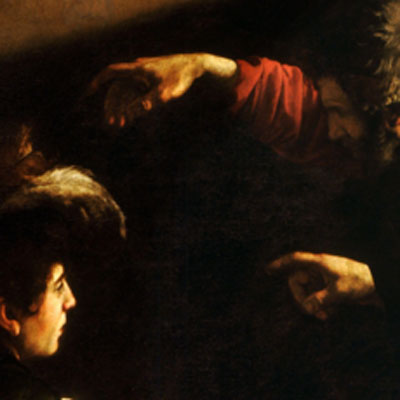
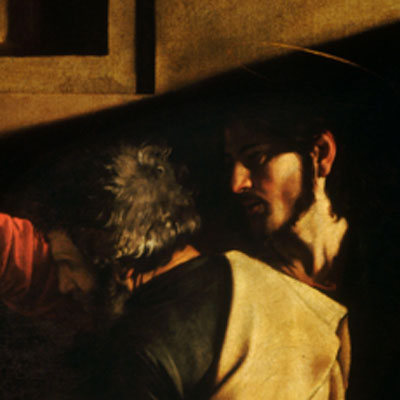
Caravaggio’s personal representations convert the mythological to the everyday pulling flying disciples off of the Papal ceilings to sit them on bar stools around an empty table in a lowly tavern. In The Calling Of Saint Mathew the prosaic is interrupted by the miraculous but to most of the bystanders of the composition the event goes unnoticed. Jesus and Peter enter the tavern barefoot wearing period contemporary clothes. Jesus points an accusing finger at Mathew. Mathew could be the bearded male third from left but the composition has more potency if he is the young male fiddling with the coins on the far left.

The magic of the painting is in the lighting; here tenebrism is used with deliberate mystery. Light is used in two ways. An upper window top right sets up a diagonal across the painting and this aids the narrative by giving it direction. A second light source falls on aspects of the characters, their faces and gestures. This second light is the one of interest as its source is unclear. Some of the light is frontal, some low as it illuminates under the table and some comes from the right, possibly from an open door through which Jesus and Peter entered. The light from the upper right window is above the majority of people in the composition. The light from the assumed open door (off frame) would need to travel through Jesus and Peter to hit the table. Jesus and Peter throw no shadow. Any frontal light, which is the most probable direction for light to be able to hit all five figures to the left of the composition gathered around a table, is shadowed on the left. This second light is used to split the composition into two groups. The group around the table sit in a sphere of multi directional light and as such are illuminated. Jesus and Peter stand in a more natural light that falls on their backs and obeys most scientific laws. The brilliantly lit hand of Peter, seconding the motion of Jesus’s hand, being the exception and is unnaturally lit. There is a dark chasm that divides the two groups in the composition. Into this dark chasm are the pointing accusing hands and here they float as an offering, a salvation. The picture could be read as a tripartite with a dialogue between two groups across a dark void and as such is symbolic. 

Light adds a super-real element to the painting increasing its intensity. It highlights and accentuates, focusing on aspects of the narrative to aid decryption. Light sets the scene by establishing the space, location and atmosphere in which the meeting takes place. Light aids the dynamic of the composition by setting up a diagonal to aid the reading of the narrative whilst it moves the eye across the canvas. Finally, light emphasises the spiritual through mystical illumination, it splits the two groups of the composition into deliverer and receiver.      

The Surrogate Twin