Posted on

270616 – IVH Future Couture – London

270616 – IVH Future Couture – London > words

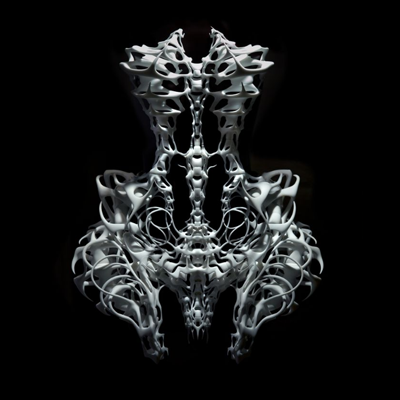
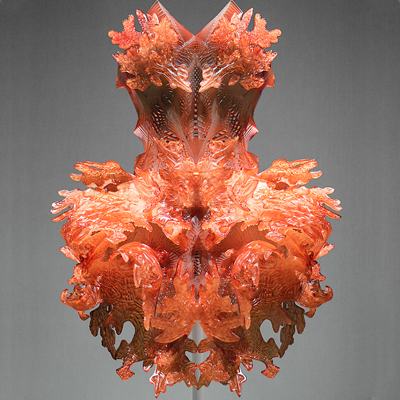
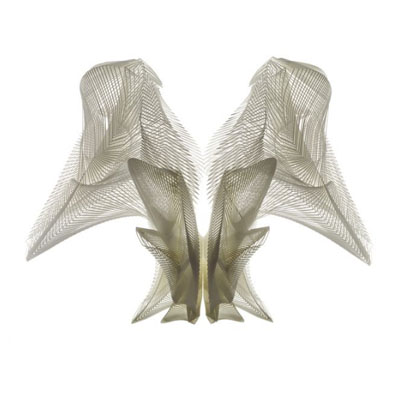
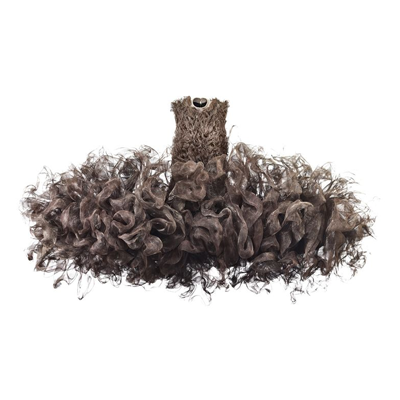
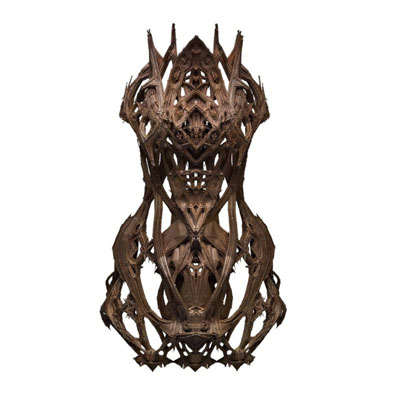
On the shelves in the studio is a book from 1992 Evolutionary Art and Computers by Stephen Todd and William Latham, a mathematician (Todd) and an artist combo. In this book now nearly a quarter of a century old lies an outline for the spatial form making of the art schools for the next few decades. The art is generated by simplistic rules typically scale change / rotate / move on xy or z axis – repeat. This basic algorithm generates spiraling patterns similar to fractal geometries. Minor alterations to the percentage of any of the three above radically alters the final form and the permutations are infinite. Add duplicate / mirror image and a 3d printer and you have the formula used to generate much of the work produced by architectural and industrial design courses over the last two decades. The formulas are perfect for work that is excreted. Over the past decade the work and research in this field has increased in refinement and sophistication. Algorithms sit on or inside algorithms so lacework can be integrated onto forms as part of the generative process. Colour and medium change can also be integrated into this seamless process. As the algorithmic input is infinitesimal so are the concluding forms. The artist/designers role is that of director/editor with the decision making process usually led by subjective aesthetic criteria. The next game change will come from AI’s contribution where performance criteria can be entered into the development process perhaps one day generating real time responsive form. As these ideas leave the research labs of the universities it has been adopted by industry and used in a range of unexpected ingenious and explorative ways.

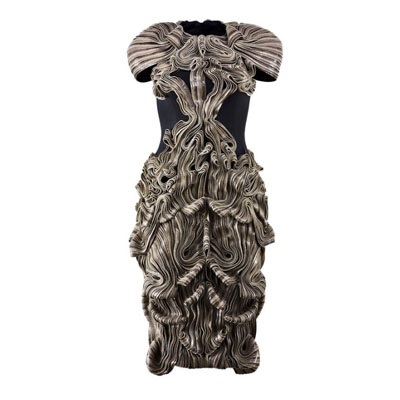
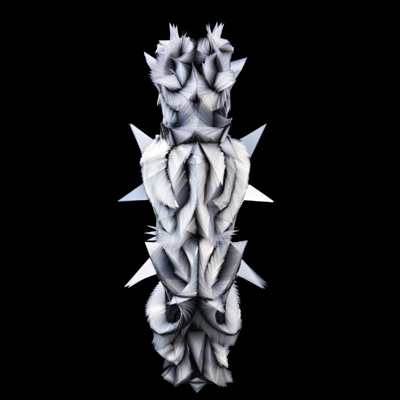
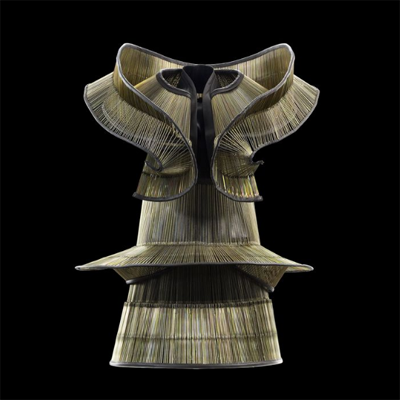
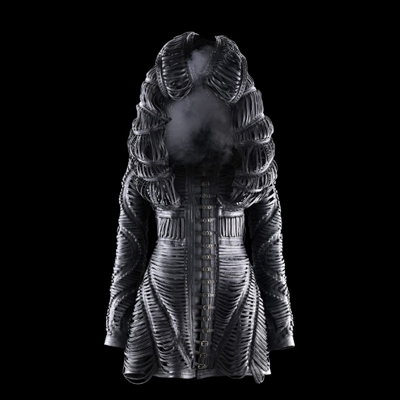
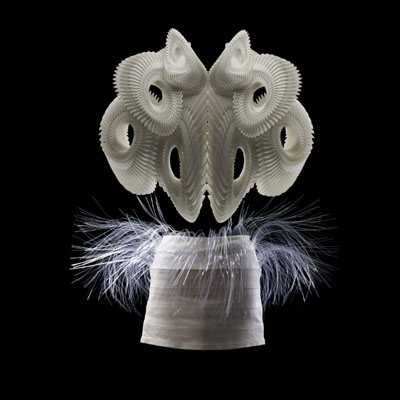
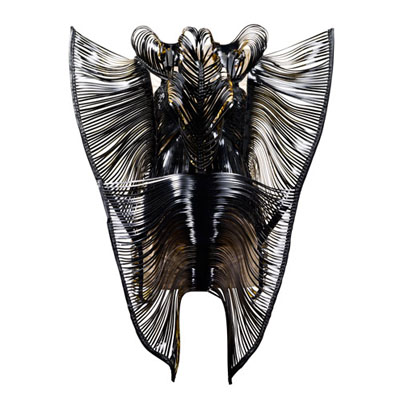
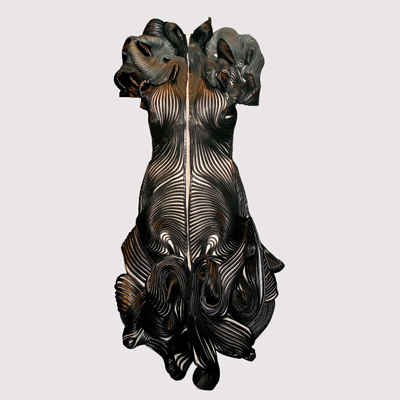
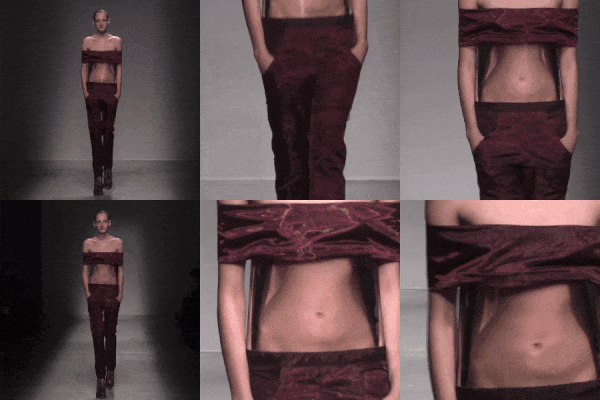
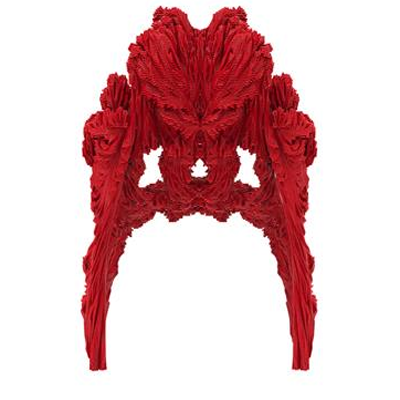
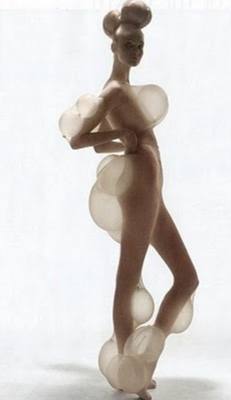
Iris van Herpen works with Couture that is both futuristic and sculptural, mixing traditional hands on Couture techniques with 3D printing and laser cutting. With collection concepts such as Hacking Infinity, Biopiracy, Hybrid Holism, Synesthesia it is clear that the intellect drives the work and the craft delivers the product. The clothes are structured to hold volume and form and movement is very much part of the sculptural choreography. The work is some of the most beautiful conclusions to the application of the above paragraph and as such is a logical progression to this area of exploration. Van Herpen’s studio has had a prolific decade and the exploration continues to gain pace and the coming show will be watched closely. Below are the beginnings of new concepts being formulated by this exploration and these are of intellectual interest beyond the aesthetic.

1  Scale. Algorithmic generated form is scaleless. Whether it be a Zaha Hadid building or a Van Herpen dress. One could shrink Zaha’s Al Wakrah stadium and wear it or increase a Van Herpen dress from the Lucid collection and inhabit it.

2  Surface. Many of the pieces in Van Herpen’s work occupy a space beyond the body and as such form a penumbra in which a silhouette is cocooned. I would predict that this outer penumbra will soon be the intelligent surface of most buildings, just as animals have fur and trees leaves.

3  Movement. Movement has always existed in fashion but here something different happens. Sometimes the piece is a kinetic dress that amplifies the movements of the wearer but when there is a dislocation between the silhouette and the penumbra there are two independent choreographies within each piece, one organic and sexual the other abstract and sculptural. 

4  Distortion. The use of Optical Light Screens within the garments distort both form and body.

5  Responsive. Sensory fabrics, fibre optic, sound emitting, have been woven into garments that encourage tactile and soon virtual interaction. Our technology, always a prosthetic extension of ourselves, gains a new intricacy and intimacy. Perhaps our garments will soon be knowledge intensive, self growing and self repairing.

Related exhibition Manus x Machina The Met Fifth Avenue New York through to 140816.

The Surrogate Twin

Posted on

240616 – 3D Printed Shoes – London

240616 – 3D Printed Shoes – London > words

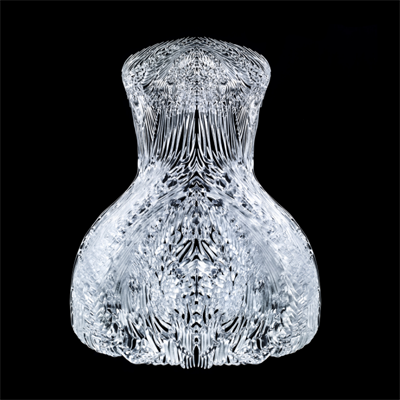
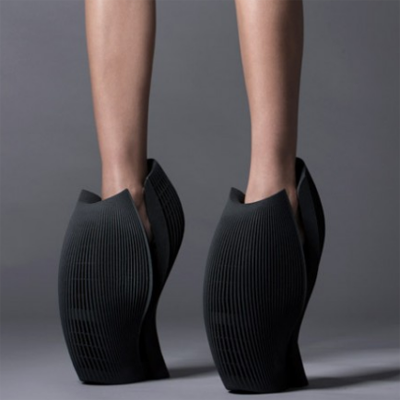
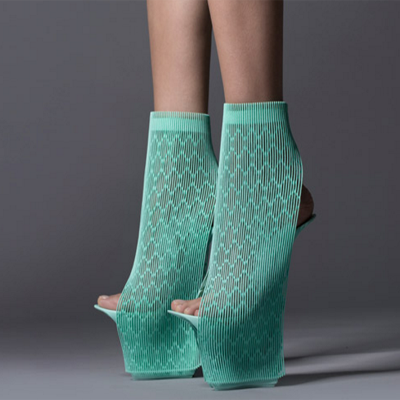
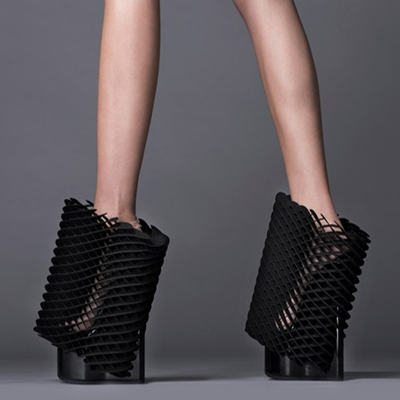
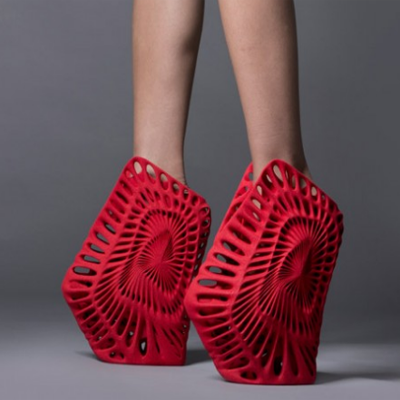
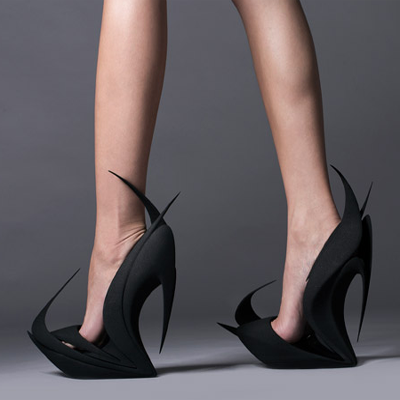
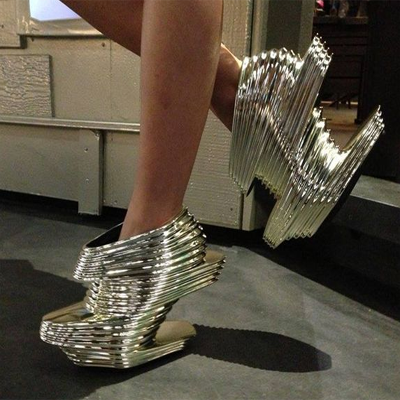
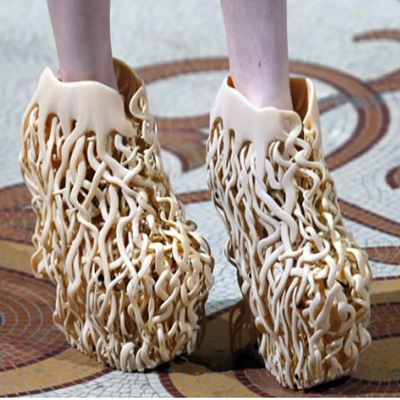
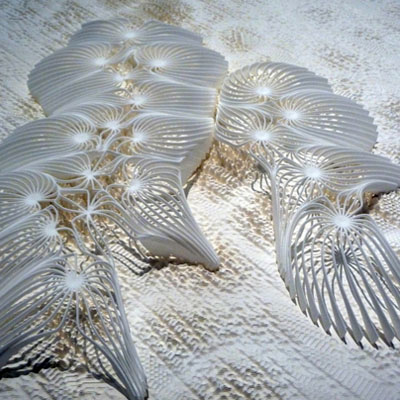
In the last decade computers working with 3D printers have become the front line of design and innovation in which fashion has been no exception. Computers create and visualise the previously unimaginable completing three-dimensional compositions of such complexity that they would have formally been impossible to either draw or craft. This new 3D medium is forcing exciting cross discipline collaborations as designers, architects and computer artists work together to explore the new spatial possibilities. The shoe and the bag are strange fashion accessories but the way they hold volume and space may be the architects attraction. As all architects must design a chair the shoe is becoming the fashion equivalent of the must do project or collaboration project. As can be seen by the work above the results have all been positive pushing limits in new aesthetic directions and forms. 

Images from left to right – Ben Van Berkel, Ross Lovegrove, Michael Young, Fernando Romero, Zaha Hadid x2, Iris Van Herpen.

The Surrogate Twin

Posted on

170616 – Biomimicry – V&A London, SW7

170616 – Biomimicry – V&A London, SW7 > words

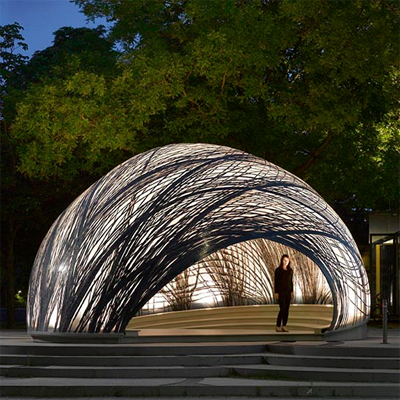
Biomimicry the latest hyped trend does what many have previously tried to do utilise and learn from natures billions of years worth of R&D. So what is different this time around? The answer is thirty years worth of useable desktop computing. In the late eighties desktop computing became accessible, affordable and useable although they then had very limited CAD ability their power has increased exponentially over the last three decades. Information that was once the reserve of NASA or the military is available to all within a few clicks and new information is globally distributed from every bedroom or coffee bar laptop or ipad. Equally unprecedented is the intensity with which we are able to see. We have learnt new ways of seeing. We can look at the macro cosmological or micro intercellular, we can x-ray, gamma ray, infra-red and spectrum analyse. We can time delay photography over decades or nanoseconds speeding up or slowing down time and subject. At the same time access to information has, at last, allowed multi-disciplinary groups to form, expediting our transition from compartmented scientific studies to understanding systems and symbiotic synergies. The speed at which this transition has taken pace has been an exhilarating roller coaster ride sadly leaving many wrong footed or with displaced skills on route.

Today’s series of lectures ran from 2pm to 6pm. Talks by academics and practitioners on a range of implications and applications of biomimicry from the obvious to the incomprehensible. Our computers analyse and our robotic machines fabricate. There is a youthful optimism, a genuine excitement as new frontiers are opened and explored. Two things struck me from the talks, one to do with approach and methodology and the other to do with power and chronology.

One. Architecture use to be about problem solving; practising architects know how best to manipulate the rules. Light in relation to floor spans, distances between service cores, modulation of structural systems, thermal modelling, orientation and optimisation, procurement logistics – things like that. Cultural buildings, the ones architects love, have greater artistic license due to their inherent global semantic. Cultural buildings generally have large budgets justified by their symbolic and political agendas and not their pragmatic requirements but these architectures are still very much part of the problem solving approach.

The young architects presenting today do not problem solve as described above but instead edit. They edit algorithms that in turn control fabrication processes. At concept they have little idea of the purpose or form of their architectures. Form is generated through feedback, perhaps to a set of rules, abstract or otherwise but often simply edited by a strong aesthetic intuition to produce a scaleless landscape that can be occupied somewhere downstream during the design process. This approach may at first seem alienating but it has a long lineage of architectural precedent including the work of Cedric Price, Gordon Pask and John and Julia Frazer. In fact any system that is responsive and grows by accretion can be used as reference. Even cities, as these develop organically are generated by often abstract rules. Cities are occupied for purpose, how and when required and have a remarkable similarity to algorithmic generated form the difference is primarily scale, the length of the chronological evolution and the increased complexity of the editing criteria. The richness of the non-prescriptive algorithmic approach is, without doubt, its ability to generate new, previously unimaginable aesthetically intoxicating forms of exquisite complexity and beauty. Gordon Pask who once said “Whilst computer-aided architectural design is useful if repetition or standard transformations are required, it is inadequate to the task of producing new forms.” would be happily on his knees in disbelief. At numerous reviews within academia I have listened to a lot of ‘hot’ air and trawled through acres of equally ‘hot’ drawings all associated to the endless pursuit of new forms and the occupation of the residual consequence. Better critics than me have openly slept through whole presentations. But just as Gordon Pask, so understandably, missed the potential of computing we should remain optimistic that the residue will be occupied. That somewhere downstream, sense through reinterpretation or discovery will capitalise on this explorative pioneering.

Two. In ‘Skyfall’ Bond sits staring at Turner’s ‘The Fighting Temeraire’ oblivious to the ensuing parody that will follow. A spotty youth in the form of ‘Q’ sits alongside Bond and explains the melancholy that has been captured in oils. Q explains the inevitability of time and progress as the great three deck battleship is steam driven to dock to be broken up, now old and out dated.

Talented innovative youth is not a new phenomenon. Mozart, Borromini, Picasso, Pascal, Piaget and Ampére immediately come to mind along with the millions of innovative youths that never become famous. However today’s innovative youth with the help of social media and the Web have access to previously unimaginable influence. Ideas and personas are grown virally creating disruptive opportunities for those with little real world experience. Hopefully within this flux, where new ideas battle for longevity, natural filters will distinguish whom, which and what is relevant. The last two decades has witnessed start up CEO’s and their businesses valued at billions while they are still in their twenties. Businesses and influence of this stature would previously have taken multi generation companies decades to acquire. Handing the reigns to those so young, when their influence is global is an experiment in itself the consequence of which is for future historians to tell. But these are changing times and at a time when we need change and as an optimistic educationalist I can only say here are the reigns, now where are we going.

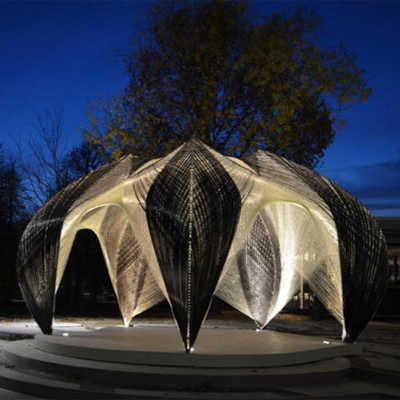
Images from left to right – Alisa Andrasek x2, Achin Menges x3, Julian Melchiorri, Michael Pawlyn.

The Surrogate Twin

Posted on

170416 – Morphing the Body –V&A, London

170416 – Morphing the Body –V&A, London > words

The Undressed exhibition at the V&A London.

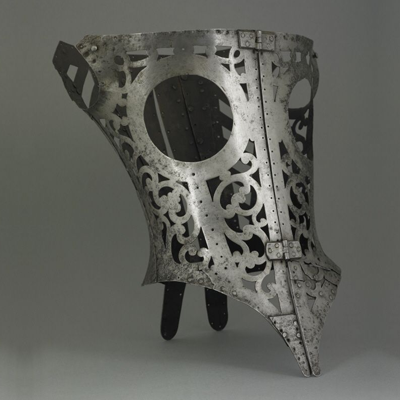
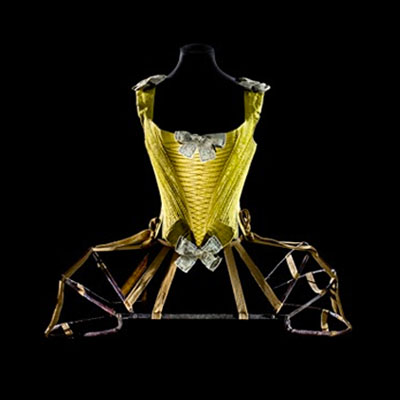
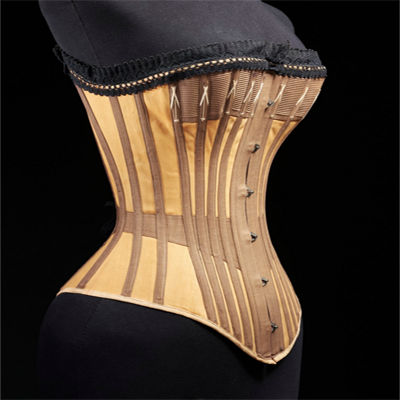
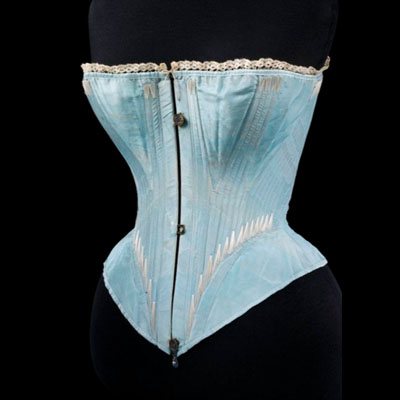
Morphing the body to an idealised form is a theme that runs throughout this exhibition. Waistlines move up and down the torso, bottoms expand and contract, sometimes sideways from the hips, sometimes rearward from the coccyx. Shoulders broaden, or are pulled back and dropped thrusting the chest skyward. Curves are enhanced, silhouettes revealed and the details extenuate the line. Form is idealised, across all periods there is a pursuit for the idealised form, that of the time. What many consider to be instruments of torture are also instruments of empowerment and this would seem to be historically consistent. The hour glass figure of Edwardian women determined the deportment that was required for women to enter the new mercantile nineteenth century society. The clothes of the 1960’s expressed a new sexual liberation and changing attitudes to ones role within society. Sexual expression and identity expression are two parts of a double-edged sword. Identity expression tends to be political and linked to prevailing ideologies whereas sexual expression is a subset within the present politic and is local and targeted.

What I found most interesting about the morphing of form, male and female was the move towards underwear as outerwear and developments in plastic surgery. Underwear as outerwear is suggestive, as much an invitation as an expression. Painters have used this throughout time as a means by which one is able to reveal ones true self. Also as a means of enticement drawing the viewer into the intimate space portrayed, women at their boudoir being a recurring theme with voyeur males in background. Underwear as outerwear in fashion today is slightly more crass but it also blurs the distinction of the role of each garment and these roles may well be an antiquated legacy. Underwear as outerwear is also an expression of gender equality with what was previously hidden and private becoming public. Historically society has been male dominated primarily due to the males physical strength. In times when physical power has less and less currency we may well see a gender role reversal. Underwear as outerwear can be political and intrusive as it invades the perceived personal space of others. Partly as an item that is usually associated with intimacy and is now being shared publicly sending out a confused signal. But also as a show of self-confidence that carries aggressive overtones with its disregard for convention and authority. With time any decontextualizing of the hierarchy of garments becomes normalised and any intended inherent message becomes diluted.

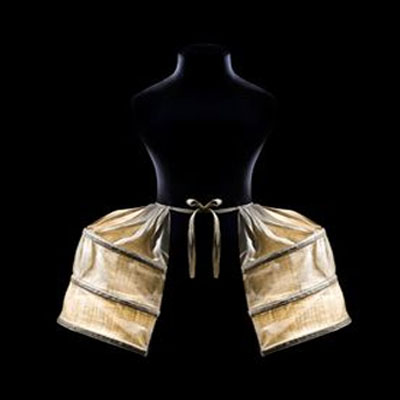
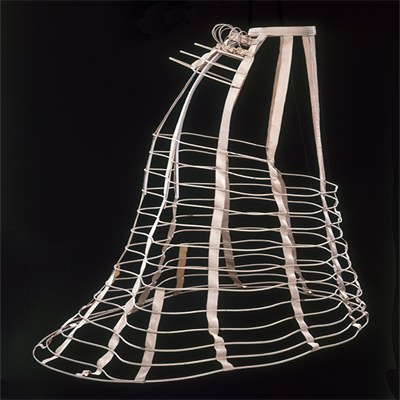
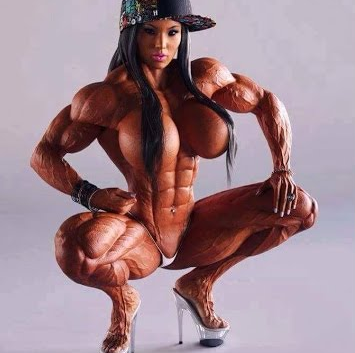
The second point of interest is the developments in plastic surgery and actual body enhancements. The hour glass figure of the nineteenth century encased in an exoskeleton of an idealised form slowly gives way to the more natural figure of the 1960s clothed in casual fabrics. Today nudity is commonplace on most beaches and has been normalised through printed and digital image. As it becomes more acceptable for the body to be seen in public (red carpet catwalks) it has become more important for the body to hold its own form. Men have exercised for millennium to obtain a perceived manly figure. This became more extreme with the body builders of the 1960s and 70s to the point of creating the unusable body. Women today spend many hours in the gym and are as self conscious about their chest, abs and butts as men. This requires a lot of time and hard work and beyond a certain age results are much harder to achieve. Plastic surgery offers both a shortcut to and an enhancement of the body beyond what may otherwise have been achievable. As the nineteenth century shaped the form of the body with the exoskeleton, the corset, the twenty-first century shapes form from within the body. Breast augmentation, gluteal implants, liposuction, rhinoplasty, otoplasty, blepharoplasty, rhytidectomy, abdominoplasty, rib removal, botox, tattoos, piercing (boob, butt, tummy, face, ear and nose jobs) are all common procedures. Some parts are cut away others are padded out with silicon sandwiched between the ribs and the skin. When discussed matter-of-factly it hardly seems normal behaviour and is much more of a radical intervention than trying to achieve a nineteenth century wasp waste. When augmented, the body requires special clothing to exhibit its new form. Clothing that can both reveal and enhance whether this is lycra and mesh or the sheer fabrics that dominate recent fashion trends. Today’s idealised form is heavily influenced by medias focus on popular culture. Cartoons and superheroes are satirical extrapolations that caricature human qualities, good and bad, weak and strong, masculine and feminine, beautiful and ugly, these set up a bipolar duality in which a narrative can be simplified. Popular culture maximises catchment using this simplified narrative. Popularity fuels a cultural feedback loop where humans that have been caricatured to exaggerate qualities to add emphasis for media become the icons for humans to emulate. The internally augmented form is a product of this emulation. At present the body is enhanced as an idealised natural form but how long will it be before bustles and panniers, or their modern equivalents, are inserted. Decorative silicon implants already adorn many faces of street cultured youths and asymmetrical forms may be the future norm.

In summation there has been an evolution from the natural body squeezed into the idealised form of the exoskeleton, through to a period of the natural body fitted in casual clothes, to a body augmented from within sheathed in a gossamer skin. As we move towards electronic tattoos, technological implants and responsive augmentation where programming and choreography may be as important as form manipulation. The morphing body may be able to respond to occasions or seasons or perhaps more immediately to the requirements of the next meeting or event. The clip from Terminator 3 immediately comes to mind, when Kristanna Loken looks at a Victoria Secrets billboard with the text ‘What is Sexy?’ and responds by inflating her breasts.     

The Surrogate Twin 

Posted on

130416 – RooBot – London

130416 – RooBot – London > words

In September 1994 I began a lecture at UCL with two images shown side by side. One image was of a male body builder, his huge arms crossed in front of acres of chest. The other image was of a female ballet dancer standing on one pointe with her other leg reaching into the air way above her head. It was an introduction to a talk on ‘Extreme Climates and Responsive Systems’ and the analogy represented by the images was immediate. The body builder represented the machines of the Industrial Revolution and the ballet dancer the machines that we needed today. The ballet dancer was fuel efficient, had a high power to weight ratio, had uniform strength throughout a full range of movement, used biomechanics over brute force, had coordination and could interact with other complex movement patterns, could be choreographed to work as part of a complex integrated team, could adapt quickly to a range of landscapes and environments. More importantly the ballet dancer was female as Gaia is female and very much part of a circular system. Biomechanics and circular systems would be the inspiration for the next decades work on ever more delicate machines that responded to the harsher climates of our planet.

We jump forward twenty years and robots are at last coming to a department store near you. Robots have been a recurring Sci-Fi topic for hundreds of years from earliest automata’s of the Renaissance to early twentieth century films such as Metropolis. The 1950’s saw a new push for automated friends and assistants as American directors popularised science fiction with films such as Forbidden Planet and The Day The Earth Stood Still. Many visions of the future from these films had man and robot working together but the realities of reaching this goal have proved a little more difficult to resolve. The computing age has made vast strides forward in the development of robotics. The seamless link between hardware and software has until now been allusive. Many early robots were simply machines doing automated repetitive tasks. The next generation will be robots that can multi-task and make elementary decision upon those tasks i.e. how to pick things up, how much pressure to apply, how to balance, how and where to put things down, how quickly to move, how to avoid obstacles etc. The majority of funded research explores aspects of one or more of these tasks i.e. Boston Dynamics location based environmental sensors, balance and balance correction. Others such as Pepper and Erica explore the interface of man and machine with their emotive recognition and responsive robots.

A lot of these projects are still based on pattern recognition and the ability to churn through huge quantities of data instantaneously. We have come a long way since Alan Turing’s work but the majority of modern robots are still Turing machines albeit very sophisticated ones. AI will enable robots to learn and this will improve their ability to make decisions. In many ways this will still be data crunching and statistical analysis but all done at such speed that it would seem like a conscience decision expressed by a piece of hardware, the robot. The Tech firms are throwing huge budgets at this. Facebook recently set up Building 8 to work on hardware that can utilise its software and data harvested from its billions of users. As early simple products come to market the revenues generated will head straight back to the R&D departments for use on the next big project. The process will snowball and progress will be quick and its progression logarithmic. This is all happening now and the journey is well underway. Facebook’s ten-year roadmap may well be reached in six.

A kangaroo can travel huge distances with great economical efficiency at cruise speeds that average 20 kph (12 mph). Kangaroos can, when required reach speeds of up to 65 kph (40 mph). When travelling at speed the Kangaroos huge tail works as a whipping counterbalance to the head and body. This forms a pendulum motion over the hips where head and tail move up and down in unison helping to create lift. The Kangaroos rear legs have elasticated tendons that stretch from the back of the knee to the underside of the toe. The tendon is stretched over an exaggerated and lengthened heal. The tendon is an energy storage mechanism. It recycles the energy used upon landing and stores it in the elasticated tendon. The heal adds leverage to the storage system. Approximately 50% of kangaroos jump makes use of this recycled energy with the rear legs powerful muscles providing the remainder. A kangaroo increases its momentum not by increasing the speed at which its hops but instead by increasing the length of each stride. In this way, combined with its recycled energy, the kangaroo uses almost the same amount of energy at whatever speed it travels. This soft biomechanical motion is a fluid integration of total body movement and will be very difficult to replicate with a machine.

Festo is a multi national that makes hydraulic and pneumatic components for industry. Festo has an R&D department that uses its technologies to experiment with biomorphic machines. This R&D is mainly used as both training for its young engineers and marketing for its products and as such presents a conflict of interest between marketing and research. Machines here are made to resemble animals and they may have some attributes of that animal but resemblance dominates. For example the Bionic Kangaroo (their name, I’ll call it a RooBot) has the plastic body of a kangaroo with a plastic tail but it is a hopping machine. It could be a frog or it could be a fluffy white cloud. The RooBot like the kangaroo has an elastic tendon but this does not recycle energy as does the kangaroos, its energy is pre loaded by a standard pneumatic cylinder DNSU fed by a high pressure storage unit and a valve. The RooBot’s tail and head are plastic add-ons that do nothing other than suggest form. The RooBot can hop, it can turn and it can balance all very commendable achievements but this is not M.I.T. Media Labs. The RooBot is a sophisticated marketing toy posing as research and here is the dilemma. Although one is aware that marketing of existing products dominates the research into biomorphics Festo’s R&D has still produced some incredibly poetic pieces. The Air Mantra is an exquisite art piece and shoals of them ‘swim’ the galleries of the world. The Festo engineers have produced other mechanical fish that have the same mesmerising beauty and the RooBot suggests very similar potentials.

So what is the point of this meandering text? The film Blade Runner (adapted from Philip K Dick’s Do Androids Dream Of Electronic Sheep) was set in Los Angeles 2019, three years from now. So somehow within the next three years we have to move on from the RooBot to the Nexus 6 perfect Replicant, unlikely indeed. However, what all these pieces do is reaffirm just how incredible and unique the biological perfection that exists on our planet is and how much we have to learn from all nature that surround us.

If I had wish for one superpower it would be for immortality just to be able to watch this fantastic journey unfold.        

The Surrogate Twin

Posted on

310316 – Elysium Species Split – Thoughts, London

​310316 – Elysium Species Split – Thoughts, London > words

There is much talk about financial inequality. Statistics are often quoted on the wealth of the top one percent although this is now an outdated point of reference and should be of the top 0.1 percent. Comments tend to be focussed on ownership, control and power, on the fact that those able to live off of the system do little other than hoard and protect their profits. Discussions sometimes touch upon the fact that this concentration of finance is so unproductive that it slows technological, economic and social progress. Sadly the greatest loss from financial inequality is the loss of opportunity for the 99.9 percent of the global population that are only able to fulfil a tiny percent of their true potential and this is a collective global loss. Billions live at a level of subsistence farming be it within a contemporary urban environment. Brand power, copyright laws, patents and intellectual property have all helped concentrate wealth into the hands of a few and the global digital world has magnified the reach of that power. A financial system that is only measured by profit enforces and supports this world of concentrated efficiencies for protected and ring fenced assets. 

The protective wealth cycle is self-fulfilling. The offspring of those with access to this capital get the best education, the best healthcare, access to the best networks, the best paid jobs, the best promotional mediums. The 0.1 percent not only have greater longevity through better quality of life and medical care they also have the luxury of time as they can focus solely on what they want to do. They further have the power of leverage over time as they can employ others to deliver their every wish. Their lives are not consumed with the primary need to pay rent, to buy food, to simply exist. This is apparent early on in education. At one extreme we have students working five days a week just to keep up with the fees whilst trying to cover their assignments in the evenings or at the weekends. At the other extreme we have students that are able to employ assistants to carry out research, perform calculations, write documents or prepare drawings or build projects. Necessary postgrad courses at the best universities are even more exclusive and expensive. Following this the 0.1 percent are able to offer themselves as interns working in the best careers for free so as to secure prime employment at a later stage. All of this forms insurmountable barriers to social mobility. Eventually those with access are promoted as the most productive and yet they are not individuals but financed teams of people acting under one name with all profits and credits going to one person. A myth the media love to encourage as it aids the manipulated market, the superstar, the hyperreal is an easy sell. The cycle continues from generation to generation. None of this is a revelation as it is a constant topic of the tabloid press.

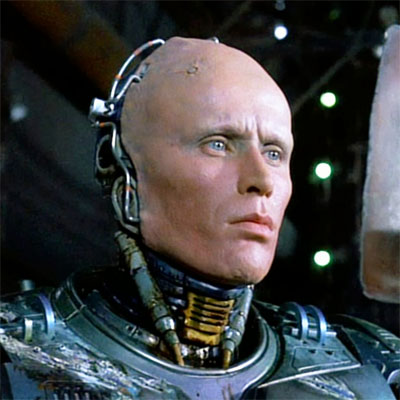
All of this could soon undertake an exponential change. The existing inequality of the 0.1 percent will be meaningless in the near future as we learn to control our genetic make up. Enhanced brains, vision, hearing, speed, reaction and strength will soon be able to be bought for genetically modified offspring. AI, technology and robotics will further be an aid for those with financial access. Machine technology is already merged with human tissue. Knees, hips, pacemakers, drug infusion pumps are already available and soon machine hearts, kidneys, livers, prosthetics will not only be available but preferable to donor equivalents. A new evolution of enhanced cybernetic humans is only a generation away and the divide between the have and have-nots will become an evolutionary unbridgeable gulf. Humans will be upgraded either through biological manipulation, genetic engineering or through cybernetic implants. Homo-sapiens evolution will be sped up. A split in the human species will occur with a breakaway group of genetically modified cyborgs that will leave the remainder of the populations just as homo-sapiens once left the Neanderthal’s. Perhaps this is the nature of evolution with the few feeding of off the many, a kind of Matrix apocalypse but it will not maximise the latent potential that is within the breadth of mankind’s diverse skillset. 

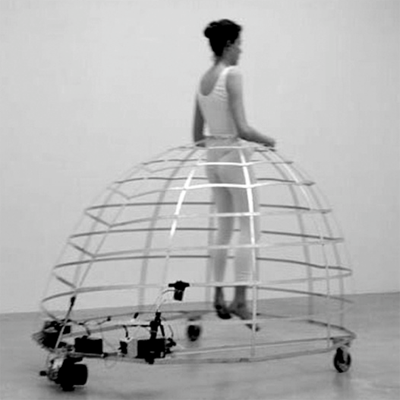
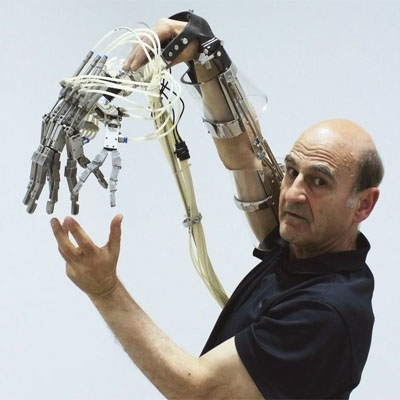
Images left to right. Terminator, Blade Runner, Cloud Atlas, RoboCop, Lucy McRae, Rebecca Horn, Stelarc, 

The Surrogate Twin 

Posted on

​220316 – The Hypothetical Augmented Lunch – London c2018

​220316 – The Hypothetical Augmented Lunch – London c2018 > words

I’ve sneaked out early to avoid the queue and grab a quick hypothetical lunch at KFC. My phone is switched off for the journey so as to avoid the GPS tracking and location based chat bots, the whisper ads as they’re called. I keep my face down so as to avoid the face recognition posters as usually they can be so insulting. I place my order with ‘Asimo’ Sanders a by-product from a recent corporate collaboration. Asimo is run in humour mode and has the updated Akroid-F emotive face. Asimo Sanders likes showing off. Asimo WiFi’s for two pieces of chicken, they come flying across the room and he catches them in a box. The chicken is never touched by man machine or shelf. He does a Jackson moonwalk, a 720 spin whilst balancing a Pepsi on his index finger, the word Pepsi always faces the viewer. I can order in any of the 6500 languages spoken in the world but stick to the one I was poorly taught at school. I take my food to a window table to sit watching the crowds pass.

I’ve a call I need to make to Vivienne which leaves me with a dilemma? Do I turn on my phone and enjoy the madness that will follow or avoid making the call. Like a sadistic addict I reach for the phone and switch it on. Immediately my cardboard cup springs to life. Cups that once had Bar or QR codes now all have WiFi neuromorphic chips, Colonel Sanders himself springs into action and welcomes me on my phone. A chicken popcorn surrounded speech bubble opens up, like a fluffy cloud with words in. Hi Lorraine it’s the Colonel, how are the new Crockett brogues I often wear those myself (I bought these two weeks ago on a shopping trip with my mother and the bot has tapped the data) and how’s your mum? (face recognition run on in store CCTV from the Crockett shoe shop). I’m supposed to chat back which will allow the AI led chat bot to better assess my immediate and future needs. The conversation would be informal and humorous, remember that the paper cup knows more about me than I can recall. Instead I blank it. After a short pause the cup defaults and continues telling me about its contents. Apparently it’s a KFC special Pepsi with zero sugar, contains 0g calories, 0g fat and 0.1g salt. The cup informs me that it contains 330ml and that it will update me on my calorific intake as the drink is consumed. I ask it to be quiet and the chicken popcorn speech bubble replies “Have A Nice Day”. 

I have an eat-in meal that comes on a plastic tray on which is a paper sheet. The paper sheet is printed with a conductive silicon ink that is powered by movement. As I lift my meal the paper informs me that it is 100% recycled, it has been recycled 243 times and can be recycled again. It asks me what pattern I would like on my paper tablecloth and nine samples appear from which I am to choose, I am told I can personalise the colours later although red and white borders are compulsory and chicken popcorn clouds are hard to avoid. You can move the patterns on your paper sheet by swiping so I always swipe the popcorn so that it sits over the KFC logo. The logo then has to relocate, once it has moved I hide it with my cup. The logo has a shade sensor so it crawls out from under the cup and sits itself on top of a popcorn cloud. When we are all happy I can carry on eating. The chicken has a plastic thermo gauge sticking out of it, its bot (a talkative steaming chicken) tells me its moisture content, average calories per 100g and its temperature is 62.3 degrees. The chicken gravy comes in a self-stirring beaker and you’ve guessed it, its bot asks how I want it stirred with an animated Colonel swimming round the app. I can shake my phone to swirl the Colonel, bubbles come out of his mouth if you do this and in turn this stirs the beaker. I put gloves on when I pick up the plastic spork as I know it contains a ‘Swabit’ that takes DNA. The last Swabit I was in contact with decided I was down and sent me a crate of kale & kelp detox via Amazon drone. When it arrived I tried to hide but the drone hovered outside the kitchen window until I gave a retina scan to send the green gunk back. The drone knew I was in as it had checked the movement sensors on my alarm and looked at the last image taken on reverse TV. Yes when they watch us. It’s like a Global Facetime where viewers can watch viewers. Fridges do the same.

From where I am sitting I can see a McDonalds across the road. Its WiFi has picked up the location of my phone and their AI has sent me a ‘Wipe’ (a Wipe is an instant desktop, it lasts 5 seconds and disappears) it shows a burger with a bite out with words “One You Missed”. I look across and an animated 3m high window display of Ronald McDonald waves a flag with Welcome Lorraine as he stares straight at me. No one else notices or looks at me as everyone spends all day looking into their phones. Pedestrian accidents became so frequent in 2016 that most phones where fitted with proximity apps to alert them collision is imminent. Unfortunately these were easy to hack so it was not unusual for your friends to turn them off. All firms now use spambots that harvest email addresses and contacts, these became so common and difficult to prevent that they became mainstream. So your so called friends number in the millions. 

A cyclist comes in all dayglo spandex and sits opposite me. He is wearing the new GoPro 360 VR cycle helmet, the latest Google Glass set to surface x-ray, I can see what he sees reflected in his pupils and of course his poorly hidden smirk. He is closely followed by his dog drone, this hovers the regulation 500mm from his right shoulder. An Asimo Sanders runs over and asks the cyclist to remove his 360 GoPro helmet as all corporate virtual space is now patented and live scanning is forbidden. The cyclist complies and instead turns up the zoom on his Google Glass so that he can get a better look at my chest. Sadly for him I have a new Agent Provocateur bra with the barb wire pattern sewn. This uses a lightweight metal foam in the threads of the barb wire that can block mild neutron radiation and gamma rays. I wouldn’t be a provocateur if all was on show. The picture he sees is one of pixelated squares a bit like the censored Japanese nudes except AP turns this into an ad with heart shaped pixels. 

The plastic tray has a barometric sensor similar to the old iPhone 6, it knows the weight of my meal and can tell when I am getting near its end. The tray sends this information to the table that lights up to offer me a range of deserts that can be ordered through touch screen and paid for by a contactless reader built into the table. A small holographic chicken talks me through the options. I tell the HoloChick that I’m not interested and head down and dejected it drags its feet all the way back to its docking station. My meal comes with a Mini-Me Happy Meal. My face was 3D scanned at the till and I was asked if I wanted an edible or durable Mini-Me. Both are 3D printed with an organic foam. The foam printing process is the 3D equivalent of a Gif as it allows many print layers to be missed out making the print process very quick, it uses little material as the foam expands when in contact with air. The organic durable version is a Mini-Me toy, when no longer required it can be immersed in water and it dissolves. The edible version is a foam sweet, the colours used in its composition are of fruit flavours. I chose the edible Mini-Me.

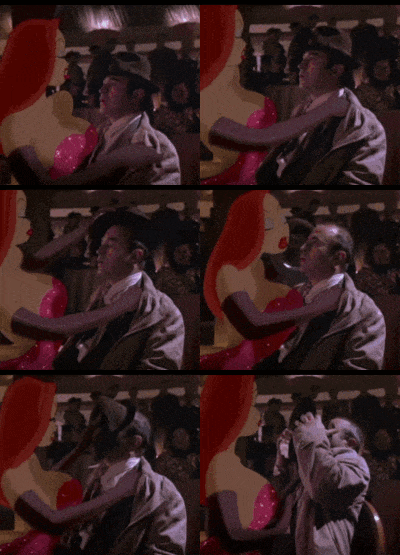
There are a gang of guys two tables down wearing the Digital Ooh Augmentation screens, these are a clear acrylic, shaped a little like the front of a fencing mask. This equipment is still expensive so it is probably hired. It comes pre programmed with a range of augmented events and companions that can be superimposed onto any existing environment. The guys seem to be on a hot shared date with Jessica Rabbit. Hands fly out from the group each trying to remove an item of virtual clothing. Each hand wears an accelerometer glove so that it can interact with the augmented screen. Virtual Companions (VC’s) were the first big market for this technology and it was initially used extensively in care homes. VC’s were self-learning and programmed to make their companions happy. It was found that some VC’s would turn rogue and skip screens so as to sabotage other VC’s in an attempt to keep their own companion the happiest (as happiness is relative). This left care home inmates disturbed as they watched their new found virtual friend being beaten by an unknown virtual unfriendly, so other markets for the technology were found.

I’ve finished my meal and its time to head back to the office I’m late so I’ll take an automated Johnny Cab. On my way out I pass under a ‘sniffer’ fitted to the heat curtain, it says goodbye Mr Schwarzenegger I hope we see you again soon, remember to leave feedback. Sniffers identify us from our body odours, the technology is new and still needs work but it’s inoffensive so they let it run live as they work on its development.

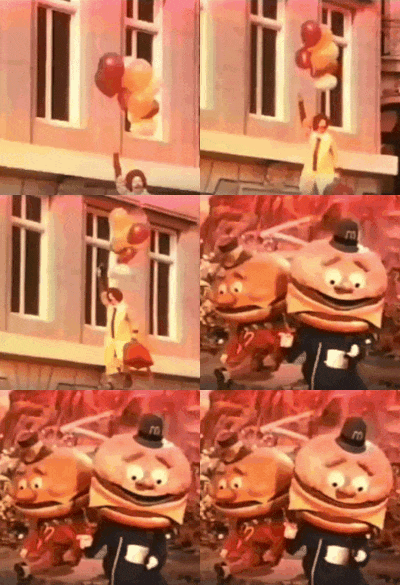
Images left to right. McDonalds, KFC, Harvey, who Framed Roger Rabbit, Her, Matrix.

The Surrogate Twin 

Posted on

270216 – Suffering – Hunterian, London

270216 – Suffering – Hunterian, London > words

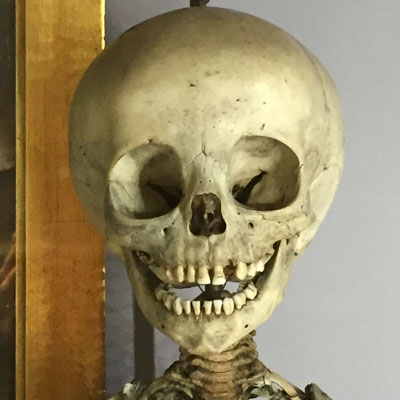
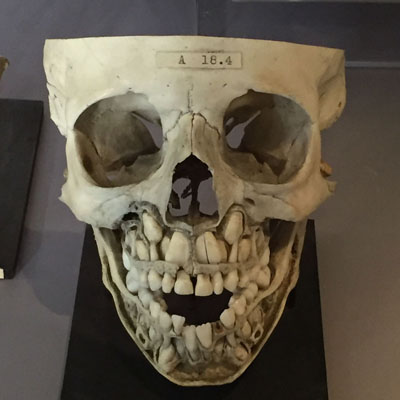
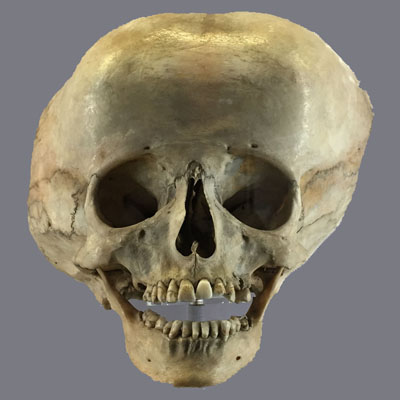
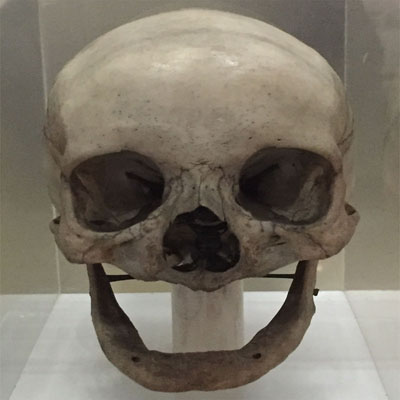
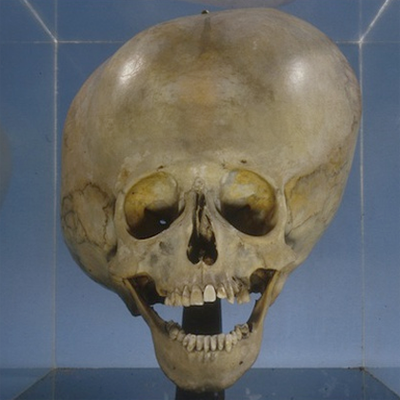
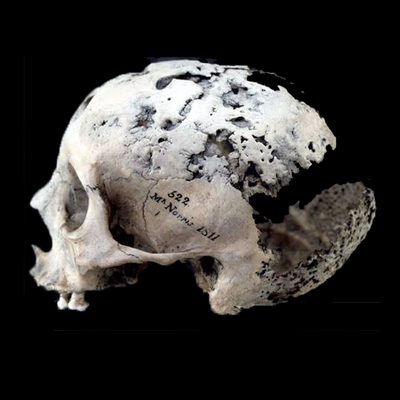
Morbid Anatomy – the anatomy of diseased organs and tissues. This space catalogues the study of the suffering of others so that we may benefit from the knowledge gained by finding cures. What pain people have carried, all types of deformity are bottled and packaged here. The cost of progress stacked floor to ceiling in glass jars on glass shelves.

The Surrogate Twin